
Have you ever eaten a peanut, cuddled a pet, or walked through a flower garden, only to start sneezing, scratching, or breaking out in red itchy patches? It can feel as if your body has suddenly declared war on something completely harmless. But how do doctors identify the real troublemaker when thousands of possible allergens are all around us? Think of your immune system as an overprotective security guard. Most days it catches real criminals like bacteria and viruses. But sometimes it mistakes an innocent visitor for a dangerous thief. The result is chaos instead of calm.
As the old saying goes, “Not everything that glitters is gold.” Likewise, not everything your immune system attacks is actually harmful. Allergy testing works like a detective solving a mystery, helping doctors find the real culprit instead of blaming the wrong suspect.
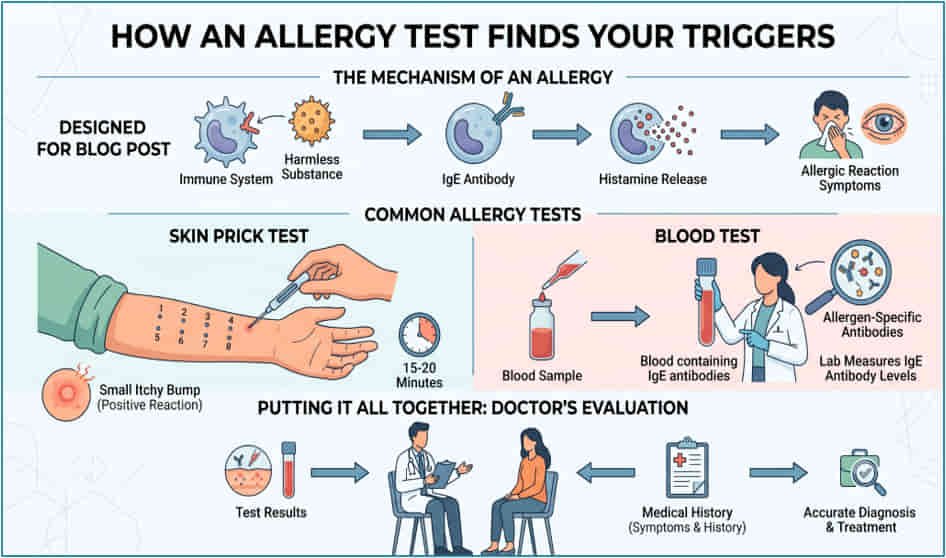
To understand allergy testing, we first need to understand what happens inside the body. Normally, your immune system protects you from harmful germs. But in people with allergies, it mistakenly treats harmless substances such as pollen, dust mites, pet dander, peanuts, or shellfish as dangerous enemies. During the first encounter, the immune system prepares for battle by producing a special antibody called Immunoglobulin E, or IgE. You can think of IgE as a “Most Wanted” poster.
| “Good diagnosis begins with asking the right questions. The best treatment follows when science uncovers the real cause, not just the visible symptoms.” |
The next time the same allergen enters the body, these IgE antibodies immediately recognise it and shout, “Intruder alert!” Immune cells quickly release chemicals such as histamine. Histamine is like a fire alarm that rings throughout the body, leading to sneezing, watery eyes, itching, swelling, skin rashes, or even breathing difficulty. The body’s defence system means well, but in allergies it ends up fighting the wrong battle.
So, how does an allergy test know exactly what you are allergic to? The most common method is the skin prick test. Tiny drops containing different allergens are placed on your forearm or back. A small sterile lancet gently pricks the skin so that each allergen enters only the outer layer. If your body already has IgE antibodies against a particular substance, a small raised, itchy bump appears within 15 to 20 minutes.
It is like asking the immune system, “Do you recognise this face?” If the answer is yes, the skin immediately responds. In some situations, such as severe eczema, certain medicines, or a high risk of severe allergic reactions, doctors prefer a blood test. Instead of looking for a skin reaction, the laboratory measures allergen-specific IgE antibodies circulating in the bloodstream using immunoassays. It is similar to checking a security database instead of questioning people one by one.
However, allergy testing is not simply about getting a positive or negative result. At a more advanced level, allergists know that sensitisation and clinical allergy are not always the same thing. A person may have allergen-specific IgE antibodies but never develop symptoms after exposure. This means the immune system has recognised the allergen, but the body does not necessarily react in everyday life. That is why doctors always combine laboratory findings with a patient’s medical history, symptoms, exposure patterns, and clinical examination before making a final diagnosis.
Modern allergy testing is therefore not a guessing game but a carefully planned investigation. Like a skilled detective collecting fingerprints, witness statements, and evidence before solving a case, doctors use science to identify the true trigger and recommend the most appropriate treatment, helping patients avoid unnecessary food restrictions or lifestyle changes while improving their quality of life.


