
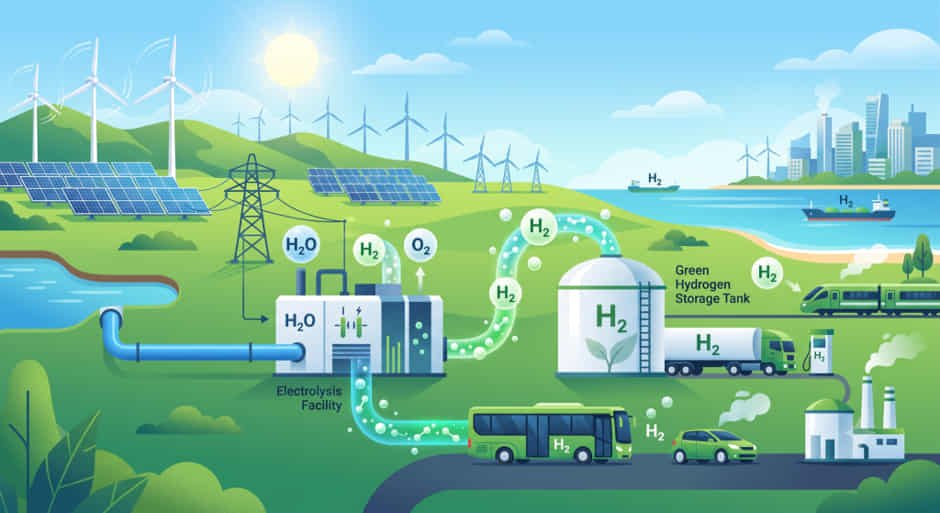
Hydrogen is often called the fuel of the future, but not all hydrogen is produced in the same way. The type attracting global attention today is green hydrogen, hydrogen made using renewable energy such as solar or wind power.
So, what makes it “green”?
Green hydrogen is produced through a process called electrolysis, where electricity is used to split water into hydrogen and oxygen. If the electricity comes from clean sources like solar or wind, the process produces almost zero carbon emissions. This makes green hydrogen a promising alternative to fossil fuels like petrol and diesel.
Why is this important for India?
India is one of the world’s fastest-growing energy consumers, and many industries, such as steel, fertilizers, and heavy transport, still rely heavily on coal, oil, and natural gas. These sectors are difficult to fully electrify, which is where green hydrogen could help. It can act as a clean fuel for industries that require high temperatures or need to store large amounts of energy.
India has launched the National Green Hydrogen Mission with the aim of becoming a global hub for the production, use, and export of green hydrogen. This aims to produce at least 5 million metric tonnes (MMT) of green hydrogen annually by 2030, supported by 125 GW of renewable energy capacity. With abundant sunlight, expanding wind energy, and a growing renewable energy sector, the country has the potential to produce green hydrogen on a large scale.
However, challenges remain. Producing green hydrogen is still expensive, and building the infrastructure needed to store, transport, and distribute it safely will take time. Researchers are also working to make electrolysis more efficient and reduce production costs.
While green hydrogen is unlikely to replace all conventional fuels, it could play an important role in reducing emissions from industries that are difficult to decarbonize. As technology advances and costs fall, it may become a key part of India’s transition to a cleaner and more sustainable energy future.


