
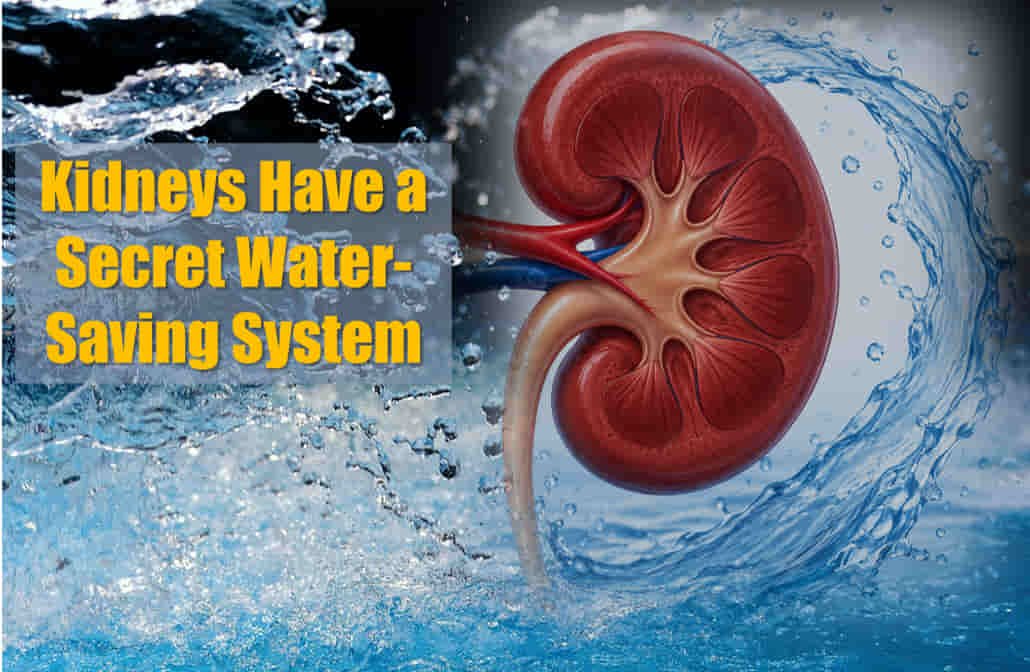
We’ve long been taught a simple story in biology: when your body begins to lose water, the brain releases a hormone called vasopressin, which tells the kidneys to conserve water and prevent dehydration. It’s a textbook example of how the body maintains its water balance.
But what if the kidneys have a backup system?
In a surprising discovery, scientists have found a completely new pathway that allows the kidneys to absorb water without relying on vasopressin. Even more remarkable, they weren’t looking for it. Like many great scientific discoveries, from penicillin to X-rays, this one happened by accident. Researchers led by Dr. Mohamad Hadla at the Mayo Clinic made the discovery while studying polycystic kidney disease (PKD), an inherited disorder in which fluid-filled cysts gradually enlarge inside the kidneys. As the cysts grow, they damage healthy kidney tissue and can eventually lead to kidney failure.
The team was testing a well-known drug called probenecid, expecting that it might worsen the disease. Instead, the exact opposite happened. The drug slowed cyst growth, prompting the researchers to investigate why. Their experiments revealed something unexpected. Probenecid increased the amount of urate, the salt form of uric acid, inside kidney cells. This rise in urate triggered a chain of molecular events that moved aquaporins, the tiny protein channels that transport water, to the surface of kidney cells. With more aquaporins available, the kidneys absorbed more water from the urine back into the bloodstream.
What made the finding so exciting was that this process occurred without activating vasopressin, revealing an entirely new water-regulating mechanism that had remained hidden despite decades of kidney research. You can think of it like discovering a secret entrance to a building everyone believed had only one door. For years, scientists thought vasopressin was the only key that opened the kidney’s water-saving system. This study shows there is another entrance, one that operates through a completely different molecular pathway.
The discovery could be especially important for people living with PKD. The currently approved drug, tolvaptan, works by blocking vasopressin to slow cyst growth. While effective, it often causes patients to produce 6-7 litres of urine each day, leading to excessive thirst, dehydration, and frequent nighttime bathroom visits. In laboratory studies and a small clinical trial, adding probenecid reduced urine production by about 30% without reducing tolvaptan’s ability to slow the disease. Many patients also reported fewer nighttime trips to the bathroom and a better quality of life.
Although larger clinical trials are still needed before this approach becomes routine, the discovery opens an exciting new chapter in kidney research. It reminds us that even organs we think we understand can still hold hidden secrets.
As the saying goes, “Nature always has another surprise waiting.” This unexpected finding not only challenges what biology textbooks have taught for decades but also offers fresh hope for developing better treatments for polycystic kidney disease and other disorders that affect the body’s water balance. Sometimes, the biggest breakthroughs come not from finding what scientists expected, but from paying attention to what they never expected to see.


