
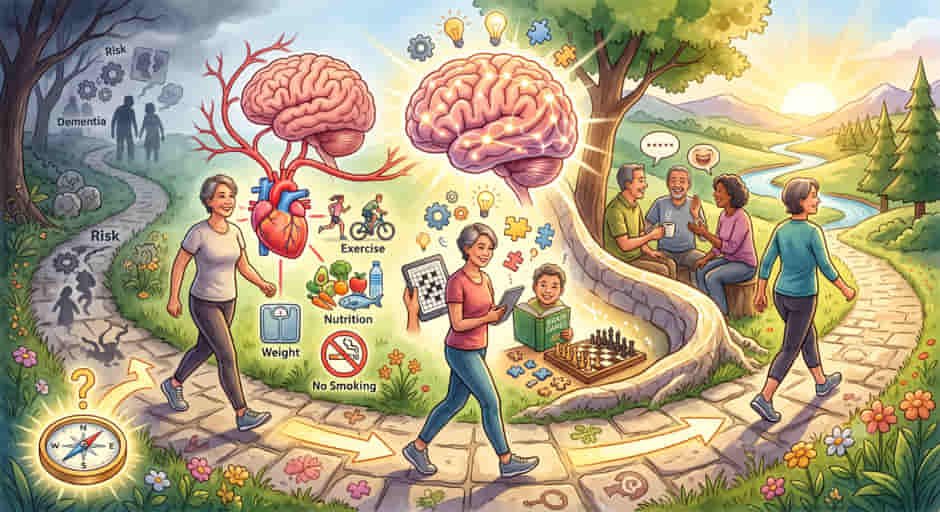
Every few weeks, a new headline seems to promise the secret to preventing dementia. One day it’s blueberries, the next it’s crossword puzzles or a miracle supplement. If only it were that simple. The truth is both more complicated and more hopeful. Scientists have not found a guaranteed way to prevent dementia, but research shows that many cases may be delayed, or perhaps even avoided, by reducing certain risk factors throughout life.
Dementia is not a single disease but an umbrella term for conditions that affect memory, thinking, language, and the ability to carry out everyday activities. The most common form is Alzheimer’s disease, although there are several others. Age remains the biggest risk factor, and genes also influence a person’s chances. While we cannot change our age or DNA, many other factors are within our control.
One of the best ways to protect your brain is surprisingly familiar: take care of your heart. Think of your brain as a bustling city that depends on an intricate network of roads. Those roads are your blood vessels, carrying oxygen and nutrients to billions of brain cells. Conditions such as high blood pressure, diabetes, obesity, and high cholesterol can gradually damage these “highways,” making it harder for the brain to function efficiently. Regular physical activity, eating a balanced diet, maintaining a healthy weight, and avoiding smoking all help keep these pathways in good condition.
Your brain also benefits from regular exercise, but not the kind you do at the gym. Learning a new language, reading books, solving puzzles, playing a musical instrument, or mastering a new hobby all challenge the brain. Just as lifting weights strengthens muscles, mental challenges help build what scientists call cognitive reserve, the brain’s ability to adapt and continue working even as age-related changes occur.
Staying socially connected matters too. Chatting with friends, spending time with family, joining clubs, or volunteering keeps the brain engaged in ways that apps and puzzles alone cannot. Quality sleep is equally important because, during deep sleep, the brain clears away waste products that accumulate throughout the day, almost like an overnight cleaning crew.
Even your ears play a role in brain health. Studies have shown that untreated hearing loss is linked to a higher risk of cognitive decline. Hearing checks and hearing aids, when needed, may help keep people socially engaged and reduce the mental effort required just to follow conversations.
What about “brain-boosting” supplements and memory pills? Despite bold marketing claims, there is currently no strong evidence that they prevent dementia in healthy people. The most reliable strategy is still a healthy lifestyle. While dementia cannot always be prevented, the choices we make today, moving more, eating well, staying curious, sleeping enough, and connecting with others, can give our brains the best chance of staying healthy for years to come.


