
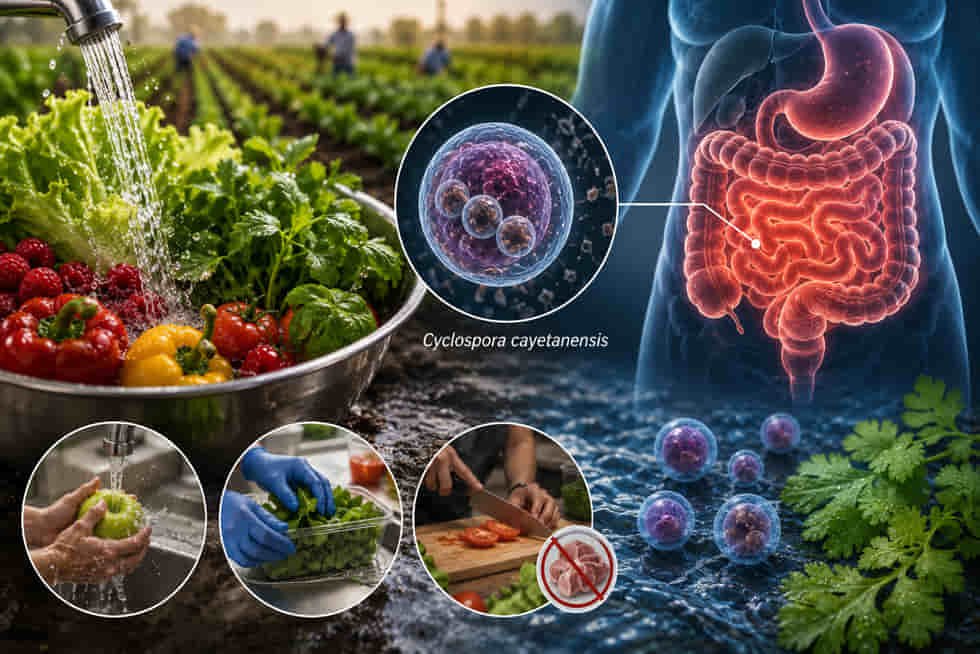
We’ve all heard the saying, “Don’t judge a book by its cover.” The same can be true for our food. A bowl of fresh salad or a juicy raspberry may look perfectly clean, yet in rare cases, it can carry an invisible hitchhiker, a microscopic parasite called Cyclospora cayetanensis.
This tiny organism is currently being linked to a growing number of illnesses across several U.S. states, with health officials working to identify exactly where the contamination began. Cyclospora is a single-celled parasite that infects the small intestine. Unlike many foodborne germs, it doesn’t spread directly from one person to another. Instead, people usually become infected after eating fresh fruits or vegetables, or drinking water, that has been contaminated with the parasite. In previous outbreaks, foods such as cilantro, basil, lettuce, salad mixes, raspberries, and other fresh produce have been identified as the source.
Imagine picking up a fresh salad from the supermarket. The lettuce looks crisp, the herbs smell wonderful, and everything appears perfectly healthy. But because Cyclospora is microscopic, there’s no way to see it with the naked eye. It can cling to produce during farming or handling, long before the food reaches your kitchen. Once swallowed, the parasite settles in the small intestine, where it irritates the intestinal lining. Symptoms usually appear one to two weeks later and may include watery diarrhoea, stomach cramps, bloating, nausea, fatigue, and loss of appetite. Some people recover only to find that the symptoms return days or weeks later if the infection is not properly treated. Fortunately, doctors can usually treat cyclosporiasis with appropriate antibiotics.
One reason Cyclospora is particularly challenging is that washing isn’t always enough. While rinsing fruits and vegetables under clean running water helps remove dirt and many microbes, this parasite may remain attached, especially if contamination occurred before harvest. That makes tracing outbreaks difficult and highlights the importance of safe farming practices throughout the food supply chain. Does this mean you should avoid fresh fruits and vegetables? Absolutely not. Fresh produce remains one of the healthiest parts of our diet, providing essential vitamins, minerals, fibre, and antioxidants. Instead, think of food safety as another healthy habit, just like washing your hands before eating or fastening your seat belt before driving.
Health experts recommend washing produce thoroughly under clean running water, peeling fruits and vegetables when practical, keeping raw foods separate from cooked foods, and practising good hand hygiene while preparing meals. During an active outbreak, it’s also wise to follow updates and advice from local health authorities. The old proverb “Prevention is better than cure” fits perfectly here. Cyclospora reminds us that food safety begins long before food reaches our plates. From careful farming and clean irrigation water to proper food handling and good kitchen hygiene, every step plays a role in keeping our meals both nutritious and safe. After all, the freshest-looking food is safest when freshness is matched with good food safety practices.


