
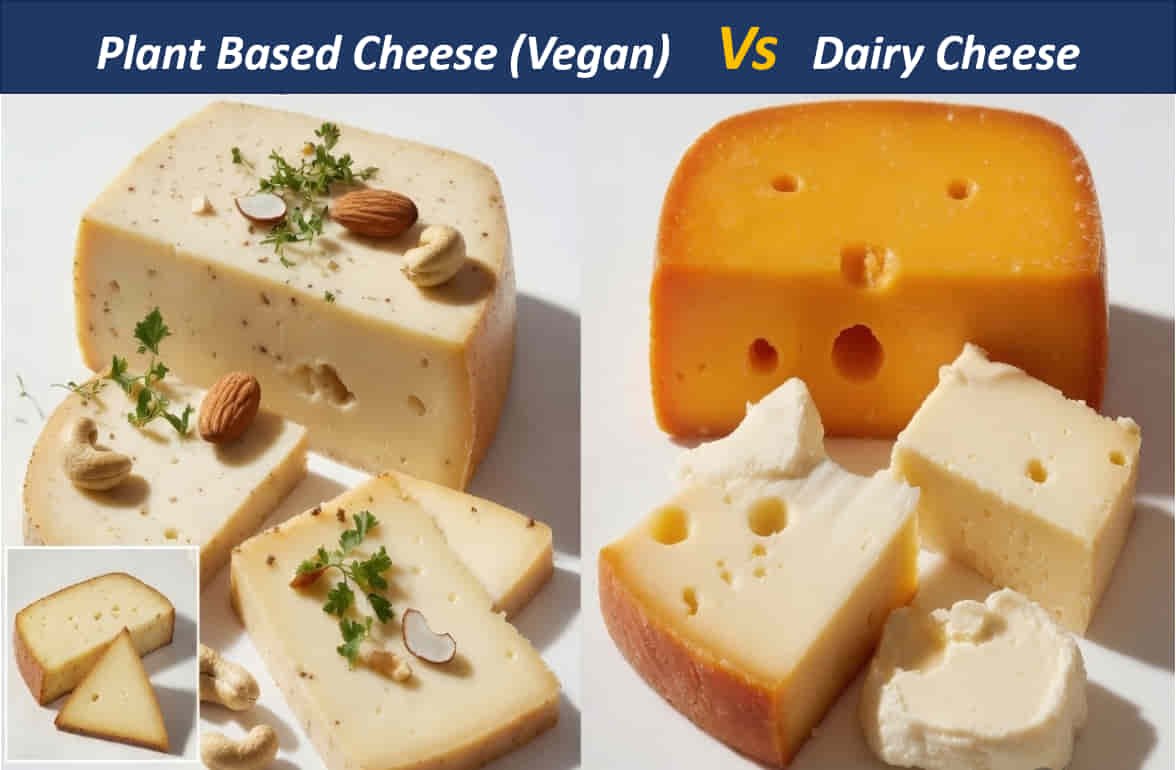
There’s a common saying: “Don’t judge a book by its cover.” The same advice applies to food labels. Just because a product says “plant-based” doesn’t automatically mean it’s healthier or more nutritious.
As more people embrace vegetarian and vegan lifestyles, plant-based cheese has become one of the fastest-growing food products worldwide. Some choose it because of lactose intolerance or milk allergies, while others prefer it for ethical or environmental reasons. But does it provide the same nutrition as traditional dairy cheese?
A study by Craig W. J. and colleagues, published in Nutrients (2022), examined 245 plant-based cheese products sold in the United States. The findings were eye-opening. Most products were made primarily from coconut oil and starch, rather than protein-rich ingredients such as soy or legumes. As a result, they contained surprisingly little protein. In fact, only about 3% of the products provided at least 5 grams of protein per serving, far less than many people expect from cheese.
The researchers also found that many plant-based cheeses lacked important nutrients naturally found in dairy cheese. Dairy cheese is a good source of calcium, vitamin B12, and sometimes vitamin D, all of which support healthy bones, nerves, and blood cells. Yet only 19% of the plant-based cheeses were fortified with calcium, 14% contained vitamin B12, and just 1% included vitamin D.
Another surprise was the fat content. Because coconut oil was the main ingredient in many products, nearly 60% of the cheeses were high in saturated fat. Although saturated fat can be part of a balanced diet, health experts recommend consuming it in moderation. Many products were also relatively high in sodium.
| Plant-Based Cheese | Dairy Cheese |
| Made of cashews, soy, oats, almonds, or coconut. | Made from cow, goat, sheep, or buffalo milk. |
| Lactose-free. | Contains lactose (except some aged cheeses). |
| Usually lower quantities of protein and B12 | Naturally high in protein and B12. |
| Often lacks calcium and vitamin D unless fortified. | Naturally rich in calcium and some varieties contain vitamin D. |
| Coconut oil-based products may be high in saturated fat. | Saturated fat varies by cheese type. |
| Often contains starch and food additives. | Produced mainly by milk fermentation. |
| Texture varies widely. | Natural creamy texture. |
| Melting quality differs between brands. | Excellent melting properties. |
| Better for people with lactose intolerance. | May cause symptoms in lactose-intolerant people. |
| Usually has lower cholesterol. | Contains cholesterol. |
Nutrition isn’t the only challenge. Have you ever noticed that some vegan cheese doesn’t stretch on pizza or melt as smoothly on a sandwich? A 2026 review published in Critical Reviews in Food Science and Nutrition, which analysed 85 scientific studies, explains why. Traditional cheese owes its creamy, stretchy texture to casein, a milk protein. Since plant-based cheeses lack casein, many become gummy, crumbly, or fail to melt properly.
The good news is that not all plant-based cheeses are the same. Products made from soy, peas, or cashews generally contain more protein and offer better nutritional value than those made mainly from coconut oil. Researchers are also developing fermented plant-based cheeses, which may better mimic the taste, texture, and nutrition of dairy cheese.
The lesson is simple: plant-based doesn’t automatically mean healthier. Plant-based cheese can be an excellent choice for people avoiding dairy because of allergies, lactose intolerance, ethical beliefs, or environmental concerns. But the smartest shoppers look beyond the front of the package. Reading the nutrition label, choosing products made from protein-rich ingredients, and checking for added calcium and vitamin B12 can help ensure you’re getting both the flavour you enjoy and the nutrients your body needs.
Source:
- Craig, Winston J., A. Reed Mangels, and Cecilia J. Brothers. “Nutritional profiles of non-dairy plant-based cheese alternatives.” Nutrients 14, no. 6 (2022): 1247.
- Rune, Christina J. Birke, Mathias Porsmose Clausen, and Davide Giacalone. “Sensory evaluation of plant-based cheese: a systematic review with a focus on texture and mouthfeel.” Critical Reviews in Food Science and Nutrition 66, no. 4 (2026): 754-779.


