
Rice has been a staple food for billions of people for thousands of years. Yet, in recent years, white rice has earned a bad reputation, often being labeled as nothing more than “empty carbs.” But is all rice really the same? Not quite. Choosing the right type of rice is a bit like choosing between white bread and whole-grain bread, they may look similar on the plate, but what they offer your body can be very different. The good news is that you don’t have to give up rice to eat healthier. Instead, understanding how different varieties are processed can help you make smarter choices that provide more nutrients, steadier energy, and better support for your overall health.
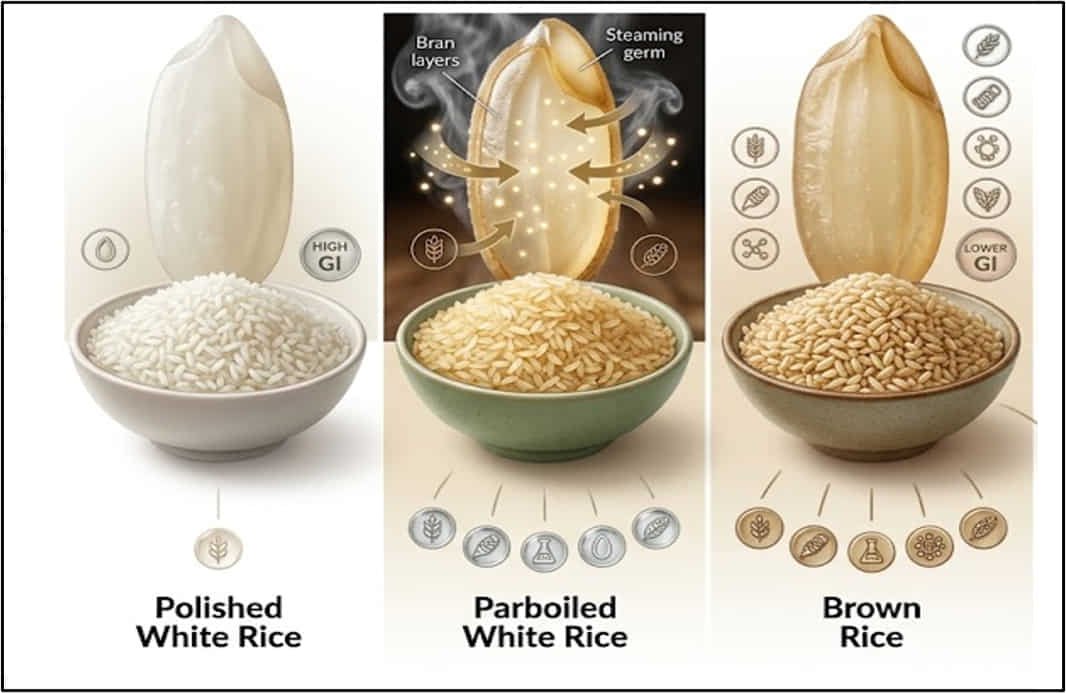
The biggest difference lies in what remains after processing. A rice grain has three main parts: the bran, the germ (embryo), and the endosperm. Most polished white rice has its bran and germ removed, leaving behind mostly the starchy endosperm. While this makes the rice softer and extends its shelf life, it also removes much of its fiber, protein, healthy fats, vitamins, minerals, and natural antioxidants. Brown, black, red, and wild rice, on the other hand, retain much of these nutrient-rich layers.
The germ contains proteins, vitamin E, B vitamins, and beneficial plant compounds, while the bran is rich in dietary fiber, magnesium, iron, zinc, and other essential minerals. Black and red rice are particularly rich in anthocyanins, the same antioxidant pigments that give blueberries and blackberries their deep color. In other words, the closer rice is to its natural form, the more nutrition it delivers.
| Rice Variety | Embryo & Protein Status | Mineral Profile | Glycemic Index (GI) |
| Black | Fully Intact (Max Protein) | High Iron, Zinc, Anthocyanins | Low (~42-50) — Elite |
| Brown / Whole Grain | Intact (High Protein) | Contains Magnesium, Phosphorus | Medium (~55) |
| Basmati (Long Grain) | Minimal Germ | Moderate | Medium (~58) |
| Polished White | Stripped (Low Protein) | Depleted (Trace amounts) | High (~70+) — Avoid |
Another important factor is how rice affects your blood sugar. Foods with a high Glycemic Index (GI) are digested quickly, causing blood sugar to rise rapidly and then fall just as fast, often leaving you feeling hungry or tired. Lower-GI foods release glucose more gradually, providing steadier energy throughout the day. One of the best options is parboiled (steamed) rice. Unlike ordinary white rice, parboiled rice is soaked, steamed, and dried before milling. This process pushes many vitamins and minerals from the outer layers into the grain, allowing it to retain more nutrients even after polishing.
| “The smallest choices on our plate often shape the biggest outcomes in our health. Food is more than fuel—it is information that teaches the body how to thrive.” |
It also changes part of the starch into resistant starch, which behaves more like dietary fiber than digestible carbohydrate. Resistant starch feeds beneficial gut bacteria, supports digestive health, and helps lower the rice’s glycemic impact. Simply put, parboiled rice offers many of the convenience and texture benefits of white rice while delivering superior nutritional value.
So, which rice should you choose? If you’re looking for maximum nutrition and antioxidant benefits, black, red, or wild rice are excellent choices. For everyday meals, brown rice or parboiled brown rice provides a good balance of fiber, vitamins, and minerals. If you exercise regularly or need easily digestible carbohydrates around workouts, parboiled basmati rice offers a practical combination of sustained energy and good digestibility.
The takeaway is simple: don’t judge rice by its color alone. The healthiest bowl isn’t necessarily the fanciest one, it’s the one that keeps more of the grain’s natural goodness intact. By making small upgrades in the rice you eat every day, you can improve your nutrition without changing the meals you already enjoy. After all, great health isn’t built by one perfect meal, but by consistently making better choices, one grain at a time.


