
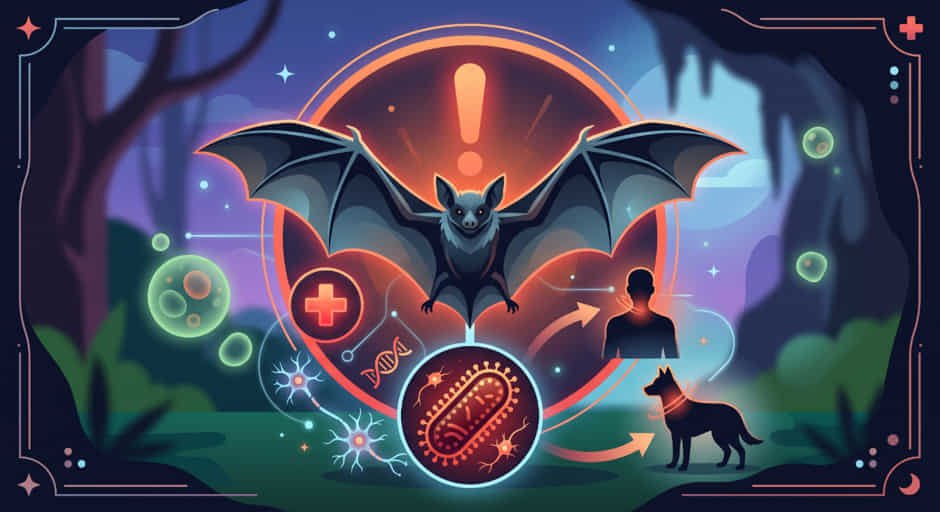
Rabies is one of the world’s deadliest infectious diseases. Once symptoms such as fever, confusion, difficulty swallowing, or paralysis appear, the disease is almost always fatal. Yet, it has one remarkable weakness: it is nearly 100% preventable if treatment begins soon after exposure. In many countries across Asia and Africa, dogs remain the main source of rabies infections. However, in countries such as the United States, a different animal has become the leading cause of human rabies cases, bats. This doesn’t mean bats are becoming more dangerous than before, but it does mean that health experts are urging people to take even seemingly harmless encounters with bats seriously. The challenge isn’t that bats are aggressive; it’s that their bites can be so small they often go completely unnoticed.
Rabies is caused by a virus that attacks the brain and nervous system. It spreads through the saliva of an infected animal, usually after a bite or scratch. Unlike the obvious bite of a dog, some bat species have tiny, needle-like teeth that can leave little or no visible mark. Imagine being pricked by a sewing needle, you might barely notice it. This is why people sometimes don’t realize they have been exposed. A bat flying into a bedroom at night may seem like a harmless visitor, but if someone was asleep, a child was present, or a person was unable to explain what happened, doctors recommend treating the situation seriously. It’s better to be safe than sorry. Seeking medical advice quickly can mean the difference between preventing the disease and facing a life-threatening infection.
Another reason bat-related rabies receives attention is that bats have adapted well to living alongside humans. They can enter homes through open windows, chimneys, attic vents, or tiny gaps in roofs and walls that may seem too small for an animal to squeeze through. Fortunately, less than 1% of wild bats are estimated to carry rabies, so finding a bat does not mean it is infected. In fact, bats are among nature’s most valuable helpers. A single bat can eat thousands of insects in one night, helping farmers by reducing crop pests. Many bat species also pollinate flowers and disperse seeds, supporting forests and ecosystems. The goal is not to fear or harm bats, but to admire them from a distance and avoid handling them with bare hands.
If you are bitten or scratched by a bat, or even suspect you may have had close contact, wash the affected area immediately with plenty of soap and running water for at least 15 minutes and seek medical care without delay. Doctors can provide post-exposure prophylaxis (PEP), a treatment that includes a series of rabies vaccines and, in some situations, rabies antibodies. When given promptly, PEP is highly effective at preventing the virus from causing disease. Rabies remains one of the rare illnesses that is almost always fatal once symptoms appear, yet it is also one of the most preventable. Understanding the hidden risks of bat encounters, while respecting the important role bats play in nature, is the key to protecting both human health and wildlife.


