
Walk through any supermarket today, and you’ll notice one word everywhere: protein. From breakfast cereals and yogurts to chips, cookies, and even ice cream, countless products proudly advertise their protein content. Scroll through social media, and you’ll likely come across fitness influencers encouraging people to “eat more protein” to build muscle, lose weight, or stay healthy. While protein is undoubtedly one of the body’s most important nutrients, this growing obsession raises an important question: Can you actually eat too much protein? The answer is more nuanced than many advertisements suggest. Protein is essential, but it isn’t a magic ingredient that automatically transforms into muscle.
Think of it like bricks delivered to a construction site. Without workers and a building plan, in this case, regular exercise and adequate rest, the extra bricks simply won’t build a bigger house. Instead, your body may use the excess protein as an energy source or store the extra calories as fat, just as it would with carbohydrates or fats.
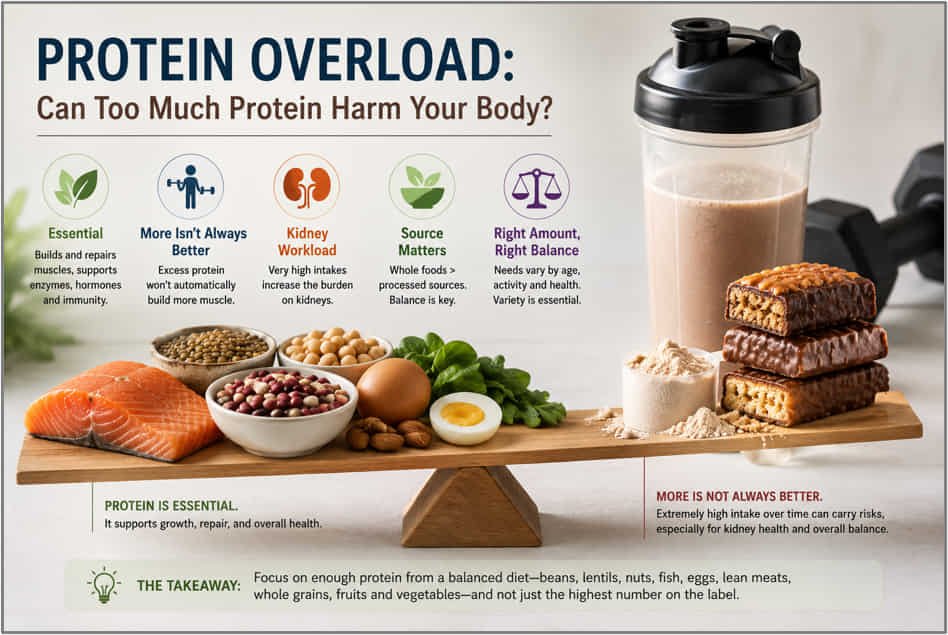
Protein plays countless vital roles in the body. It helps build and repair muscles, forms enzymes and hormones, supports the immune system, and is essential for healthy skin, hair, and organs. However, more isn’t always better. For most healthy adults, consuming slightly more protein than the minimum recommended amount is generally safe and may even be beneficial, particularly for athletes, older adults, or people recovering from illness. But extremely high-protein diets followed over long periods don’t necessarily provide additional benefits.
| “Nutrition is not about eating the most of one thing—it’s about giving your body what it truly needs. In health, balance will always outperform excess.” |
One reason for caution is the kidneys. When the body breaks down protein, it produces nitrogen-containing waste products that must be filtered from the blood by the kidneys and excreted in urine. Eating more protein increases this filtering work. Current research shows that moderately high protein intake does not appear to damage healthy kidneys, but people with chronic kidney disease or reduced kidney function often need to carefully manage their protein intake under medical supervision because their kidneys are already under strain.
Equally important is where your protein comes from. A diet rich in beans, lentils, chickpeas, nuts, seeds, fish, eggs, dairy, and lean poultry provides protein along with vitamins, minerals, healthy fats, and other beneficial nutrients. In contrast, relying heavily on processed meats, excessive amounts of red meat, or highly processed protein snacks may increase the intake of saturated fat, sodium, and preservatives while displacing healthier foods. A protein-focused diet can also unintentionally crowd out fruits, vegetables, whole grains, and dietary fiber, which are equally essential for heart health, digestion, and maintaining a healthy gut microbiome. As the saying goes, “Don’t put all your eggs in one basket.” Good nutrition depends on variety, not on maximizing a single nutrient.
So, how much protein is enough? There is no one-size-fits-all answer. Protein requirements vary depending on age, body weight, physical activity, growth, pregnancy, and overall health. Adolescents, pregnant women, older adults, and people involved in intense physical training generally need more protein than the average sedentary adult. According to the World Health Organization (WHO), protein typically contributes about 10-15% of an adult’s daily energy intake, although individual requirements may differ. Rather than chasing the highest protein number on a nutrition label, focus on meeting your own needs through a balanced, varied diet. Protein is an essential building block of life, but like most good things, the key lies in balance, not excess. A healthy body isn’t built by eating the most protein, it’s built by nourishing it wisely.


