
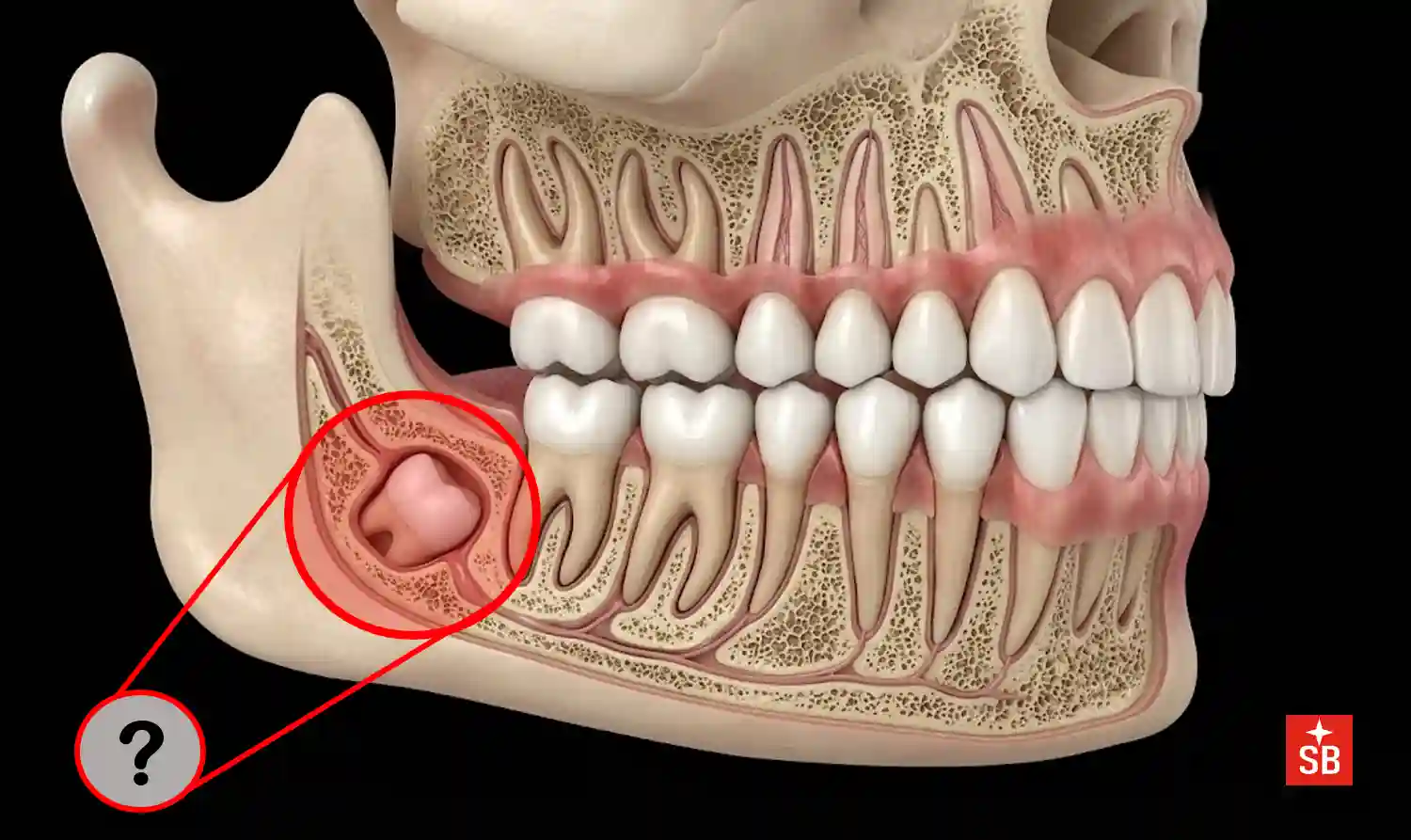
When you’re a child, losing a tooth is almost a routine part of growing up. A loose tooth falls out, a gap appears, and a few months later, a larger permanent tooth takes its place. It seems almost like the body has planned for the first set to be temporary. Losing a baby tooth can feel like nature’s little farewell before the next tooth takes centre stage. But then something strange happens: once those permanent teeth are gone, there is no replacement waiting underneath.
Why does the body get two sets of teeth, but not a third? It is a curious case where the body’s replacement plan appears to have an expiry date.
The answer begins before we are even born. Teeth develop from a specialised layer of cells in the developing mouth called the dental lamina. This structure acts almost like a blueprint for tooth formation, sending out signals that tell cells where and when to build individual teeth.
The first set becomes our 20 baby teeth. A second wave of development produces the permanent teeth that replace them, while the permanent molars develop separately rather than replacing baby teeth. In simple terms, the dental lamina works like a construction manager, telling different cells when to start building and where each tooth should stand.
So why doesn’t the blueprint simply keep going? During tooth development, a structure called the successional dental lamina helps generate the permanent replacement teeth. In humans, this developmental machinery eventually becomes inactive and breaks down. Without that continuing source of tooth-forming tissue, another complete generation cannot normally develop.
It is almost as if the body’s tooth factory switches off its machinery after the second production run. Scientists believe this loss of the dental lamina’s regenerative potential is one important reason humans are diphyodont, meaning we normally develop two generations of functional teeth. In biological terms, the word may sound complex, but the idea is simple: two sets, then the production line closes.
Interestingly, our biology may not have completely forgotten how to make extra teeth. Some people naturally develop supernumerary teeth, meaning teeth beyond the usual number. Researchers have also found evidence suggesting that remnants of tooth-forming tissue may persist in certain regions of the human mouth. This hints that the instructions for making another tooth may not be entirely absent, and they may simply be switched off or no longer organised into a complete third generation. Nature, in a way, may still have a few old instructions tucked away in its biological toolbox.
And that possibility is now attracting serious scientific attention. Researchers are investigating molecules involved in tooth development, including USAG-1, which acts as a brake on tooth formation. Blocking this protein has encouraged new tooth development in animal studies, and experimental approaches are now being tested in humans.
The science is still young, so the idea should be treated with curiosity rather than certainty. It is still far too early to call this a cure for tooth loss, but the idea of activating our own dormant tooth-forming machinery is no longer pure science fiction. The tooth may be out, but the scientific plot is far from over.
For most of us, the permanent set really is the final version. But the biology behind those two sets suggests something fascinating: the human body may have lost the ability to repeatedly replace teeth, without necessarily losing every molecular instruction required to build them. It is a striking example of how evolution can leave behind biological clues from an older story. As the proverb says, “where there is a will, there is a way”, and in this case, science is asking whether the body still has a hidden way to grow what it once stopped making. The future of dentistry may therefore depend not only on replacing lost teeth, but on learning whether our own biology can build them again.


