
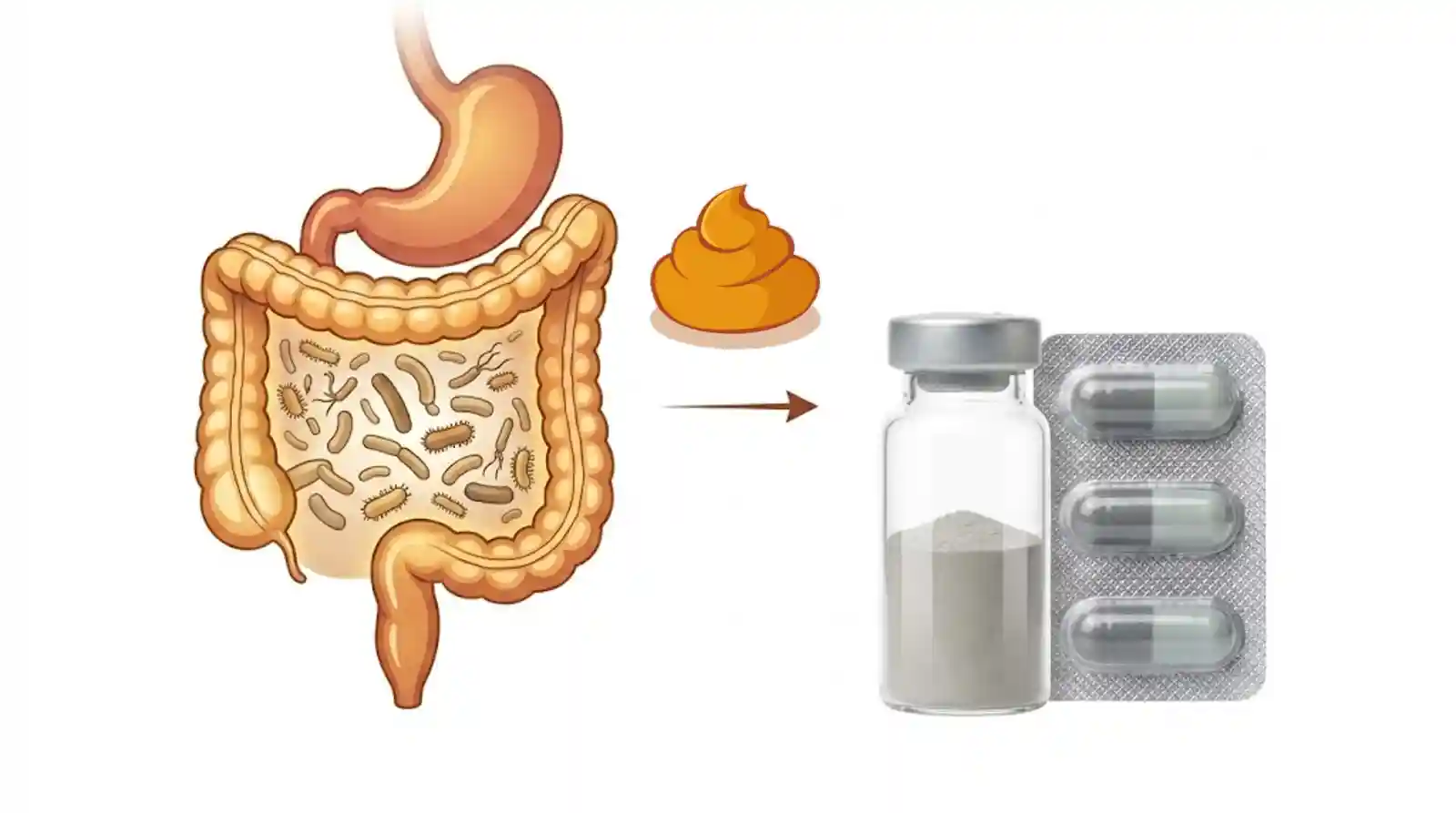
The idea sounds almost unbelievable: could something we normally flush down the toilet actually become a medical treatment? It turns out that scientists have been asking exactly this question, and in some cases, the answer is already yes. What seems like waste at first glance may actually be a tiny biological treasure chest. In simple words, the toilet may sometimes hide more than meets the eye.
The reason has less to do with waste itself and more to do with what lives inside it. Human stool contains trillions of microorganisms, including bacteria, viruses, fungi, and other microbes that make up the gut microbiome. Think of the gut microbiome as a busy neighbourhood, where different microbes live, compete, cooperate, and influence one another. These microorganisms influence digestion, metabolism, immune function, and the overall balance of the intestinal ecosystem. When antibiotics or disease severely disrupt this ecosystem, harmful bacteria can sometimes take advantage. In other words, when the good neighbours disappear, troublemakers may move in.
One of the best examples is Clostridioides difficile, or C. difficile. This bacterium can cause severe diarrhoea and inflammation of the colon, particularly after antibiotic treatment has disrupted normal gut bacteria. In people who experience repeated infections, restoring the gut microbiome can dramatically reduce the chance of another episode. Here, the problem is not simply one bad bacterium, but a whole microbial community losing its balance. The gut, in a way, is like an orchestra, and when too many instruments fall silent, the music can turn into noise.
This is where faecal microbiota transplantation, or FMT, comes in. FMT is a microbiome-based approach that aims to rebuild the disrupted microbial community. In FMT, carefully screened material from a healthy donor is transferred into the intestine of a patient. The goal isn’t to treat the patient with “stool” itself, it is to restore a healthier community of microorganisms. It is less about the package and more about the passengers inside it. Because of its effectiveness against recurrent C. difficile infection, microbiota-based therapies have moved from an unusual experimental treatment into regulated medicine.
In the United States, the FDA has approved two microbiota-based products: Rebyota and Vowst. Vowst is particularly striking because it comes as oral capsules containing purified bacterial spores derived from human stool rather than requiring a traditional transplant. Both products are approved to prevent recurrence of C. difficile infection in appropriate adults following antibacterial treatment. It sounds almost like turning the tables on disease, using microbes to fight a problem caused by microbial imbalance. The irony is striking: something once treated as the end of the biological journey can become part of a medical solution.
But scientists aren’t stopping there. Researchers are investigating whether carefully selected microbes or microbiome-derived molecules could eventually be used for conditions such as inflammatory bowel disease, metabolic disorders, and other diseases linked to the gut microbiome. However, evidence is still developing, and FMT cannot currently be recommended as a routine treatment for most of these conditions. The scientific road ahead is promising, but it is not a shortcut. As the old saying goes, “slow and steady wins the race”, especially when medicine is dealing with something as complex as the human microbiome.
There are also real risks. Donor material can potentially transmit infectious organisms, which is why rigorous donor screening and testing are essential. The FDA has reported serious infections linked to investigational FMT, highlighting why this is a medical procedure, not a DIY treatment. In medical jargon, safety depends on careful screening, testing, and control of the biological material being transferred. A useful analogy is organ donation: just because something comes from a healthy person does not mean it is automatically safe for another person.
So, why are scientists interested in human waste? Because what looks like waste may actually contain a complex biological ecosystem with therapeutic potential. The humble stool sample may be more than a leftover, it may be a biological library waiting to be understood. Scientists are learning that nature can sometimes hide useful tools in the most unexpected places.
The future of medicine may not simply involve creating new drugs from scratch. Sometimes, scientists may first need to understand and carefully harness the medicines that biology has already created inside us. In that sense, one person’s waste could become another person’s medicine, but only when science, safety, and careful testing are firmly in the driver’s seat.


