
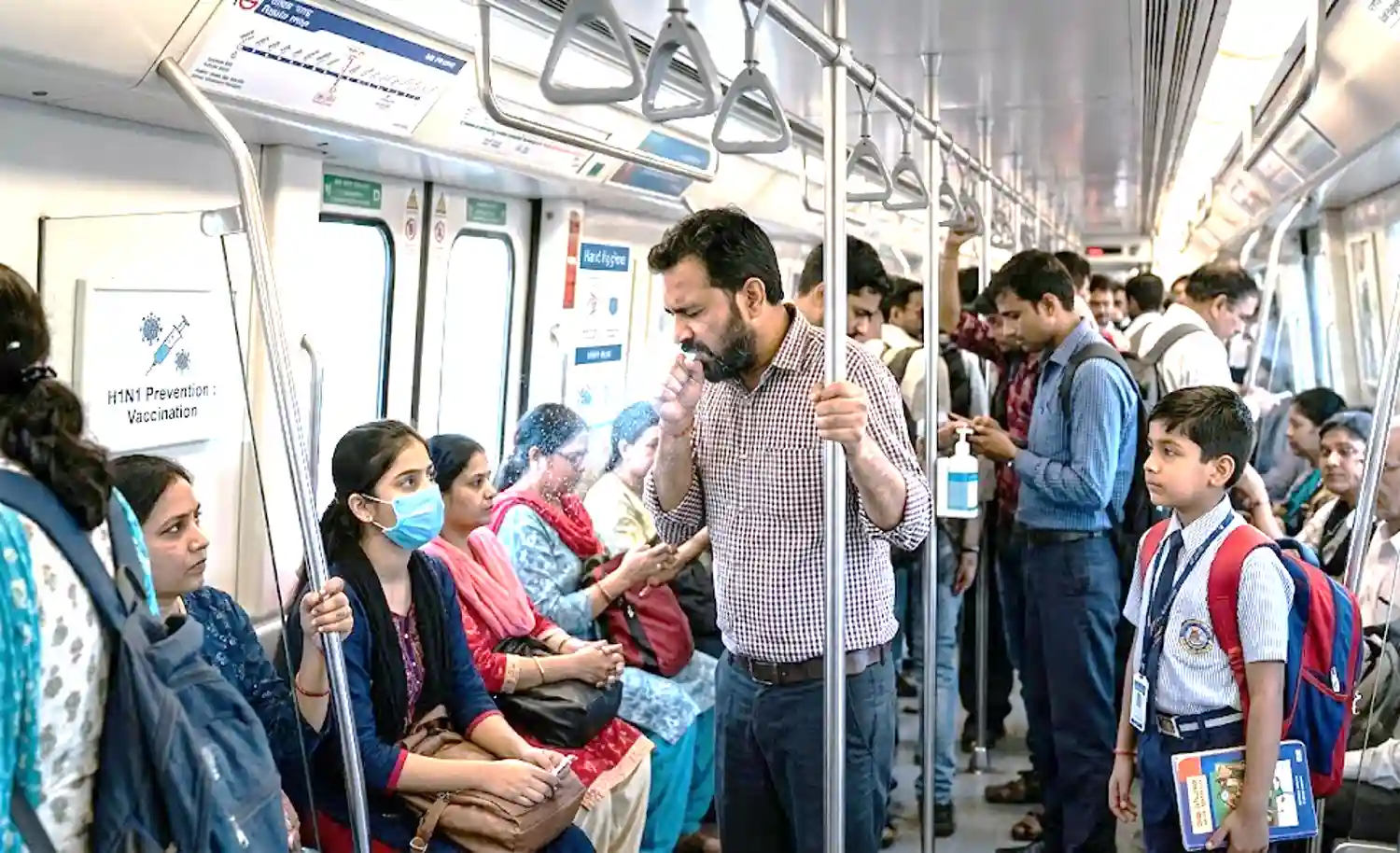
A cough in a crowded metro, a sneeze across an office desk, or a child returning home from school with a fever may seem like ordinary parts of flu season. But with H1N1 cases in Delhi rising nearly six-fold, influenza is receiving renewed attention this year. Delhi has reported 1,344 cases compared with 229 during the corresponding period last year. The important question now isn’t simply how many people are infected, but how we can reduce the chances of becoming one of them. In simple terms, prevention is the shield we can carry every day, even when the virus itself remains invisible. As the saying goes, prevention is better than cure.
H1N1 is an influenza A virus that primarily spreads through respiratory droplets and particles released when an infected person coughs, sneezes, talks, or breathes. These tiny particles can reach another person’s nose, mouth, or eyes, particularly in crowded or poorly ventilated spaces. Think of these particles like invisible messengers travelling through the air, carrying the virus from one person to another. This makes prevention less about avoiding one particular place and more about interrupting the chain of transmission. In other words, the virus may be tiny, but its journey can be surprisingly wide.
The first line of defence is vaccination. Flu vaccines are updated periodically because influenza viruses continually change, and vaccination can reduce the risk of influenza illness and, importantly, severe complications. The influenza virus is something of a moving target, changing its features over time and making regular vaccination an important tool of protection. It is particularly important for people at higher risk, including older adults, young children, pregnant women, and people with certain chronic medical conditions. Vaccination, therefore, acts like a rehearsal for the immune system, helping it prepare before the real challenge arrives.
Everyday habits matter too. Washing hands regularly, covering coughs and sneezes, improving ventilation, and avoiding close contact with others when sick can reduce the opportunities for the virus to spread. Small habits can build a big wall of protection, proving that sometimes the simplest steps carry the greatest weight. If you’re unwell, staying home rather than pushing through work, college, or social plans isn’t just considerate, it helps break the transmission chain. Nobody wants to be the person who turns a single cough into a group problem. A little distance today can prevent a much bigger problem tomorrow.
And prevention doesn’t stop at avoiding infection. Recognising illness early matters, especially for people at higher risk of complications. Antiviral medicines such as oseltamivir can reduce the severity and duration of influenza when prescribed appropriately, with the greatest benefit when treatment begins early. In clinical language, timely antiviral treatment can be particularly important because influenza can progress from a mild illness to more serious complications in some people. Antibiotics, however, do not treat H1N1 because it is caused by a virus. Using antibiotics for a viral infection is like using a key for the wrong lock, the effort may be real, but it will not open the door.
An H1N1 surge doesn’t mean every fever is dangerous, but it is a useful reminder that influenza is more than “just a bad cold.” The numbers may sound alarming, but panic is not the prescription. Vaccination, ventilation, hygiene, staying home when sick, and timely medical care together form a far more effective defence than waiting for infection to spread before taking it seriously. The best defence is not a single magic bullet, but several simple layers working together. When it comes to influenza, staying alert without becoming alarmed is the smart middle path.


