
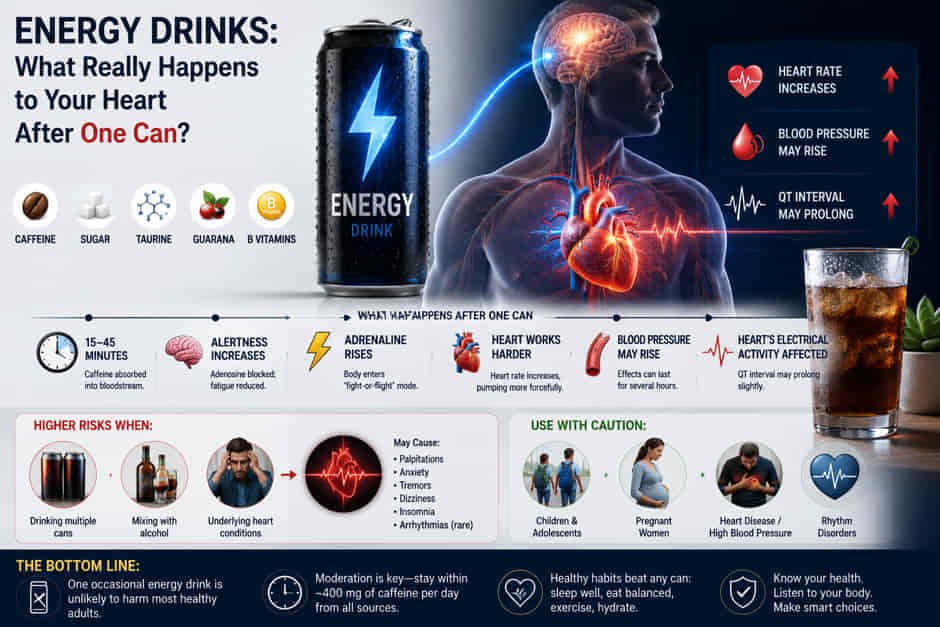
Energy drinks promise exactly what their name suggests, a quick boost of energy, improved focus, and better physical performance. Whether it’s students preparing for exams, office workers battling afternoon fatigue, or athletes looking for an extra edge, millions of people reach for these brightly coloured cans every day. But what actually happens inside your body, especially your heart, after drinking just one can?
The answer depends on the drink, your overall health, and how much you consume, but the effects begin within minutes.
Most energy drinks contain caffeine, sugar, and other stimulants such as taurine, guarana, and B vitamins. Within about 15 to 45 minutes of drinking one, caffeine is absorbed into the bloodstream and blocks adenosine, a brain chemical that promotes sleepiness. This increases alertness and temporarily reduces fatigue. At the same time, adrenaline levels rise, preparing the body for a “fight-or-flight” response.
Your heart responds to these changes by beating faster and pumping blood more forcefully. Blood pressure may also rise for several hours. For most healthy adults, these changes are temporary and usually not dangerous after consuming a single standard-sized energy drink. However, some studies have found that energy drinks can also temporarily affect the heart’s electrical activity by prolonging the QT interval, a measure of how the heart resets between beats. Although this change is usually small in healthy people, it may increase the risk of abnormal heart rhythms in individuals with underlying heart conditions or those taking certain medications.
The risks become greater when energy drinks are consumed in large amounts or mixed with alcohol. Drinking multiple cans in a short period can result in excessive caffeine intake, leading to palpitations, anxiety, tremors, dizziness, insomnia, or, in rare cases, serious arrhythmias. The high sugar content in many energy drinks can also contribute to weight gain, insulin resistance, and tooth decay if consumed regularly.
So, should you avoid energy drinks altogether?
Not necessarily. Most healthy adults can safely consume moderate amounts of caffeine, up to about 400 mg per day from all sources. However, children, adolescents, pregnant women, and people with heart disease, high blood pressure, or certain rhythm disorders should be particularly cautious. It’s also important to remember that caffeine is often hidden in coffee, tea, soft drinks, chocolate, and some medications, making it easy to exceed safe limits.
The real issue isn’t usually one occasional energy drink, it’s frequent consumption, oversized servings, and combining them with other stimulants. A can may provide a temporary burst of energy, but good sleep, regular exercise, balanced nutrition, and proper hydration remain the safest and most effective ways to keep your heart, and your energy levels, healthy.


