
For years, we’ve heard the warning: “Don’t eat after 8 p.m. if you want to lose weight.” Many people believe that eating late at night automatically leads to weight gain because the body supposedly “stores everything as fat” while we sleep. But is the timing of your meals really the problem, or is it what, and how much, you eat?
The answer is more nuanced than a simple yes or no.
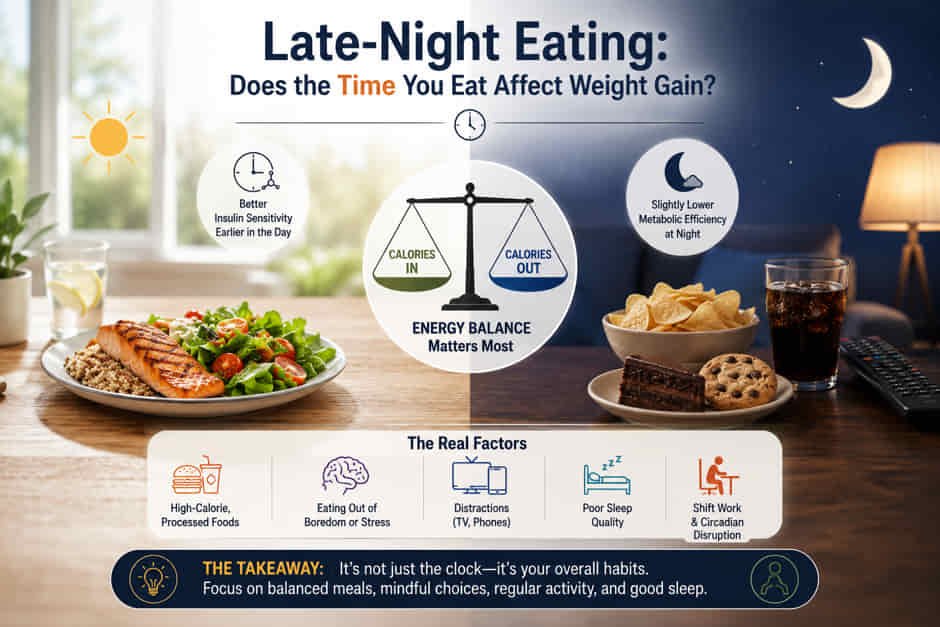
Body weight is primarily determined by energy balance, how many calories you consume versus how many you burn. From this perspective, eating the same meal at 7 p.m. or 10 p.m. doesn’t magically change its calorie content. If your total calorie intake remains the same, meal timing alone has a relatively small effect on weight.
However, our bodies do follow an internal biological clock, known as the circadian rhythm, which influences metabolism throughout the day. Research suggests that insulin sensitivity tends to be higher earlier in the day, meaning the body may process glucose more efficiently in the morning than late at night. Late-night eating may also slightly reduce calorie burning after meals and alter hormones involved in hunger and fullness. These changes are relatively modest but can become more significant over time.
The bigger issue is that late-night eating is often linked with unhealthy habits rather than the clock itself. Many people snack on calorie-dense foods such as chips, biscuits, ice cream, or sugary drinks while watching television or scrolling through their phones. Because these snacks are usually eaten out of boredom, stress, or habit instead of genuine hunger, they can easily add hundreds of extra calories without people noticing.
For shift workers, however, the situation is more complex. Regularly eating during the biological night has been associated with a higher risk of obesity, type 2 diabetes, and cardiovascular disease. Scientists believe this is partly due to disruption of the body’s natural circadian rhythm, although irregular sleep patterns and lifestyle factors also contribute.
So, does eating late at night cause weight gain?
Not directly. A healthy, balanced dinner eaten later in the evening is unlikely to make you gain weight on its own. What matters most is your overall diet, portion sizes, food choices, physical activity, and sleep quality. If you’re genuinely hungry at night, there’s no need to avoid eating, but choosing a nutritious, protein-rich snack is far better than mindlessly reaching for ultra-processed foods.
The real takeaway isn’t to fear the clock, it’s to build healthy eating habits that you can maintain, regardless of what time dinner is served.


