
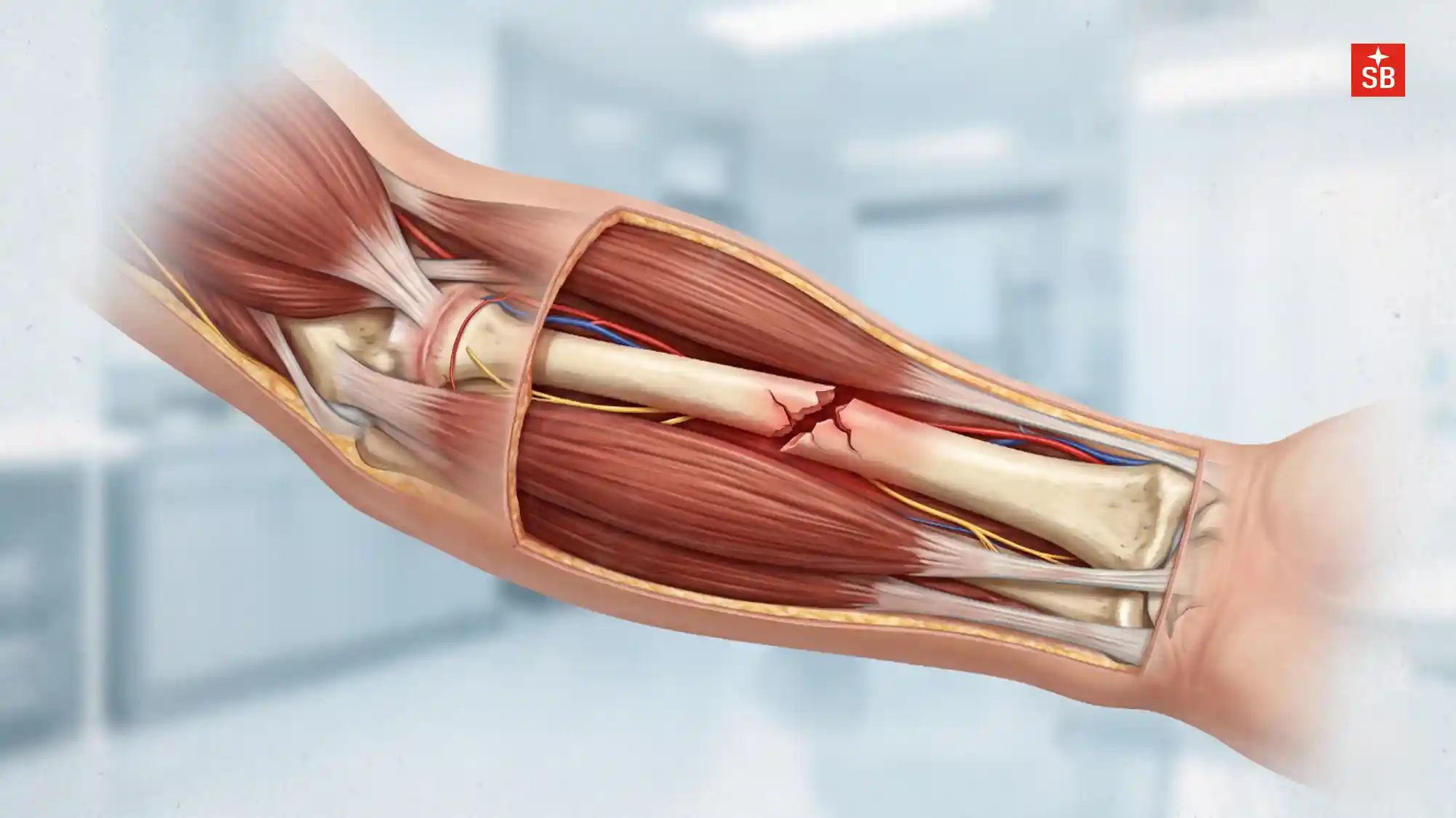
When a bone breaks, most of us imagine the repair happening inside the bone itself. But a fracture is not an isolated injury. Bone is surrounded by muscles, blood vessels, nerves and connective tissue and some of these neighbouring cells may play an important role in helping the bone heal.
Researchers have found that muscle cells can contribute to the repair of fractured bones, revealing a closer relationship between muscle and bone than previously understood. Bone healing happens in several stages. Soon after a fracture, the body forms a blood clot around the damaged area.
This is followed by inflammation, the formation of a temporary soft tissue structure called a callus, and eventually the replacement of this tissue with new, stronger bone. During this process, cells from surrounding tissues move toward the injury and release signals that coordinate repair. Muscle-derived cells can contribute to this environment and influence the behaviour of cells involved in bone formation.
One important group of cells is mesenchymal progenitor cells, which have the ability to develop into different types of connective tissue cells, including bone-forming cells. Muscle tissue has a population of cells that can respond to injury and contribute to regeneration.
Signals released by muscle cells influence nearby bone-forming cells, helping coordinate the repair process. Muscles and bones work together every time we move, and they develop from closely connected tissues during the body’s development. When one is injured, the other cannot simply be ignored.
Understanding this relationship can have important implications for people whose fractures heal slowly or fail to heal properly. Conditions such as severe muscle damage, ageing and prolonged immobilisation can affect the environment surrounding a fracture. Understanding how muscle contributes to bone repair could therefore help researchers develop treatments that encourage better healing.
Researchers are investigating exactly which muscle cells are involved, what signals they release and how these signals influence bone formation. A broken bone may look like a problem belonging only to the skeleton, but its repair is actually a team effort.
The muscles surrounding a fracture are not simply waiting for the bone to heal but they may be helping to make that healing possible.


