A patient twists in terrible pain on a hospital bed. The cancer pain is a raging beast, chewing through every nerve like a relentless predator. Every few hours, a nurse rushes in with a crushing pill. The patient swallows it, but their stomach is already raw from chemotherapy, triggering a wave of violent nausea. It is like trying to fill a leaking bucket, the medicine never gets the chance to do its full job. Within minutes, the pill is thrown up, wasted. Desperate, the medical team turns to an intravenous injection. The needle pierces the flesh, bringing a sharp, brutal sting. As the old proverb says, “Where there is pain, there is hope for healing.” For an hour, the drug floods the bloodstream like a tidal wave, making the patient dizzy and spaced out. But soon, the wave crashes, the drug level plummets, and the monster of pain wakes up again, screaming for the next dose. A doctor quietly says, “There has to be a better way.”
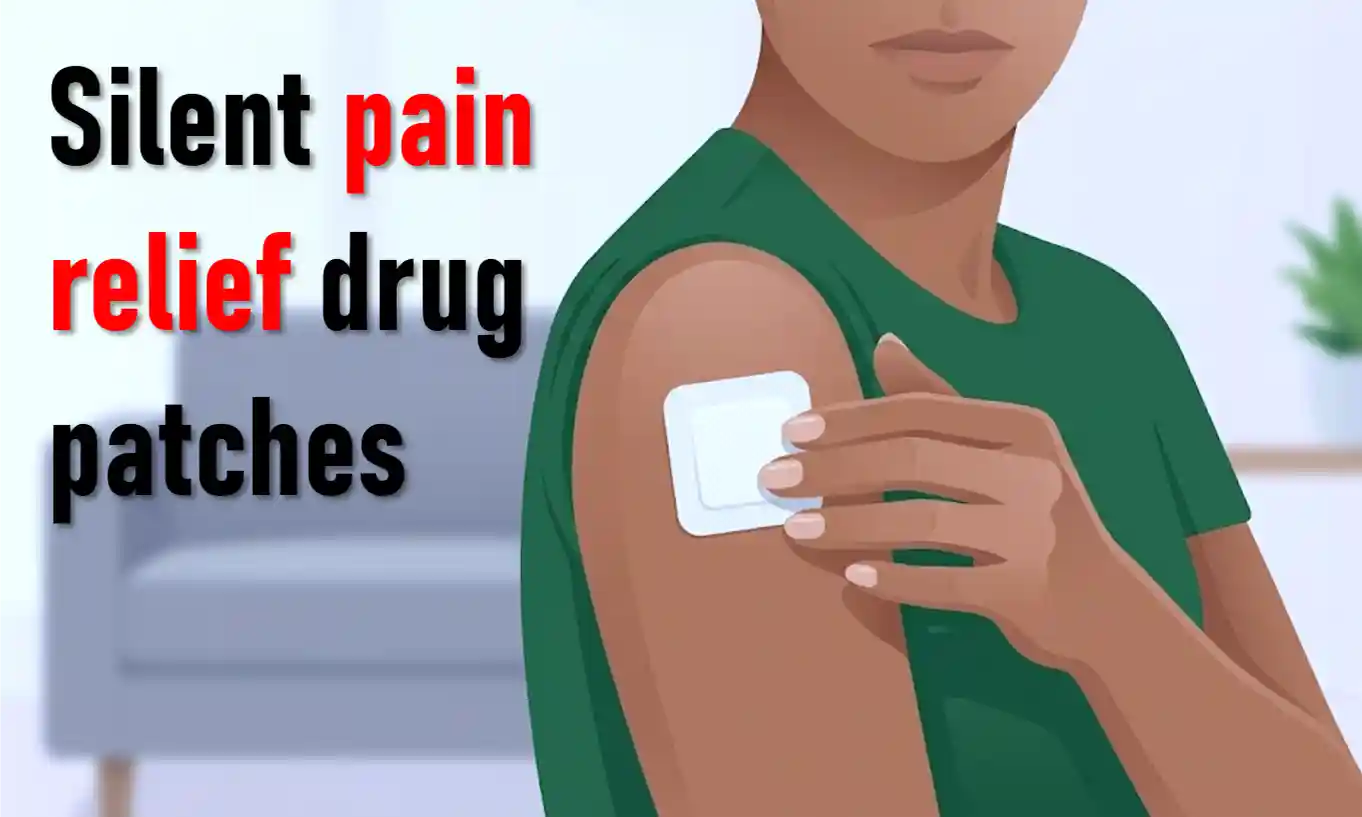
This dramatic, exhausting roller coaster of peak and valley agony is the daily reality of traditional medicine. It is a battle that leaves both patients and caregivers physically and emotionally tired. But then, a simple, unassuming sticker is pressed gently onto the patient’s shoulder. No needles. No swallowing. No nausea. It looks ordinary, but appearances can be deceiving. Hour after hour, day after day, this quiet guardian releases a perfectly steady, microscopic stream of relief directly through the skin. The beast is tamed. The patient breathes, smiles, and lives. This is the revolution of the medicated pain relief drug patch, the silent warrior of modern healthcare. Like a faithful watchman standing through the night, it keeps working even when the patient is resting.
The Mechanics of the Magical Sticker, How It Works
How does a flat piece of tape conquer pain that a heavy duty pill struggles to fight? It is like a tiny postman delivering an important letter straight to the correct address without taking unnecessary detours. The secret lies in a masterclass of microscopic engineering called the Transdermal Drug Delivery System, or TDDS. In simple words, “transdermal” means delivering medicine through the skin. The human skin, specifically the outer layer known as the stratum corneum, is designed like a strong brick wall to keep the outside world out. It is the body’s natural security guard, always standing alert. Pain patches do not just sit on the skin, they cleverly cross this wall using brilliant science.
A patch is a carefully designed, multi layered system. At its core is a drug reservoir or a drug in adhesive matrix that holds the active medication. Think of it as a tiny warehouse storing medicine safely until it is needed. To help the drug move through the skin’s tough barriers, scientists use special chemicals called permeation enhancers. These enhancers act like molecular keys, temporarily loosening the tight lipid gaps between skin cells without causing damage. They do not break the wall, they simply unlock a small gate for a short time.
Once the door is gently opened, the medication molecules drift steadily downward. They bypass the stomach entirely, slipping quietly into the dense network of capillaries just beneath the skin. Capillaries are the body’s smallest blood vessels, carrying medicines and oxygen throughout the body. From there, the drug enters the bloodstream at a controlled, perfectly steady rate, maintaining a strong line of defence against pain for 12 hours, 24 hours, or even a full week. Unlike pills that arrive like a sudden storm, the patch works like a calm river that flows without interruption. Scientists often describe this as controlled drug release, where the medicine reaches the body slowly and continuously. As one researcher might say, “Slow and steady often wins the race, especially in pain management.”
This smooth and steady delivery is one of the greatest strengths of transdermal patches. Instead of forcing the body to handle sudden bursts of medicine followed by long gaps, the patch keeps drug levels balanced. It is like keeping a lamp glowing steadily instead of switching it on and off every few hours. This simple idea improves comfort, reduces unwanted side effects, and allows patients to focus more on living than on counting the hours until the next dose. Sometimes, the smallest solutions quietly create the biggest revolutions.
The War of Delivery, Patches vs. Pills and Injections
To truly appreciate the patch, we must look at the major limitations of its rivals, oral medicines and injections. Every method has its own strengths and weaknesses, but the journey of a medicine is just as important as the medicine itself. It is like choosing the safest road to reach the same destination. As the saying goes, “A smooth sea never made a skilled sailor,” and modern medicine has learned valuable lessons from every method of drug delivery.

When you swallow a painkiller, it travels down a long and challenging road. It first enters the stomach’s highly acidic environment, where it can sometimes cause irritation, ulcers, and even bleeding. For some patients, this journey is far from comfortable. If it survives the stomach, it is absorbed through the intestine and reaches the liver first, a crucial checkpoint known as first pass metabolism. In medical science, first pass metabolism means that the liver breaks down a significant part of the drug before it reaches the rest of the body. The liver acts like a strict customs officer, carefully checking every traveller before allowing entry. During this process, the liver destroys a considerable percentage of the medicine before it ever reaches your aching lower back or throbbing joints.
To make matters worse, pills often create a sudden spike in drug levels inside the body. It is like pouring an entire bucket of water onto a thirsty plant instead of watering it slowly. The medicine may briefly become too concentrated, increasing the chances of side effects, before its level quickly falls. As the concentration drops, the pain returns, forcing the patient to take another dose. This repeated rise and fall is known as the peak and trough effect. It is a classic case of “too much, too soon, then too little, too late.”
Injections, on the other hand, work quickly and bypass the liver. They are often lifesaving in emergencies and are essential for many medical conditions. However, they also have their own drawbacks. Many people fear needles, making injections stressful and uncomfortable. The injection site may develop pain, bruising, or, in rare cases, infection. In addition, injections can still produce rapid peaks and falls in drug concentration, similar to oral medicines. It is like switching a bright light on and off repeatedly instead of allowing it to shine steadily. A nurse may reassure a worried patient, “The injection will help quickly, but we know it is not always comfortable.”
The transdermal patch wins this battle by choosing steady control over sudden force. Rather than flooding the bloodstream all at once, it quietly delivers medicine through the skin at a slow and controlled pace. By absorbing directly through the skin, it completely bypasses first pass metabolism and avoids the gastrointestinal tract altogether. This reduces stomach related side effects and allows more of the medicine to reach its intended target. The patch behaves like a patient gardener watering a plant drop by drop, allowing healthy growth instead of causing overflow.
The patch also acts like an automated slow drip intravenous system, but without the needle. It keeps drug levels remarkably stable in the bloodstream, reducing sudden highs and lows. Stable drug concentration often means better pain control and fewer unwanted side effects. This process is known as sustained drug delivery, one of the biggest advantages of modern transdermal therapy.
Another important benefit is safety. If a patient develops an unwanted side effect, they do not have to wait for a swallowed tablet to pass through the digestive system. They can simply remove the patch, immediately stopping further drug delivery through the skin. Although some medicine already present in the body continues to act for some time, removing the patch quickly prevents additional drug absorption. This simple action gives both doctors and patients greater control over treatment. Sometimes, the easiest solution is also the smartest one.
The Weapons Checklist, Major Uses in Pain Relief
Pain patches are carefully designed with different medicines, each selected to fight a specific type of pain. Just as every key opens a different lock, every patch has its own special purpose. Modern pharmacology matches the right medicine with the right condition to achieve the best possible relief.
The Anti Inflammatory Avengers, NSAIDs
Patches containing Diclofenac belong to a group of medicines called Non Steroidal Anti Inflammatory Drugs, commonly known as NSAIDs. These medicines reduce inflammation, swelling, and pain in muscles and joints. They are widely used for arthritis, sports injuries, sprains, and muscle strains. Instead of affecting the whole body strongly, the medicine works mainly near the painful area, making treatment more focused. It is like sending a firefighter directly to the burning room instead of flooding the entire building.
The Nerve Shield, Lidocaine
For patients suffering from post herpetic neuralgia, the severe nerve pain that can remain after shingles, or diabetic nerve pain, Lidocaine patches provide valuable relief. Lidocaine blocks pain signals travelling through nearby nerves before they reach the brain. In simple words, it temporarily quietens the nerves that are shouting pain messages. It is much like lowering the volume of a noisy loudspeaker until peace returns.
The Counter Irritant Distractors
Some over the counter patches contain Menthol, Capsaicin, or Methyl Salicylate. Instead of directly blocking pain, these ingredients create cooling or warming sensations on the skin. These new sensations compete with pain signals reaching the brain, reducing the feeling of discomfort. Scientists call this counter irritation. It is similar to rubbing your elbow after accidentally hitting it, the new sensation helps distract the brain from the original pain. It is a clever example of the saying, “Fight fire with fire,” although in this case, the battle is gentle and carefully controlled.
The Heavy Armour Opioids
When cancer pain or severe chronic pain becomes extremely difficult to manage, prescription opioid patches such as Fentanyl or Buprenorphine may be used under close medical supervision. These powerful medicines act on the central nervous system to provide long lasting pain relief over several days. Because opioids are highly potent and carry risks of dependence and serious side effects, they are prescribed only when clearly needed and monitored carefully by healthcare professionals. Like a powerful engine, they must always be handled with great responsibility. As doctors often remind patients, “Strong medicines demand strong care.”
The Biological Boundary, Limitations of the Patch
As remarkable as transdermal patches are, they are not all powerful. Every scientific technology has its limits, and drug patches are no exception. Even the smartest key cannot open every lock. The skin is an excellent protector, carefully deciding what may enter the body and what must stay outside. It quietly reminds us that nature built strong defences long before modern medicine arrived.
The skin acts as a stubborn gatekeeper that allows only certain types of drug molecules to pass through. To travel through a conventional transdermal patch by passive diffusion, a drug molecule must usually be very small, generally less than 500 Daltons in molecular weight. Dalton is simply a scientific unit used to measure the size of molecules. It must also be lipophilic, meaning it dissolves easily in fats and oils. This property allows the medicine to move through the oily outer layers of the skin. Scientists often call this the “500 Dalton Rule,” one of the most important principles in transdermal drug delivery.
If a drug molecule is too large, too heavy, or too water loving, it cannot cross the skin barrier effectively. It simply remains on the surface of the patch instead of entering the body. It is like trying to push an elephant through a narrow doorway, the journey simply cannot happen. This is not a failure of the medicine, but a natural limitation of the skin’s protective barrier.
Some patients may also develop skin irritation, redness, itching, rashes, or allergic reactions because of the adhesive that keeps the patch attached to the body. Although these reactions are usually mild and temporary, they can make long term use uncomfortable for certain individuals. Doctors therefore recommend applying each new patch to a different area of healthy skin. A little care today can prevent bigger problems tomorrow.
Another important limitation is speed. Drug patches release medicine slowly and steadily, making them unsuitable for medical emergencies that require immediate relief. A person experiencing sudden, severe pain, a rapidly worsening migraine, or another emergency cannot depend on a patch alone. In such situations, faster methods such as injections or rapidly acting medicines are needed. The patch is more like a patient marathon runner than a hundred metre sprinter. Slow and steady is its greatest strength, but also its greatest limitation.
The Great Transdermal Frontier, Can We Patch Insulin and Thyroid Drugs
If transdermal patches are so effective, many people naturally ask, “Why can’t we use them for insulin or thyroid medicines?” It is a reasonable question, and the answer lies in chemistry, molecular size, and human biology. Sometimes, the biggest obstacles are the ones we cannot see.
Thyroid medicines, such as levothyroxine, require extremely accurate dosing and absorption to maintain normal hormone levels in the body. Even small changes in the amount absorbed can affect treatment. For this reason, oral tablets remain the standard method of therapy for most patients.
Insulin presents an even greater challenge. Unlike ordinary pain medicines, insulin is a protein made up of many amino acids joined together. It is a giant compared with the tiny molecules that normally pass through the skin. A typical insulin molecule weighs nearly 6,000 Daltons, far above the skin’s approximate 500 Dalton limit. Trying to push insulin through an ordinary skin patch is like trying to pass a football through the eye of a needle. The skin simply refuses to allow such a large molecule to cross.
However, science never stands still. Researchers have found new ways to overcome this molecular roadblock. One of the most exciting innovations is the Smart Microneedle Patch. These advanced patches contain hundreds of microscopic needles made from safe, biocompatible materials. The needles are so tiny that most people hardly feel them. They gently cross the outer skin barrier without reaching the deeper nerves that produce pain. In a way, they quietly knock on the skin’s front door instead of trying to break through its walls.
Once inside the upper layers of the skin, these tiny needles deliver insulin directly into the tissues, allowing the medicine to enter the bloodstream more effectively. Scientists are also developing dissolving microneedles that slowly disappear after delivering their medicine, leaving behind no sharp waste. It is a beautiful example of engineering meeting biology.
Researchers are exploring another exciting approach using special chemical compounds and ionic liquids. These substances temporarily loosen the tightly packed lipid pathways within the skin, making it easier for larger molecules, including certain peptides such as insulin, to move across the barrier. Think of it as briefly widening a narrow pathway so that larger travellers can safely pass through. Current research published in leading scientific journals, including Nature, continues to improve these technologies.
Although completely passive patches for insulin or thyroid medicines are still facing clinical challenges, active microneedle patches and other smart delivery systems are rapidly changing the future of medicine. Clinical trials are helping scientists evaluate their safety, effectiveness, and long term reliability before they become widely available. As one scientist might say, “Today’s experiment could become tomorrow’s everyday treatment.”
The global transdermal drug delivery market continues to grow rapidly. According to market reports from Grand View Research and Fact.MR, pain management remains the largest application of transdermal patches, accounting for approximately 22.9 to 46 percent of the global market. This remarkable growth reflects increasing confidence in safer, more convenient, and patient friendly drug delivery systems.
The future of medicine may not always arrive through a syringe or a tablet. Sometimes, it arrives quietly as a small patch resting gently on the skin. Like a silent healer standing faithfully beside the patient, the transdermal patch proves that great innovations do not always make the loudest noise. In medicine, as in life, gentle solutions often leave the deepest impact.