
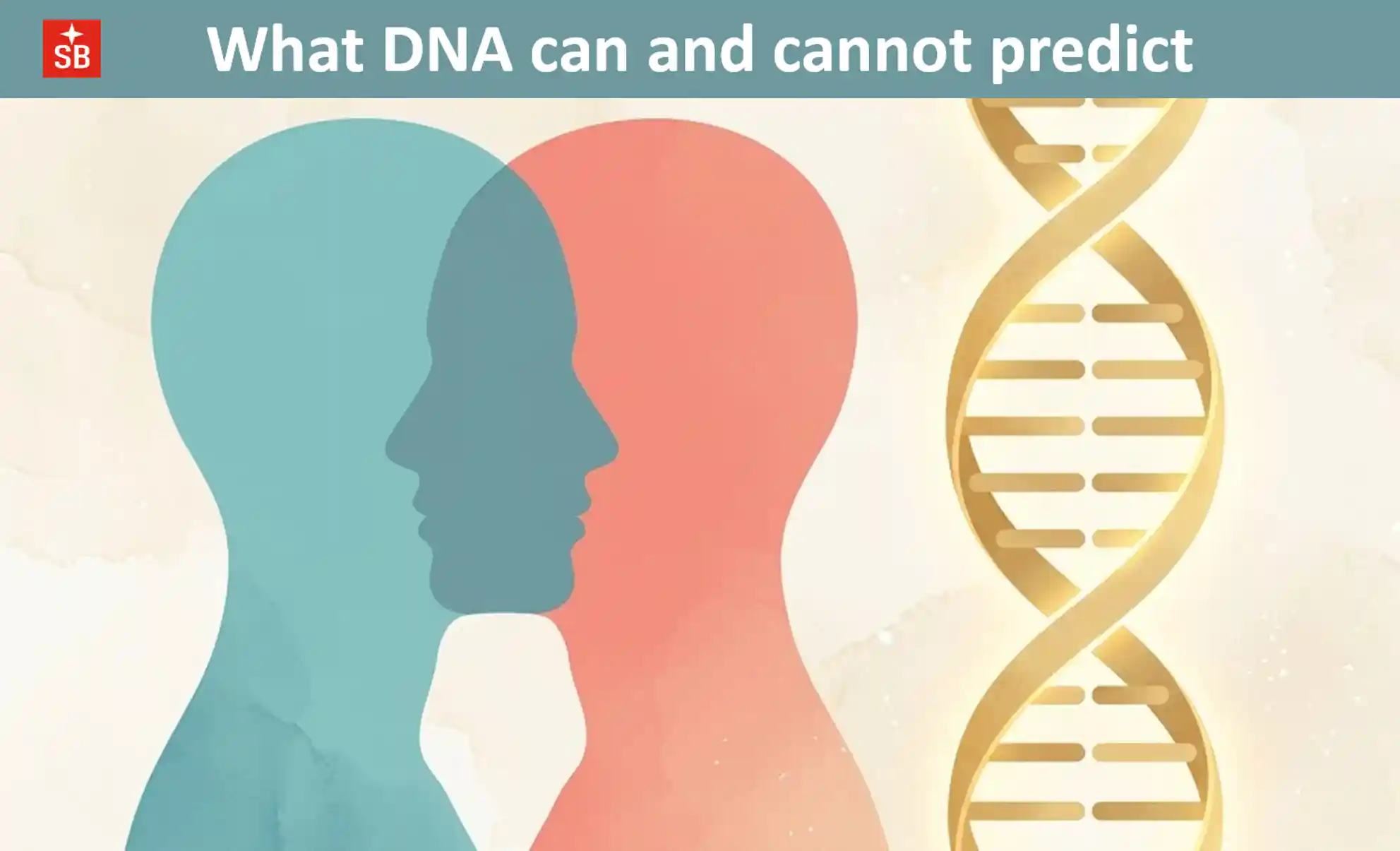
Mental illnesses such as depression, anxiety, bipolar disorder, and schizophrenia often run in families. If a parent or sibling has one of these conditions, it is natural to wonder, “Are mental illnesses inherited? Could a genetic test reveal whether you will develop one in the future?” These are questions that quietly knock on many minds. It is like holding a family photo album and wondering whether it also contains a map of your future health.
“Forewarned is forearmed,” but knowledge should bring awareness, not fear.
The answer is both fascinating and reassuring.
Genes do influence the risk of developing many mental illnesses, but they are not destiny. Think of genes as the blueprint of a house, not the people who decide how the house will be lived in. Every person inherits thousands of genes from their parents, and many of these genes contribute to how the brain develops and functions.
Large-scale genetic studies have shown that conditions such as schizophrenia, bipolar disorder, autism spectrum disorder, major depression, and attention-deficit/hyperactivity disorder (ADHD) all have a genetic component. However, unlike disorders caused by a single faulty gene, most mental illnesses are polygenic, meaning they are influenced by hundreds or even thousands of genetic variants, each contributing only a very small increase in risk. It is a story written by many tiny letters rather than one bold word.
Because no single gene determines whether someone will develop a mental illness, scientists have developed polygenic risk scores (PRS). These scores combine the effects of many genetic variants to estimate a person’s inherited susceptibility to a particular condition. You can think of a PRS as a weather forecast. It may suggest a greater chance of rain, but it cannot tell exactly when or where every drop will fall. While this approach has advanced rapidly in research, current polygenic risk scores are not accurate enough to predict with certainty whether an individual will develop a mental illness. Science is opening new doors, but many rooms are still waiting to be explored.
Genes are only one part of the picture.
Environmental and lifestyle factors play equally important roles. Childhood experiences, chronic stress, trauma, sleep, physical health, substance use, social support, and many other influences interact with a person’s genetic makeup throughout life. It is like an orchestra where genes play one instrument, while life experiences conduct the entire performance.
Two people with similar genetic risk can have very different mental health outcomes depending on these experiences. As the saying goes, “Different roads lead to different destinations,” even when the starting point is the same.
Researchers are also studying epigenetics, chemical changes that affect how genes are switched on or off without altering the DNA sequence itself. It is as though certain pages of a book are highlighted while others remain quietly closed. Stress, nutrition, and environmental exposures may influence these changes, offering another explanation for why identical twins, who share nearly all of their DNA, do not always develop the same mental illness. In a way, the genes whisper, but the environment often decides how loudly that whisper is heard.
So, should you take a genetic test to predict your mental health?
For most people, the answer is not yet. While genetic testing has an established role in diagnosing some rare neurological and developmental disorders, it currently has limited value for predicting common mental illnesses in routine clinical practice. It is important not to jump the gun, because today’s science is still refining these powerful tools.
Scientists continue to improve these methods, but they are not designed to provide definitive answers for individuals. As one researcher might say, “We are reading more pages of the genetic book every year, but the final chapter is still unwritten.”
The encouraging news is that genetic risk is not a life sentence. Early support, healthy sleep, regular exercise, strong social connections, stress management, and timely mental health care can all influence long-term wellbeing. Every positive habit becomes another brick in the strong foundation of a healthy mind. Small daily choices may seem ordinary, but together they can make an extraordinary difference.
Your genes may load the gun, but they do not decide whether it will ever be fired. In mental health, biology matters, but so do your experiences, your environment, and the choices you make throughout life. Your DNA writes the opening lines, but you still hold the pen that shapes much of the story ahead.


