
Edited By Dr. N. Ashok Vardhan
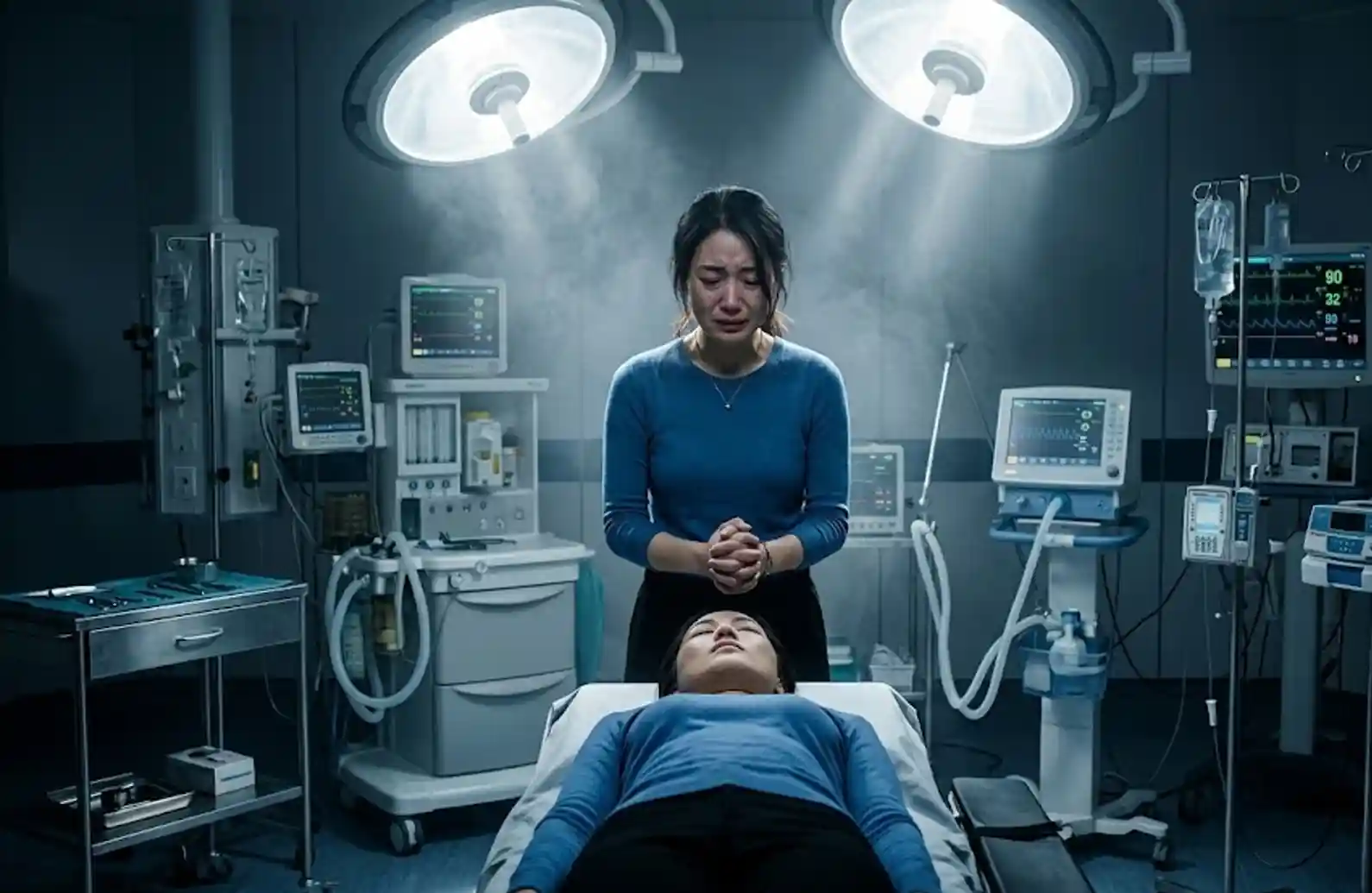
Closing your eyes in a bright, modern hospital room, surrounded by smiling doctors, should be the beginning of healing. Yet, for some patients, waking up feels like stepping into a terrifying psychological thriller. You look at your spouse, but you do not see love, you see a monster. You look at the nurse, but you do not see help, you see an enemy. You begin to scream, kick, and sob, but your own mind has locked you inside a room where logic cannot breathe. It is like standing inside a house where every mirror suddenly shows a stranger. This is not a horror movie. This is the reality of Emergence Delirium, the chaotic twilight zone of surgery. It is crucial to remember that not every peaceful awakening is as calm as it appears.
The great brain betrayal
To understand this frightening condition, we must look at how the brain wakes up from a deep, artificial sleep. Think of your brain as a giant office building. When the anesthesiologist gives you drugs, they turn off all the lights at once. But when surgery ends, the lights do not turn back on at the same time. It is more like a city after a power cut, where some streets light up while others remain in darkness. The basement, the primitive, emotional part of your brain called the amygdala, snaps awake instantly. It senses danger and whispers, “Run, something is wrong.” Meanwhile, the top floor of your prefrontal cortex, the logical boss that tells you where you are and keeps you calm, is still completely asleep. For a brief but terrifying window, you are an emotional vehicle with the accelerator pressed to the floor, but nobody is steering the wheel. The brain becomes a ship sailing through a storm without its captain.
During the “window period” of emergence delirium, the brain experiences a chemical traffic jam because the anesthesia drugs leave different brain regions at different speeds. Like passengers leaving a crowded stadium through different gates, some brain cells recover quickly while others take longer. This temporary imbalance creates confusion, fear, and disorientation.
Here is the quick chemistry behind the chaos, highlighted by three core concepts.
• Asymmetric Reawakening: Anesthesia suppresses the central nervous system by boosting inhibitory chemicals, such as GABA, and blocking excitatory ones, such as glutamate. When waking up, the emotional centre, the amygdala, clears these drugs and snaps awake first, while the logic centre, the prefrontal cortex, remains chemically suppressed and asleep.
• Neurotransmitter Chaos: As the anaesthetic gas or fluid leaves the brain tissue, it causes a sudden, uneven surge of dopamine and norepinephrine, triggering the fight or flight response. It is as if thousands of alarm bells ring together before anyone checks whether there is a real fire.
• Acetylcholine Crash: The brain experiences a temporary, severe drop in acetylcholine, the exact chemical required for memory, orientation, and recognising where you are. Without this important messenger, familiar faces can suddenly seem unfamiliar.
The brain is flooded with chemical fear and adrenaline but lacks the memory or logic chemicals needed to understand that the surgery is over and it is safe. Ironically, the body has survived the operation, but the mind briefly believes it is still in danger.
A horrific illusion
Consider the real-life story of Ram, a 35-year-old mild-mannered teacher and a loving friend. The rain slammed against the road as the world spun, and headlights swallowed Ram and his best friend, Manu, in a horrific car crash. Hours later, Ram’s primitive brain snapped awake in the recovery room while the logical centres of his mind remained frozen under the fading grip of anesthesia. Trapped in a terrifying chemical twilight zone, his glitching mind twisted the nurse’s calm words into a horrifying illusion, Manu was dead.
A wave of pure, unfiltered agony crashed over him. Ram erupted into a primal, guttural scream, violently thrashing and pulling out his IV lines as blood splattered across the pristine sheets. His fear became a roaring storm that drowned every voice of reassurance. For fifteen agonising minutes, he sobbed inconsolably for a ghost, drowning in profound grief that felt completely real. As the saying goes, “Seeing is believing,” but in this case, the brain believed something that never happened.
Then, as the anaesthetic fog suddenly cleared and the logic centre of his brain turned back on, the phantom smoke vanished. Ram blinked away his tears, looked towards the next hospital bed, and saw Manu sitting up, bandaged but very much alive. The heartbreaking loss had been nothing more than a cruel trick played by a brain that was still finding its way back to reality.
The tears of the innocent
While adults like Ram can become aggressive, children often experience a different kind of heartbreak during this window period. Maya, a four-year-old girl, went to the hospital to have her tonsils removed. When she woke up, her mother reached out to comfort her.
But Maya did not see her mother. She stared right through her with blank, hollow eyes that reflected pure confusion. She began to cry, not a normal cry, but an inconsolable, primal shriek of terror that echoed through the hospital hallway. It was as though fear itself had found a voice. She thrashed her tiny body so violently that she nearly broke her stitches. Her mother wept, pleading softly, “Maya, it is me, Mama is here.” But Maya was trapped inside a nightmare with her eyes wide open. Her little mind had become a maze where even love could not find its way.
After twenty agonising minutes, Maya suddenly stopped, blinked, smiled, and asked for apple juice. The ghost had quietly left, and the cheerful little girl had returned as if nothing had happened. Like clouds moving away to reveal the morning sun, clarity had finally returned.
This emotional imbalance is a powerful reminder that our feelings are deeply influenced by brain chemistry. Anesthesia does not control your emotions, it temporarily shatters the glass cage that normally keeps fear and reason in balance. Even the strongest mind can lose its compass for a short while when the brain’s chemical messengers fall out of step.
For those fifteen to thirty minutes in the recovery room, a patient is not truly themselves. They are a passenger trapped inside a glitching biological machine, waiting patiently for the lights of logic to turn back on. As one doctor might gently reassure a worried family, “Do not be frightened, this confusion is temporary, and your loved one will soon be themselves again.” When the final lights come back on, the mind once again finds its way home.


