Imagine needing a new liver, kidney, or heart and, instead of waiting months or years for a donor, receiving replacement tissue grown from your own cells. It sounds like science fiction, but researchers are steadily turning parts of this idea into reality.
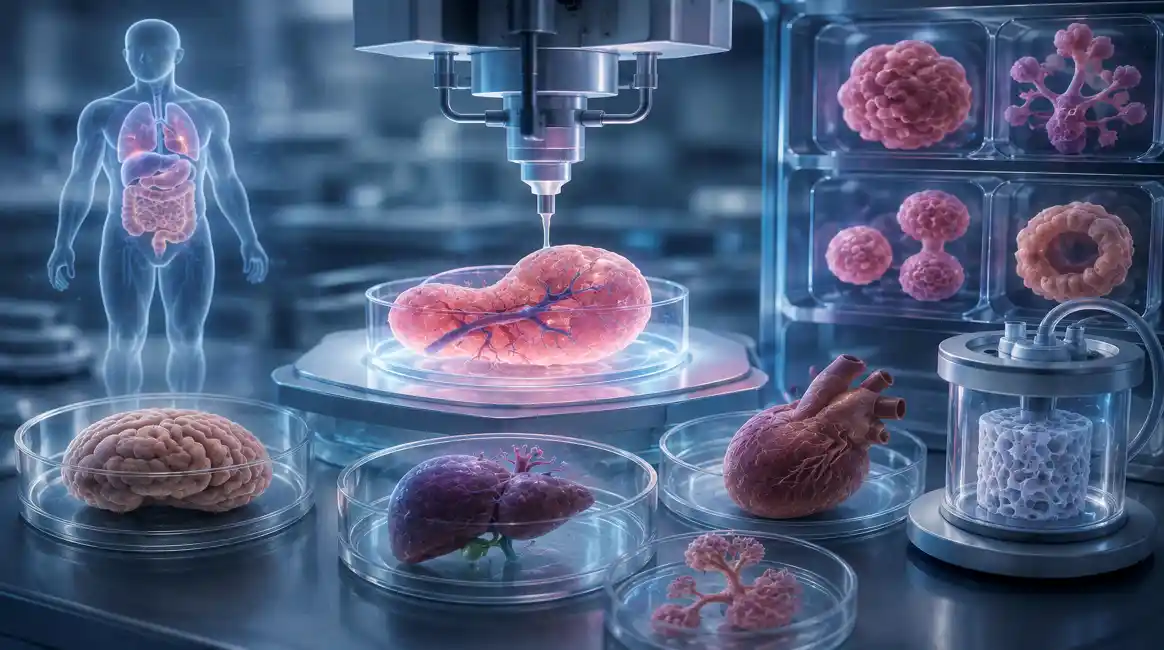
The field driving this progress is regenerative medicine an area of biomedical science focused on repairing, replacing, or regenerating damaged tissues and organs. Scientists are combining stem cells, tissue engineering, biomaterials, and increasingly sophisticated organoid technologies to recreate aspects of human organs in the laboratory.
One of the most exciting developments is the rise of organoids.
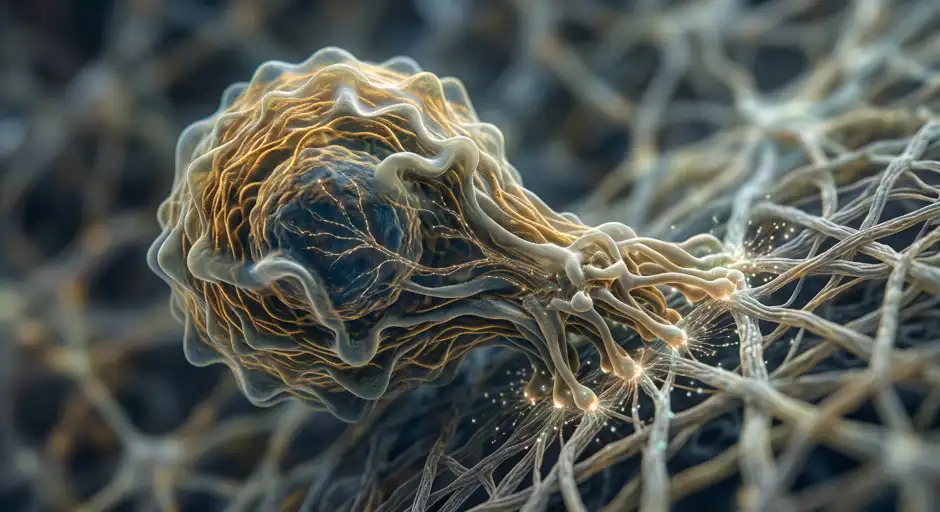
Organoids are three-dimensional, miniature tissue structures grown from stem cells that can reproduce some of the organisation and functions of real organs. Researchers have created organoids resembling parts of the brain, intestine, liver, kidney, lung, and pancreas. Although these structures are much simpler than fully developed human organs, they provide scientists with powerful models for studying development, disease, and potential treatments.
Another approach is tissue engineering. Instead of growing an entire organ from scratch, researchers can combine living cells with biological or synthetic scaffolds that provide structural support. Scientists are investigating whether these engineered tissues could eventually repair damaged heart muscle, skin, cartilage, blood vessels, and other tissues.
The most ambitious goal is creating fully functional replacement organs.
Researchers are exploring several strategies, including growing tissues from a patient’s own cells, using biomaterial scaffolds, and modifying animal organs so they can potentially be transplanted into humans. If successful, these approaches could help address one of medicine’s biggest problems: the shortage of donor organs.
Using a patient’s own cells could offer another major advantage reducing the risk of immune rejection. However, this does not mean personalised organs are ready for routine transplantation. Scientists still need to solve major challenges involving blood-vessel formation, nerve integration, immune compatibility, structural complexity, and long-term function.
There is also a huge difference between growing a small organoid and growing a complete human organ. A kidney, for example, contains multiple specialised cell types arranged into highly organised structures connected to an intricate network of blood vessels, nerves, and ducts. Reproducing all of this accurately remains extremely difficult.
So, will we soon be able to grow any replacement organ we need?
Probably not yet but the direction of research is remarkable.
Organoids are already transforming how scientists study human disease, while tissue engineering and regenerative medicine are gradually moving from laboratory experiments toward clinical applications.
The future of transplantation may therefore look very different from today’s system. Instead of asking “Whose organ can we transplant?”, medicine may eventually ask a very different question:
Source: