For decades, biology textbooks have presented the genetic code as one of life’s most fundamental rules. Three-letter sequences of DNA and RNA, called codons, tell cells which amino acids to add when making proteins. Three codons UAA, UAG, and UGA are traditionally known as stop codons, signalling the cellular machinery to end protein production.
But nature has never been particularly interested in following our textbooks perfectly.
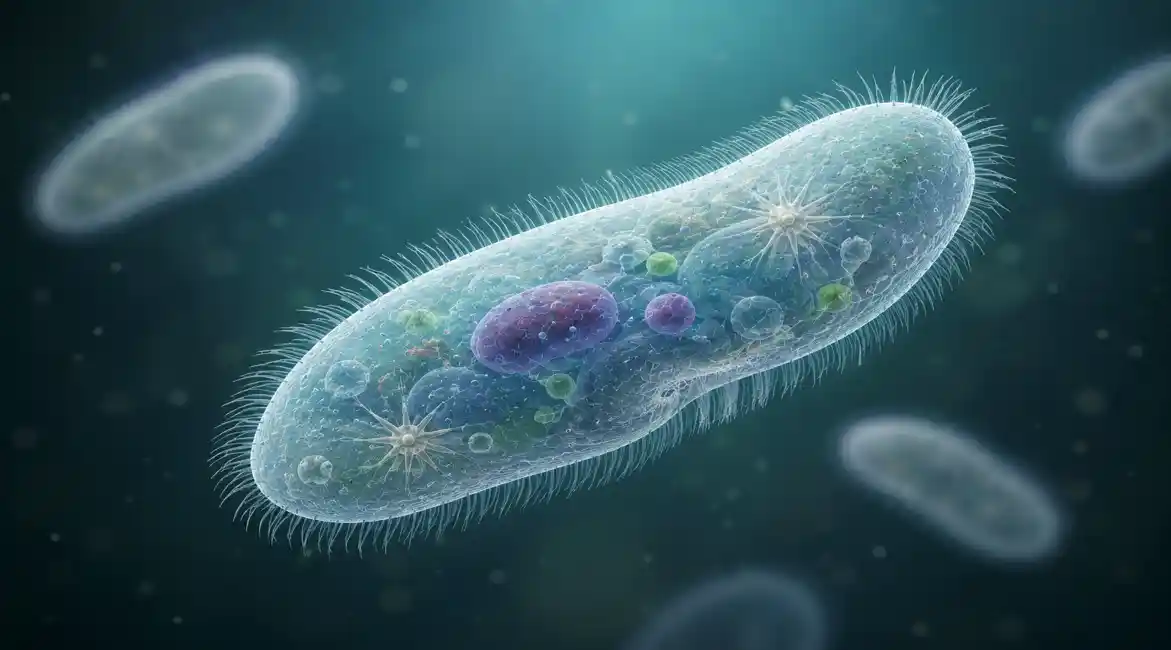
Scientists have discovered microorganisms with genetic codes that differ from the standard code used by humans and most other organisms. One of the most fascinating examples comes from certain ciliates, single-celled organisms that have independently evolved unusual ways of interpreting codons.
In some ciliates, codons that normally signal “stop” have been reassigned to specify amino acids. This means that the same three-letter genetic sequence can have a different meaning depending on the organism reading it. Researchers have also discovered organisms in which UGA, normally a stop codon, can be reassigned to encode the amino acid tryptophan.
Why does this matter?
The genetic code is often described as universal, but it is actually nearly universal. Most organisms use essentially the same system, which is one reason scientists believe the code originated very early in the history of life. The existence of exceptions shows that biological systems can evolve while retaining the basic information-processing machinery of the cell.
One particularly intriguing discovery involves Euplotes, a group of ciliates whose genetic code contains unusual reassigned codons. Researchers have found that these organisms can use codons that function as termination signals in most life forms to encode amino acids instead. This requires specialised molecular machinery that allows the cell to correctly interpret the altered code.
Scientists are interested in these organisms not simply because they are biological oddities. Understanding how genetic codes evolve could reveal important clues about the origin of life, evolution, and the flexibility of cellular machinery.
It could also have practical applications. Researchers studying synthetic biology are exploring whether genetic codes can be deliberately redesigned to make cells produce proteins containing unusual amino acids or to create biological systems that are more resistant to certain viruses.
So, did this microbe actually “break” the genetic code?
Not quite. It didn’t break the rules it evolved different rules.
The genetic code may be remarkably conserved across life, but it isn’t completely frozen. These unusual microbes demonstrate that even one of the most fundamental systems in biology can change under evolutionary pressure.
And that may be one of the most important lessons in genetics: nature’s rules are often less absolute and far more adaptable than we once thought.
Source: