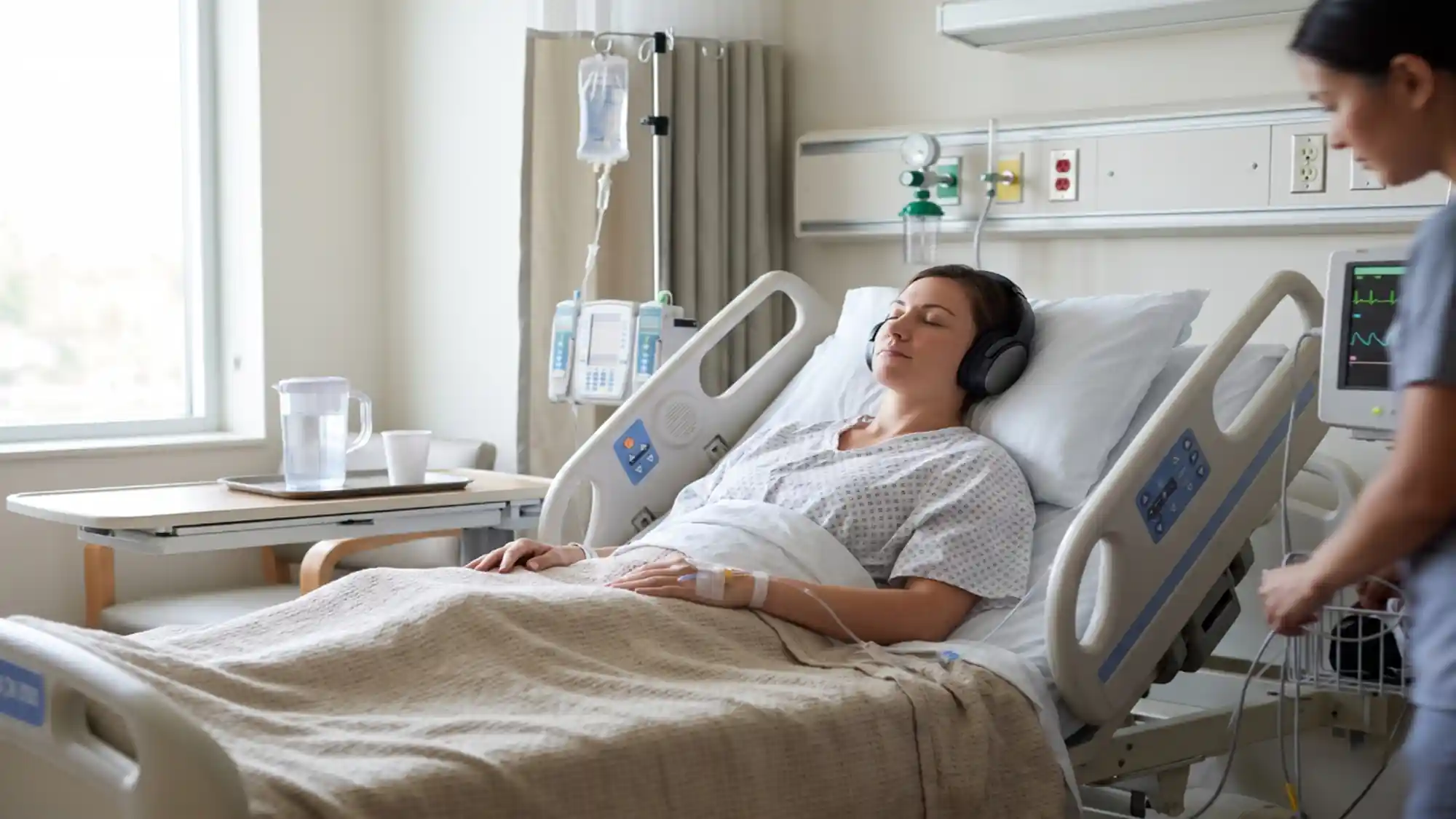
When someone undergoes major surgery, the choice of anaesthesia can influence more than simply keeping them unconscious. Doctors also want patients to wake up safely, avoid complications and return home as soon as possible. But does one commonly used method actually help patients recover better than another? A large UK clinical trial suggests that, for overall recovery, neither method has a clear advantage. The VITAL trial, led by researchers at the University of Warwick and The Royal Marsden NHS Foundation Trust, involved approximately 2,500 patients across 49 National Health Service hospitals. Published in JAMA in 2026, it is one of the largest trials to directly compare the two approaches.
General anaesthesia keeps patients unconscious and unaware during an operation. It can be maintained using different medicines, including intravenous drugs and inhaled anaesthetic gases. The first approach, called total intravenous anaesthesia (TIVA), delivers anaesthetic medication continuously into a vein. In the trial, researchers used propofol, a widely used intravenous anaesthetic. The second approach uses volatile inhalational anaesthetics, such as sevoflurane or isoflurane, which patients receive through their breathing circuit. Both techniques are established parts of modern surgical care, but anaesthetists have debated whether one leads to better recovery or fewer side effects. To investigate, researchers randomly assigned patients aged 50 and older who were undergoing planned major non-cardiac surgery to receive one of the two techniques.
What did the trial reveal?

The main measure was the number of days patients were alive and at home during the first 30 days after surgery. The results were remarkably similar: patients receiving TIVA averaged 22.5 days alive and at home, compared with 22.4 days for those receiving inhaled anaesthesia. Researchers also found no meaningful differences in major postoperative complications, delirium or deaths assessed at 30 days, 90 days and six months. These findings suggest that switching to intravenous anaesthesia does not automatically translate into better overall recovery. However, the results were not identical in every respect. Patients receiving TIVA reported lower rates of thirst, hoarseness, nausea and vomiting on the day after surgery. These differences suggest that the intravenous approach may offer some advantages in early comfort, even though it did not improve the trial’s primary recovery outcome.
What does this mean for patients? The findings support continuing to choose anaesthesia according to individual patient needs, the clinical team’s expertise and local resources, rather than assuming one technique is universally superior. A separate economic evaluation also found broadly similar costs and quality-of-life outcomes between the approaches. There are limitations. The trial was not blinded, which may influence patient-reported symptoms, and all participants were treated within the UK NHS. The results may not apply equally to every type of operation or patient. The study does not mean anaesthesia choices are unimportant. Instead, it offers reassuring evidence that two established techniques can achieve similar overall recovery outcomes for many older adults undergoing major planned surgery. Sometimes, the most useful finding is not discovering a clear winner, but learning that clinicians already have more than one effective option.
Sources
Jhanji, S., Booth, K., Hiller, L., [remaining authors], & VITAL Trial Team. (2026). Total intravenous vs volatile inhalational anesthesia for major noncardiac surgery: A randomized clinical trial. JAMA. https://doi.org/10.1001/jama.2026.11065
University of Warwick. (2026, October). Anaesthesia choice makes no difference for patient recovery after major surgery, landmark UK trial finds [Press release]. https://warwick.ac.uk/news/pressreleases/anaesthesia-choice-makes-no-difference-for-pateint-recovery-VITAL/