A laser points at your eye, removes a microscopic amount of tissue, and suddenly the world can come back into focus. It sounds like science fiction, but this is what happens during LASIK.
So how can changing the shape of the eye improve someone’s vision?
The answer begins with the cornea, the transparent curved surface at the front of the eye. Light entering the eye passes through the cornea, which bends the light and helps focus it onto the retina at the back of the eye. When the cornea does not bend light correctly, the image does not land precisely on the retina. This causes common refractive errors such as short-sightedness (myopia), long-sightedness (hyperopia) and astigmatism.
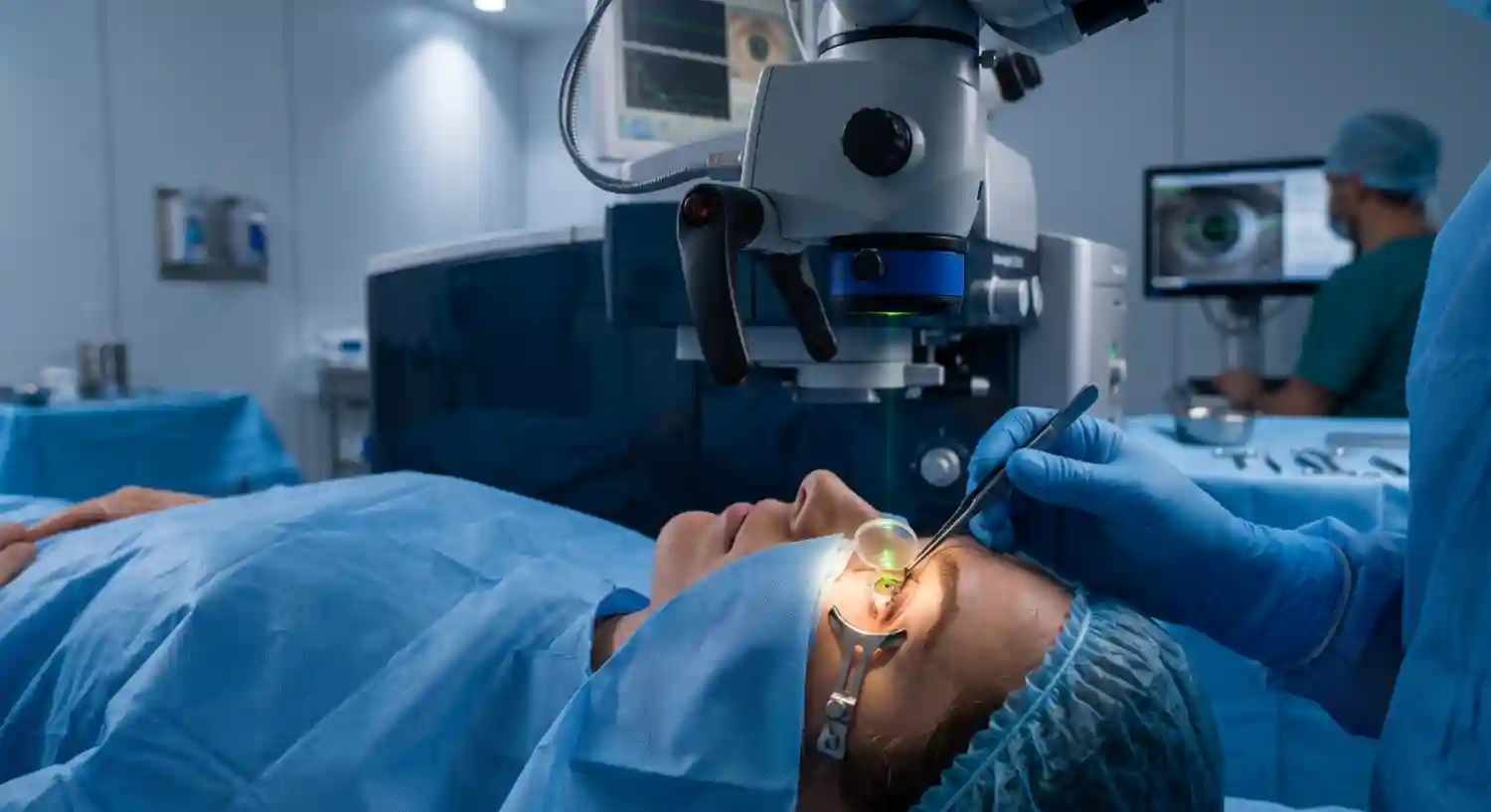
LASIK, short for laser-assisted in situ keratomileusis, works by changing the shape of the cornea so that incoming light can be focused more accurately. But doctors cannot simply point a laser at the surface of the eye. First, numbing eye drops are applied and the eyelids are held open. A thin flap is then created in the cornea.
Modern LASIK commonly uses a femtosecond laser to create this flap, although mechanical devices can also be used. The flap is gently lifted, revealing the underlying layer of the cornea called the stroma.
Now comes the part that actually changes the vision.
A computer-controlled excimer laser delivers precisely calculated pulses that remove extremely small amounts of corneal tissue. The pattern and amount of tissue removed are based on measurements taken during the eye examination before surgery. This changes the curvature of the cornea and therefore changes how it bends incoming light.
Once the reshaping is complete, the surgeon places the flap back over the treated area. No stitches are normally needed to hold it in place. The procedure itself takes less than 30 minutes, although the exact experience varies between patients and surgical systems. Vision can initially be hazy, and some people experience dryness, glare or halos around lights.
Vision may continue to fluctuate while the eyes heal and stabilize. LASIK is not suitable for everyone. Eye health, corneal thickness, the stability of a person’s prescription and other factors are considered before surgery. The remarkable part is that LASIK does not replace the eye’s lens or insert a new part.
It changes the shape of the cornea itself by removing a precisely calculated amount of tissue so that the eye can focus light more effectively. In other words, the laser isn’t giving the eye better vision. It’s changing the way the eye bends light.
Sources: