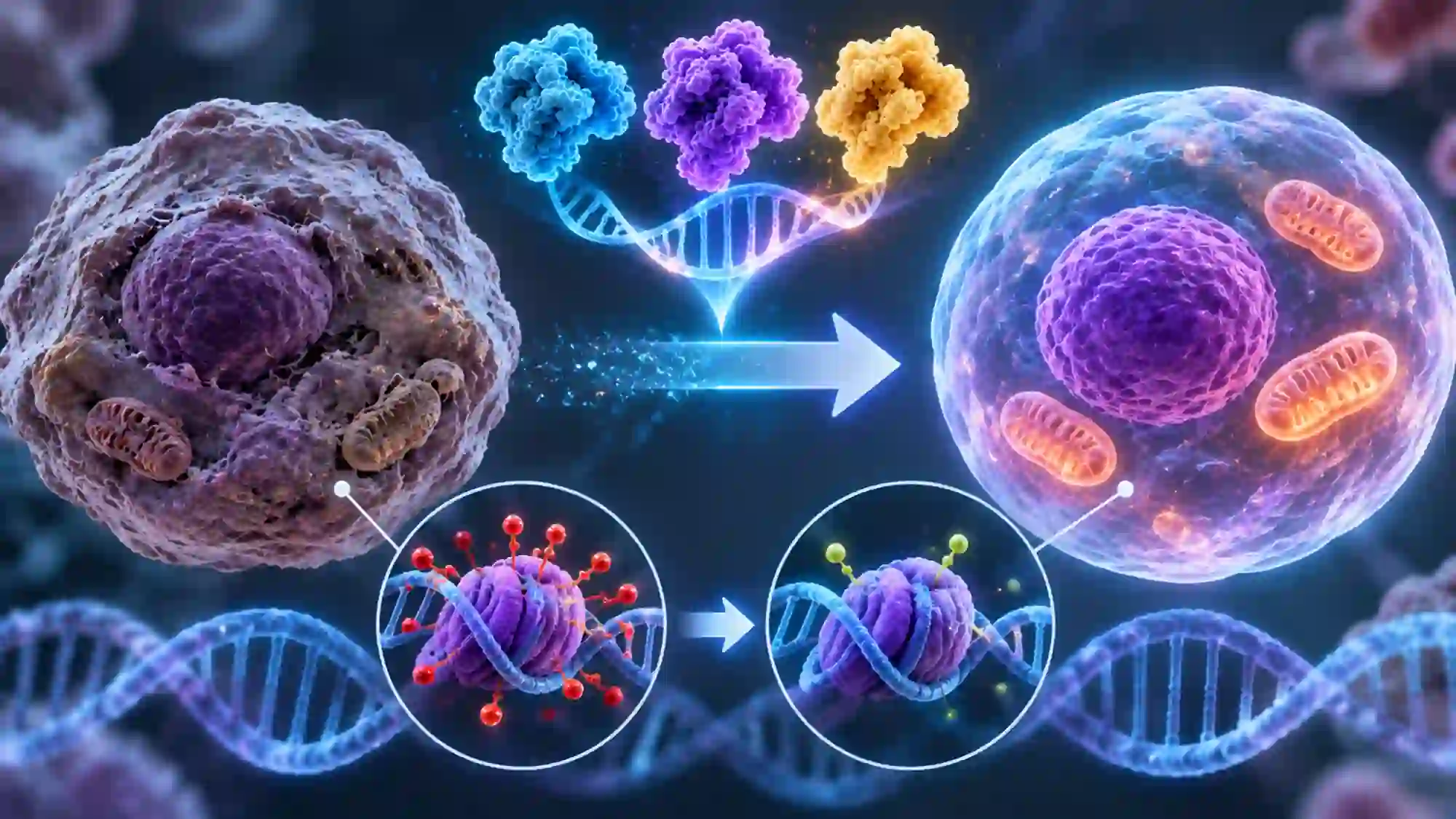
Imagine if an old skin cell could regain some of the characteristics of a younger cell without being destroyed and replaced. Or if ageing neurons could recover aspects of their youthful function while remaining neurons.
This is the idea behind partial cellular reprogramming, an emerging field of regenerative medicine that aims to reverse certain molecular features of cellular ageing without changing a cell’s original identity.
The Biological Clock Inside Our Cells
As cells age, they accumulate molecular changes. Their DNA develops chemical modifications, gene activity patterns shift, mitochondria become less efficient, and cellular repair mechanisms can deteriorate. Scientists refer to some of these changes as epigenetic ageing. Epigenetic modifications influence how genes are switched on or off without changing the underlying DNA sequence. Researchers can estimate aspects of this biological ageing using epigenetic clocks, which analyse DNA methylation patterns at specific locations across the genome. But what if some of these age-associated patterns could be reset?
The Discovery That Changed Cellular Reprogramming
In 2006, Japanese scientist Shinya Yamanaka and his colleagues demonstrated that ordinary mouse cells could be converted into induced pluripotent stem cells by introducing four transcription factors: OCT4, SOX2, KLF4 and c-MYC. These became known as the Yamanaka factors. The discovery transformed regenerative biology because it showed that mature cells could be returned to a stem-cell-like state. However, completely reprogramming a cell has an important consequence: it loses its original specialised identity. A skin cell becomes pluripotent rather than remaining a skin cell. Scientists therefore began investigating whether the same molecular machinery could be activated temporarily, allowing cells to regain some youthful characteristics without fully reverting to stem cells. This became known as partial reprogramming.
How Can Scientists Make a Cell Younger Without Replacing It?
Instead of continuously activating all four Yamanaka factors, researchers use carefully controlled, temporary expression of selected factors. One commonly investigated combination is OSK—OCT4, SOX2 and KLF4—without c-MYC.
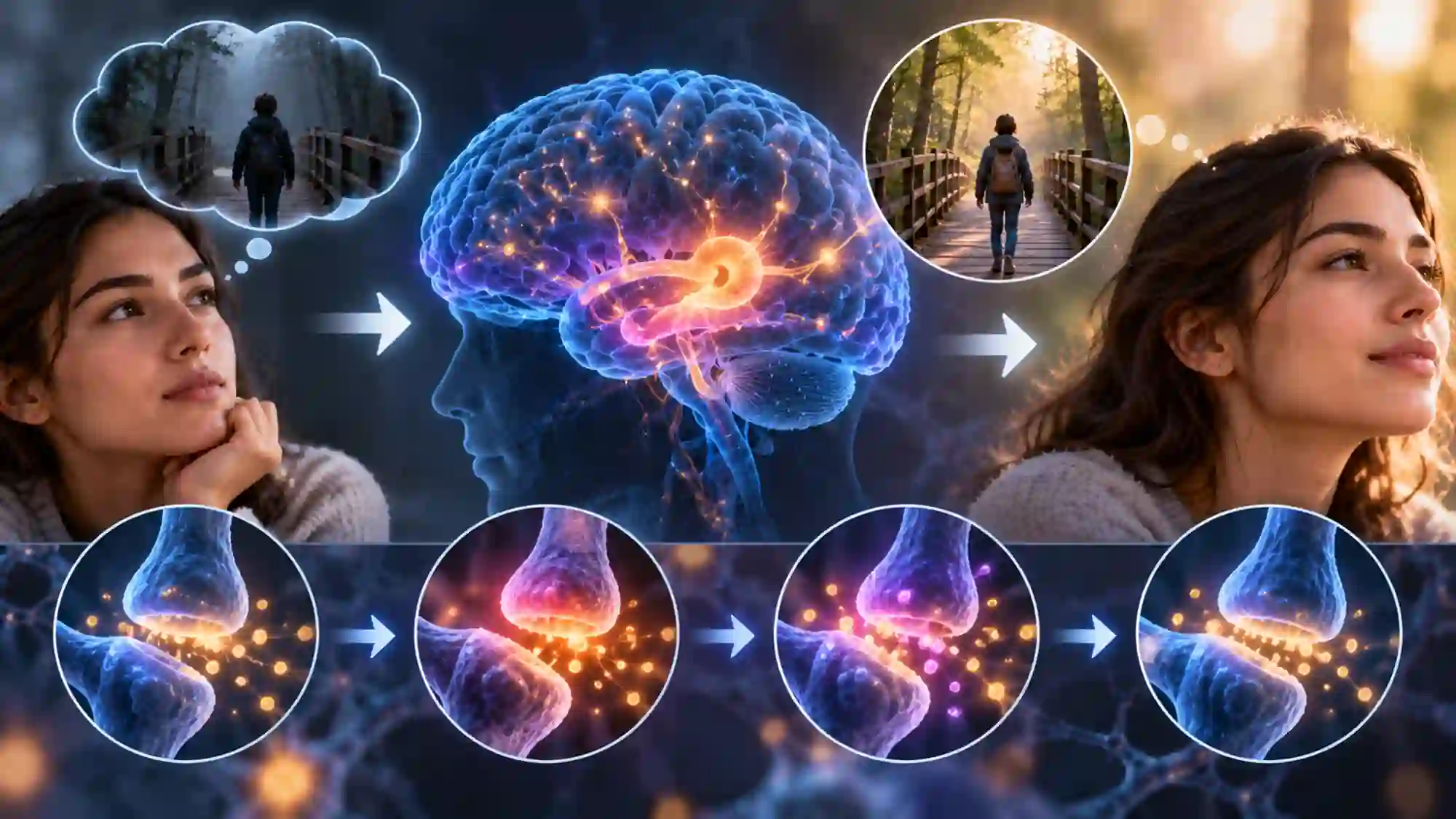
The goal is to remodel age-associated epigenetic patterns while preserving the cell’s specialised identity.In experimental models, partial reprogramming has been associated with changes in DNA methylation, chromatin organisation, gene expression, inflammation and mitochondrial function.A particularly important study published in Nature in 2020 demonstrated that OSK-mediated reprogramming could restore aspects of visual function in aged mice and mice with optic nerve damage. The researchers targeted retinal ganglion cells and observed improvements associated with the regeneration of damaged nerve fibres.More recently, a 2026 study in Neuron reported that partially reprogramming specific memory-associated neurons in aged mice restored several youthful molecular features and improved learning and memory performance. The research also investigated mouse models of Alzheimer’s disease.These findings suggest that rejuvenation may be possible even in highly specialised cells, without replacing them.
Is This Already Possible in Humans?
This is where the research becomes particularly interesting.
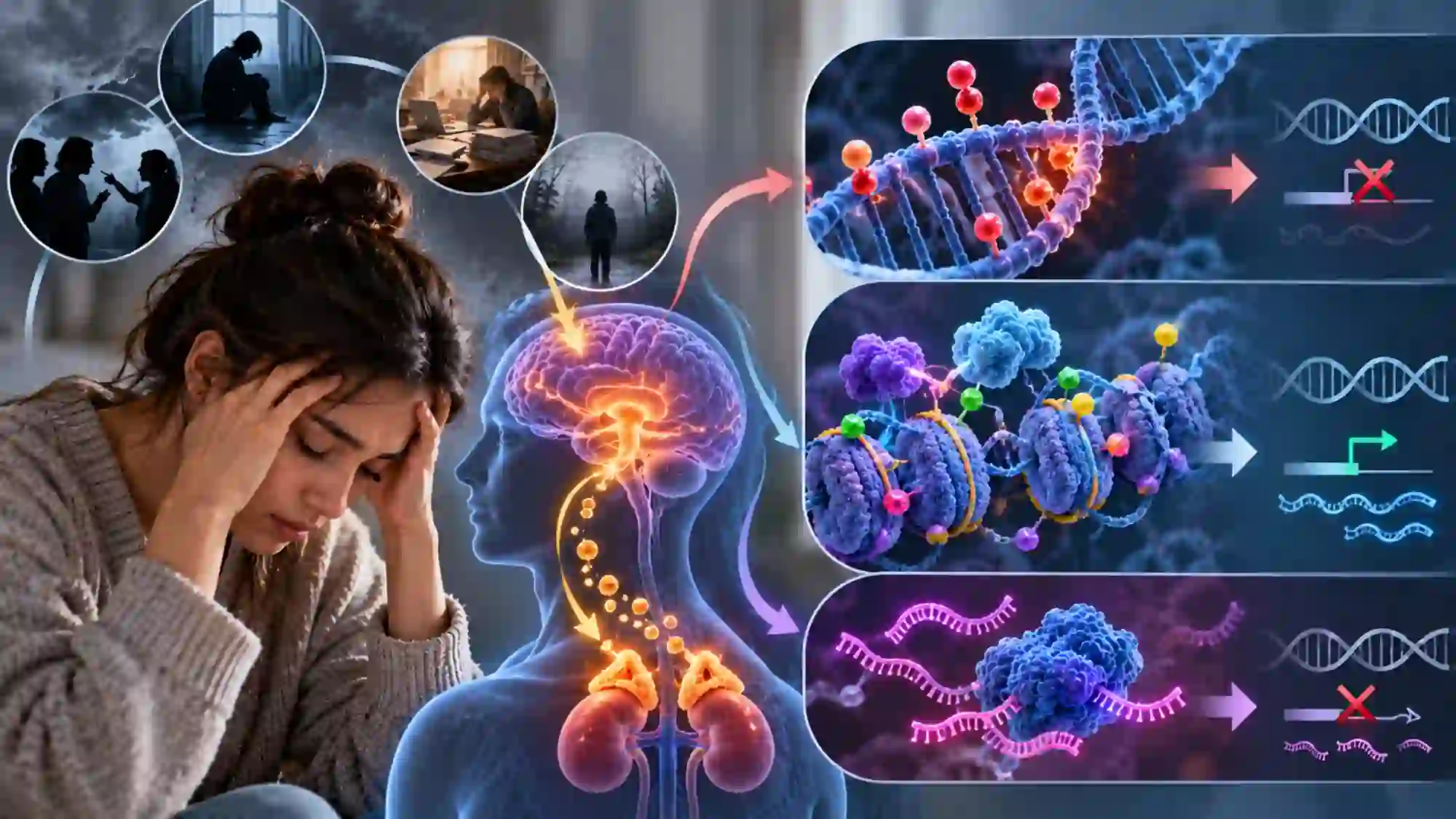
Experiments using human cells in laboratory cultures have demonstrated that partial reprogramming can alter molecular markers associated with ageing. However, results in cultured cells do not automatically translate into safe rejuvenation inside a living person.
In 2026, partial reprogramming also entered early human clinical investigation for certain optic nerve conditions, including glaucoma. This represents an important translational milestone, but it is not evidence that the technique can reverse ageing throughout the human body.
What Could Go Wrong?
The biggest challenge is controlling how far a cell is reprogrammed.
If the process goes too far, a specialised cell may lose its identity, begin dividing abnormally or develop into an unwanted pluripotent-like state. Tumour formation, including teratomas, is a major safety concern with uncontrolled reprogramming.Scientists must therefore determine the correct factors, treatment duration, delivery method and dosage for each tissue.Another unresolved question is whether rejuvenated characteristics will persist after treatment stops.Partial cellular reprogramming is not yet a proven anti-ageing treatment. Nevertheless, it offers a fundamentally different approach to regenerative medicine: instead of replacing damaged cells, researchers are investigating whether the cells themselves can be biologically reset.
The ultimate goal is not to make an old cell become a different cell. It is to help it become a younger version of itself.