
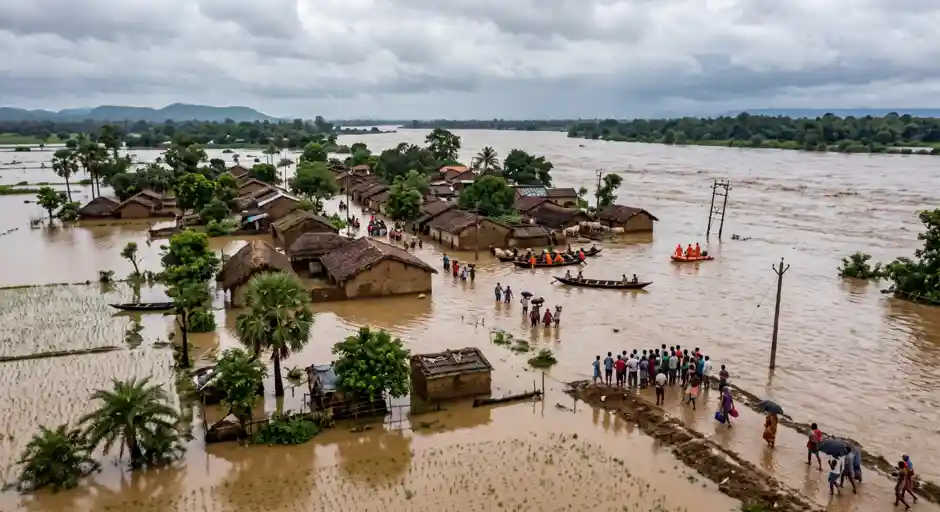
As floodwaters continue to rise along the Mahanadi River in Odisha, thousands of people are watching water levels with growing concern. Villages have been inundated, evacuation efforts are underway, and authorities remain on high alert as water released from the Hirakud Dam moves downstream. For many families, the river now feels like a giant cup filled beyond its brim. But what exactly causes a river to flood? Is it simply a matter of heavy rain? The answer is more complex than it seems. As the old proverb says, “Prevention is better than cure,” understanding floods is the first step towards reducing their impact.
A river can be thought of as a natural drainage system. It is like the body’s veins, carrying water instead of blood across the landscape. Under normal conditions, rainfall flows into streams and rivers before eventually reaching the sea. During periods of intense or prolonged rainfall, however, the amount of water entering the river can become greater than the river channel can carry. Once the river reaches its capacity, excess water spills over its banks and spreads across nearby land, creating a flood. It is similar to pouring too much water into a bucket, sooner or later, it overflows. Several factors determine how severe a flood becomes.
The intensity and duration of rainfall are among the most important. If the ground is already saturated from previous rain, very little water can soak into the soil, causing more runoff to enter rivers. Scientists call this reduced soaking ability infiltration, an important concept in hydrology. Steep slopes accelerate the flow of water, while urban areas covered with roads and concrete reduce infiltration, increasing the volume of water reaching rivers in a short time. Nature quietly reminds us, “Every drop counts, and together they can change the course of a river.”
Human activities can also worsen flooding. Deforestation reduces the land’s ability to absorb rainfall, while construction on floodplains leaves less space for rivers to expand naturally during the monsoon. In a way, it is like asking a crowded room to hold even more people. Reservoirs and dams help regulate river flow, but during exceptionally heavy rainfall, they may need to release large volumes of water to maintain structural safety. As engineers often say, “The dam is protecting itself so that it can continue protecting everyone else.” If downstream rivers are already swollen, these releases can add to flood levels, although they are carefully managed to reduce the overall risk. The ongoing flooding in the Mahanadi basin is a clear example of how multiple factors can combine. Heavy monsoon rainfall over the river’s catchment in Chhattisgarh and Odisha increased inflow into the Hirakud Reservoir. To safely manage rising water levels, controlled releases were made from the dam, leading to higher river levels downstream and flooding in several districts. Authorities issued warnings, evacuated vulnerable communities, and continued monitoring water levels as the flood wave moved through the basin. This flood wave is simply the movement of extra water downstream, much like a ripple travelling across a pond after a stone is thrown.
Floods are a natural part of many river systems, especially during the monsoon. Rivers are not enemies, they are lifelines that occasionally remind us of nature’s immense power. However, climate change is increasing the frequency of extreme rainfall events in many regions, making floods more intense and less predictable.
Ironically, the same rain that brings life to crops can also become a powerful force of destruction. Understanding the science behind rising rivers helps communities prepare better, because knowledge is the strongest umbrella when the storm arrives.


