We often think of the gut microbiome as a community of microscopic organisms that quietly helps digest food and produces useful molecules. But scientists have now uncovered a much more direct form of communication: some gut bacteria can physically inject proteins into human cells.
The discovery suggests that certain microbes may influence our biology not simply by releasing chemicals around us, but by delivering molecular instructions directly inside our cells.
Tiny bacterial syringes

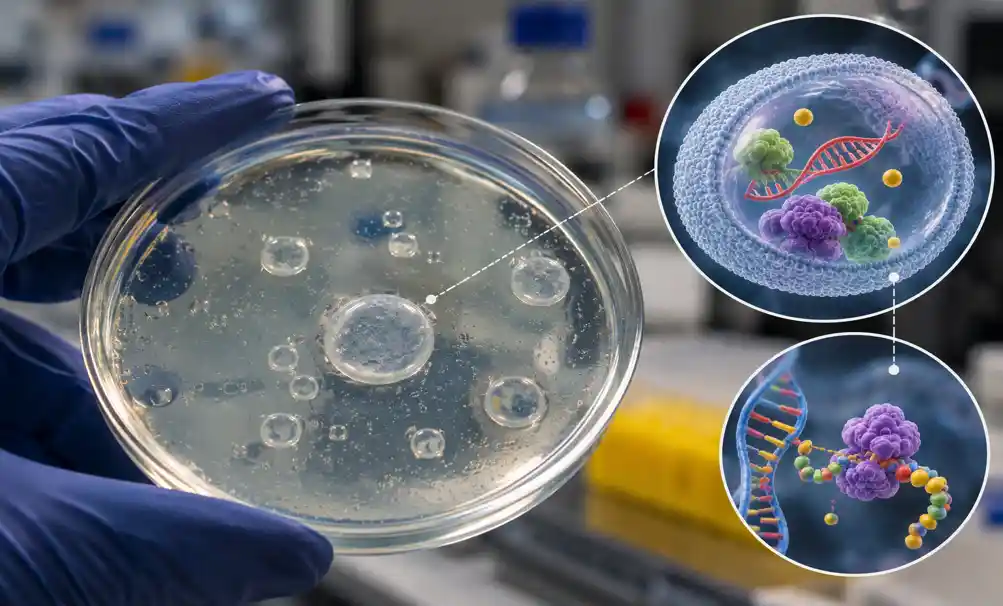
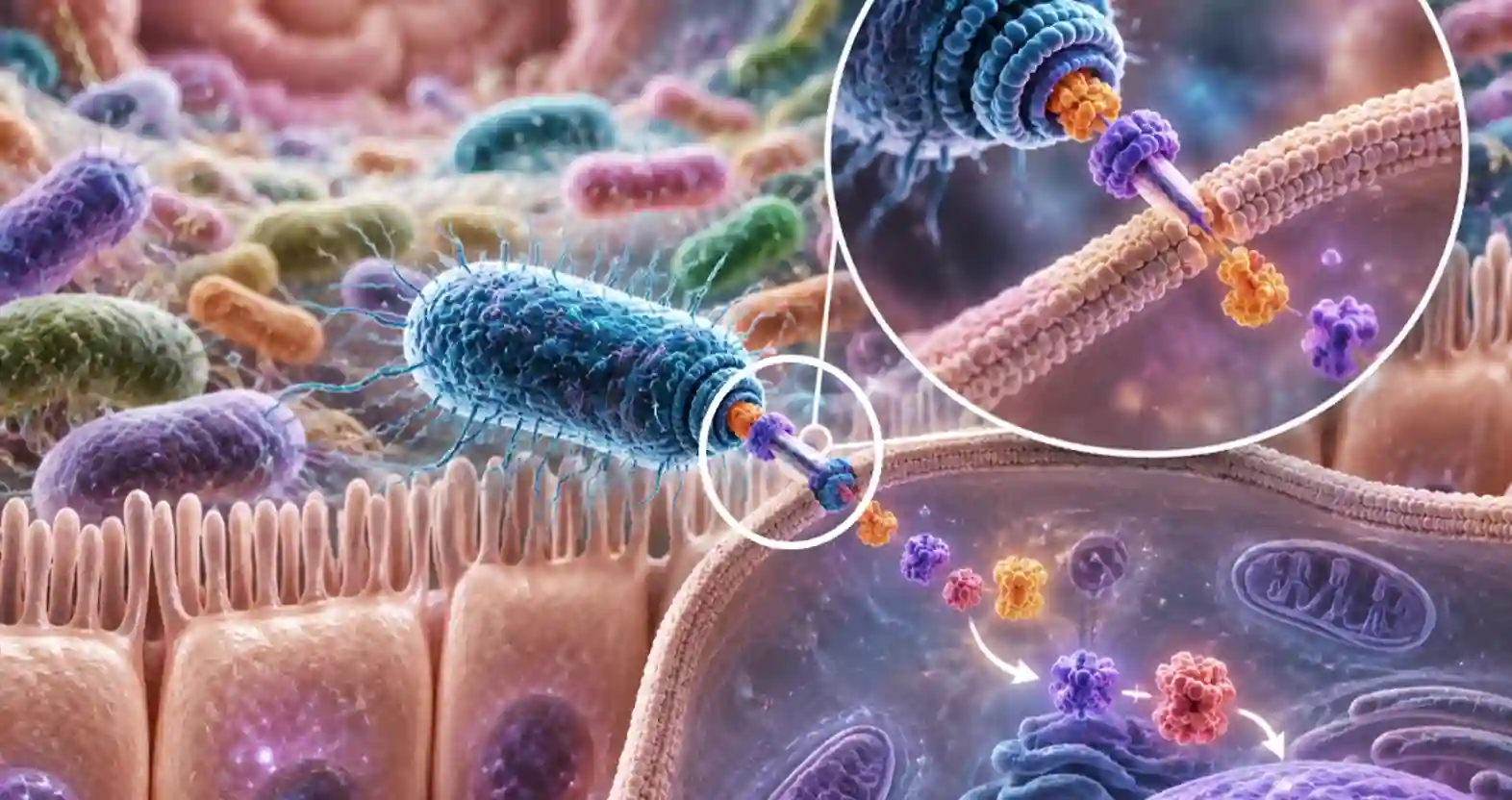
The mechanism involves structures called type III secretion systems (T3SSs). These are microscopic protein-injection machines that resemble molecular syringes. When activated, they can transport bacterial “effector” proteins across the bacterial envelope and into a neighbouring host cell.
These systems were traditionally associated with pathogenic bacteria such as Salmonella and Yersinia, where injected proteins can manipulate host cells and help bacteria establish infection.
The new research reveals that the story is more complicated.
Harmless gut residents can do it too
Researchers analysed bacteria from healthy human gut microbiomes and found that around 80% of Pseudomonadota bacteria examined carried intact type III secretion systems. Importantly, some of these bacteria were able to deliver their effector proteins into human cells in laboratory experiments.
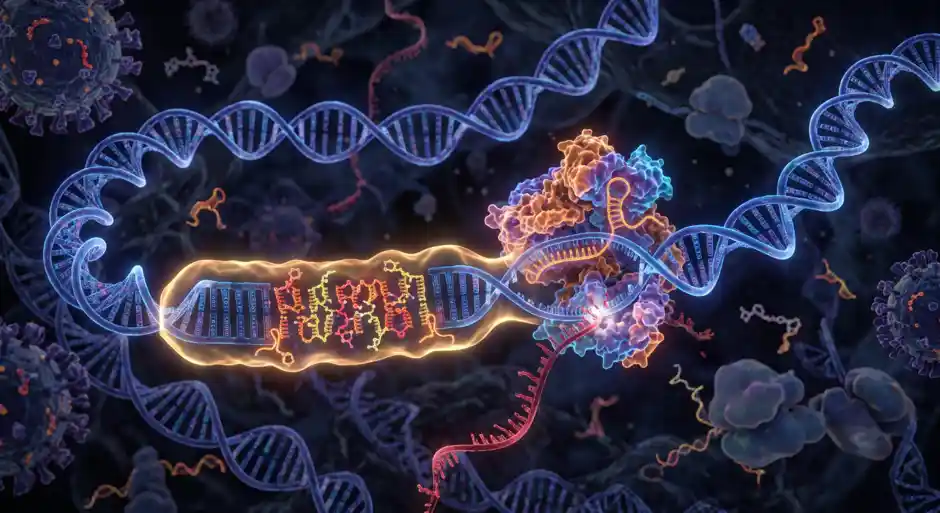
The researchers identified hundreds of candidate bacterial effectors and mapped their potential interactions with human proteins. Some of the injected proteins affected pathways involved in NF-κB signalling and cytokine secretion, both important components of the immune response.

This provides a possible molecular explanation for how particular members of the microbiome could influence inflammation and immunity.
Could this explain gut diseases?
Possibly but it is far too early to say that these bacteria cause disease.
The study found differences in effector-related genes between healthy people and people with inflammatory bowel diseases, including Crohn’s disease and ulcerative colitis. These associations suggest that bacterial protein injection could be involved in host–microbiome interactions, but they do not prove that the system causes these conditions.
The discovery also raises an intriguing therapeutic possibility. Scientists have previously explored bacterial injection systems as programmable delivery platforms for getting proteins directly into cells.
A new view of the microbiome
The biggest significance may be conceptual.
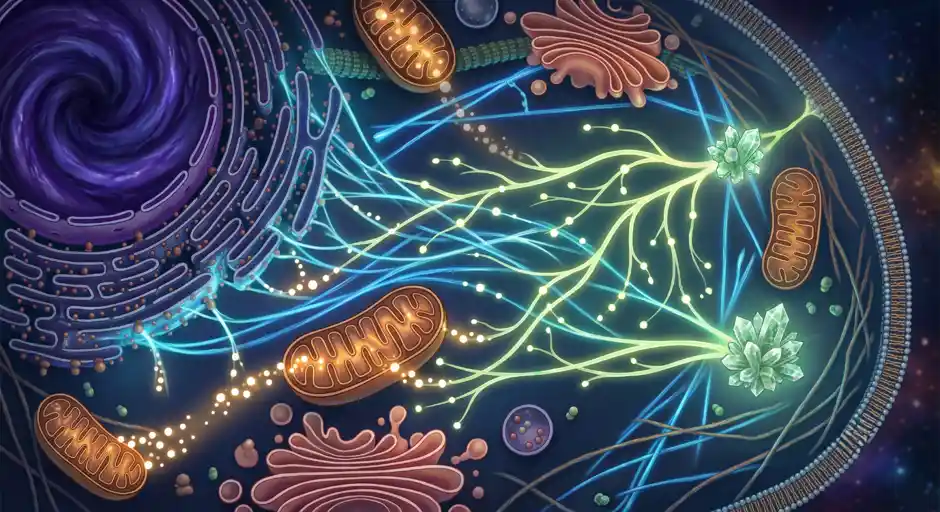
The gut microbiome is not simply a collection of organisms producing metabolites that our bodies absorb. Some microbes appear capable of direct molecular conversations with individual human cells.
We may therefore need to think of the microbiome less as a chemical ecosystem—and more as a complex biological communication network.
The next question is perhaps the most important: what exactly are these bacterial proteins telling our cells to do?
Sources: