Every photo, video, message and AI model we create has to be stored somewhere. As digital data continues to explode, computers need memory that can hold more information without consuming enormous amounts of energy. Now scientists are looking toward something that has been storing information remarkably well for billions of years: DNA.
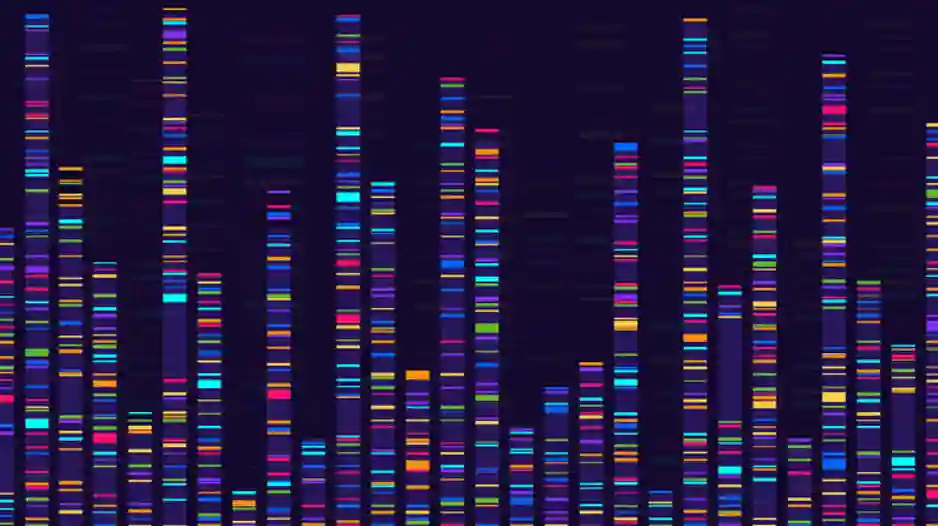
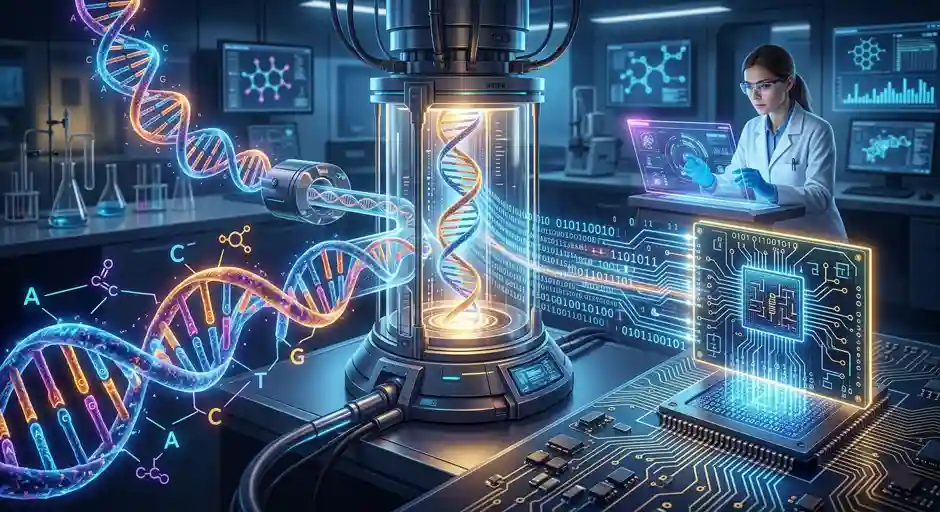
DNA already has an extraordinary job. It stores the instructions needed to build and maintain living organisms inside an incredibly small space. The four chemical bases in DNA (A, T, C and G) form a molecular code that cells can read. Scientists have realised that this same ability to pack enormous amounts of information into tiny molecules could potentially be useful far beyond biology. But there is a catch. DNA is not an electronic material. A computer normally stores and processes information using electrical signals moving through semiconductor devices. DNA, on the other hand, is a biological molecule. Simply putting DNA next to a circuit doesn’t make the two systems communicate.
Researchers at Penn State have now developed a way to bridge that gap. Instead of relying on natural DNA, they used short, synthetic DNA molecules engineered specifically for electronic applications. These DNA structures were combined with a semiconductor material called perovskite, along with silver nanoparticles that helped the DNA conduct electricity.
The resulting device is called a memristor, a type of electronic component that can remember its previous electrical state even after the power is switched off. Think of it as an electronic switch with a memory: its previous state influences what it does next. That makes memristors particularly interesting for systems designed to store and process information in the same place, rather than constantly moving data between separate memory and processing units. The DNA-perovskite combination performed especially well at very low voltages. According to the researchers, the device consumed around one-tenth the power of comparable memory technologies while offering high storage density. DNA’s enormous information capacity is part of what makes this possible: approximately one gram of DNA could theoretically hold around 215 million gigabytes of data.
This doesn’t mean our laptops will soon contain DNA chips instead of conventional memory. The technology is still at the research stage, and issues such as scaling, manufacturing, durability and integrating these materials into practical electronics still need to be solved. But the idea is fascinating for a deeper reason. Nature spent billions of years developing an extraordinarily compact information-storage molecule, and engineers are now trying to borrow that trick for computing. The future of electronics may not come entirely from making silicon smaller. It may also come from learning how biology stores information.
Sources: