Have you ever suddenly become frightened and felt a strange sensation in your stomach as if your body were dropping, sinking, or missing a step? It can happen on a roller coaster, during a sudden scare, before an important event, or even when you receive unexpected bad news.
The sensation is real, but you’re not actually falling.
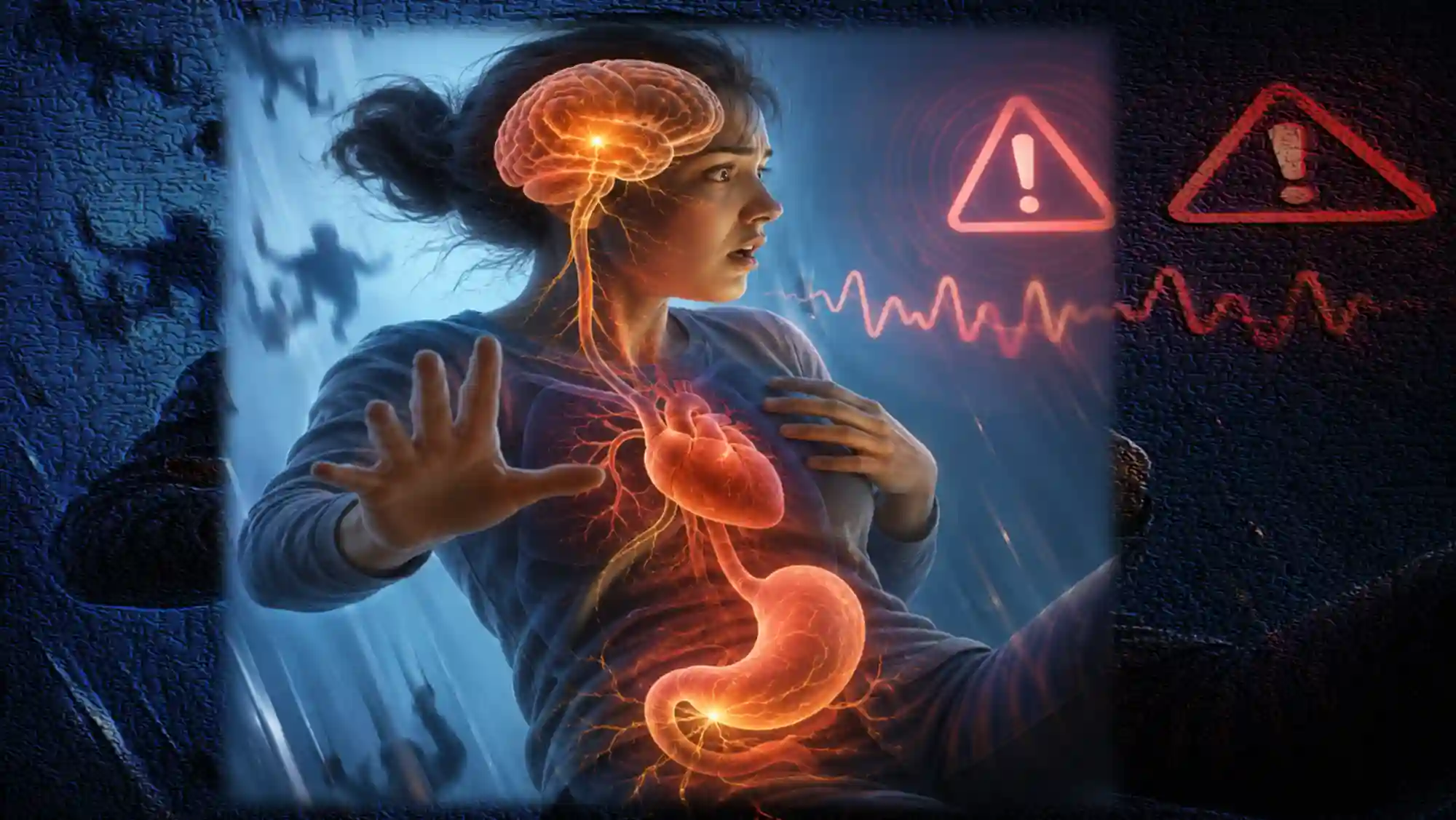
What you’re experiencing is the result of a rapid interaction between your brain, nervous system, heart, and digestive system.
When the brain detects a potential threat, it activates the body’s fight-or-flight response. The sympathetic nervous system rapidly prepares the body to respond. Adrenaline, also known as epinephrine, is released, increasing heart rate, breathing rate, blood flow to muscles, and alertness. These changes can happen within seconds.
But what causes that peculiar feeling in your stomach?
Your digestive system is strongly connected to your nervous system. During an acute stress response, the body temporarily shifts resources away from functions that are not immediately essential for dealing with danger. Changes in gastrointestinal activity and blood flow can produce sensations such as butterflies, nausea, tightness, or a sudden sinking feeling.
Another important piece of the puzzle is interoception the brain’s ability to sense and interpret what is happening inside the body. Signals from the heart, lungs, stomach, blood vessels, and other organs constantly travel to the brain. The brain then combines these signals with information about the environment to create our conscious experience of bodily sensations.
When you’re scared, these internal signals change dramatically. Your heart may suddenly pound, your breathing may become faster, your muscles tense, and your stomach may feel different. Your brain interprets this rapid collection of signals as part of the experience of fear.
This can also explain why fear sometimes produces a sensation similar to falling.
A sudden change in body state particularly in the stomach, chest, heart rate, and muscle tension can create a powerful internal sensation that the brain interprets as movement or instability. The feeling may be especially noticeable when fear occurs unexpectedly because the body changes faster than you consciously process what is happening.
Interestingly, not everyone experiences these sensations in the same way. Research suggests that people differ in how strongly they notice and interpret internal bodily signals, and these differences can influence emotional experiences such as anxiety.
So, why does your body feel like it’s falling when you’re scared?
Because fear doesn’t happen only in your brain. It is a whole-body response. Your brain detects a threat, your autonomic nervous system rapidly changes your physiology, and your brain then interprets those internal signals as a powerful physical sensation.
That sudden “drop” in your stomach isn’t your body imagining danger.
It’s your body’s alarm system switching on before you’ve even had time to think.
Sources: