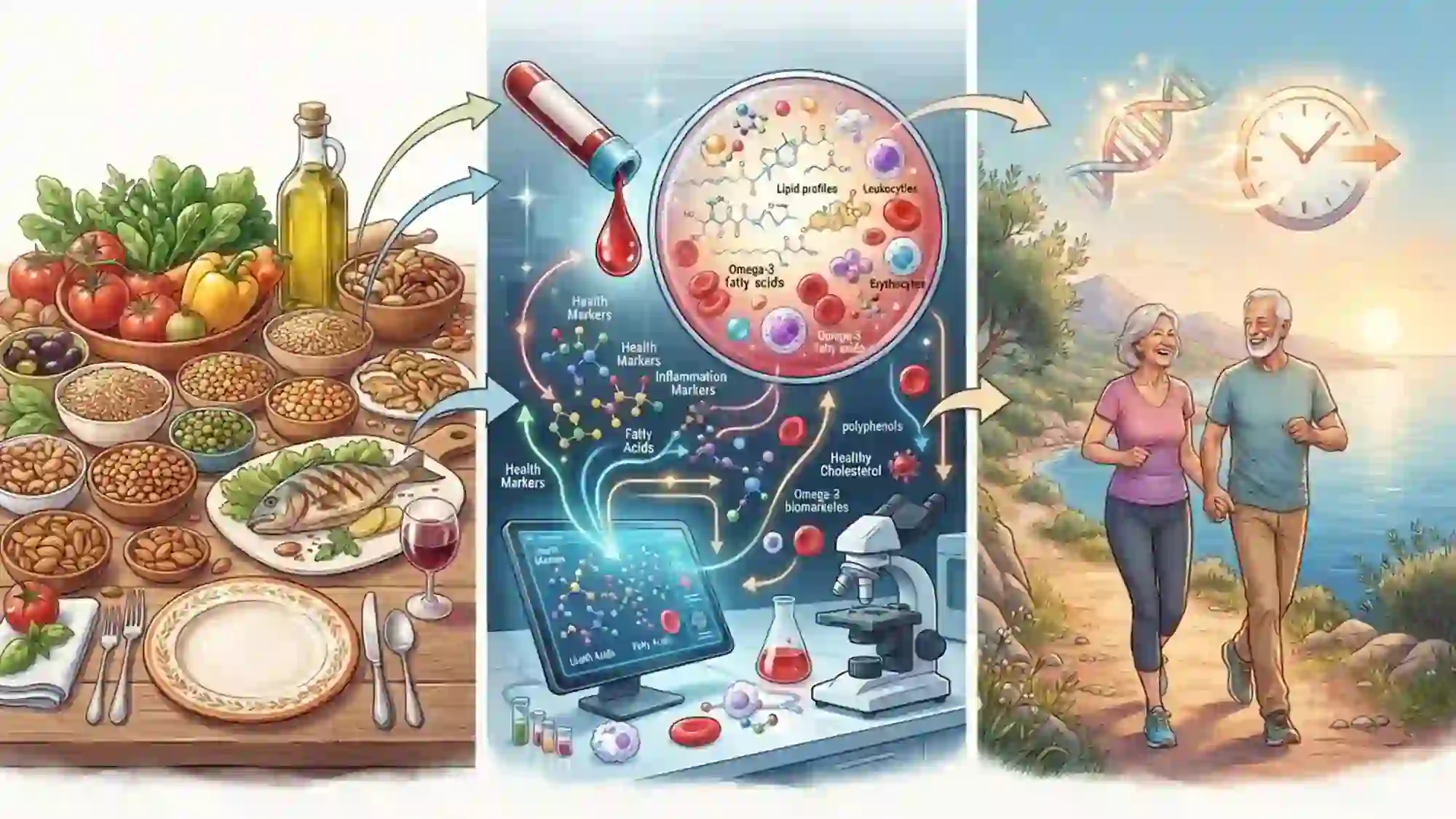
How do researchers know whether someone follows a healthy diet? Often, they ask people to remember what they ate over the past few days or weeks. But memory is not always reliable, and food questionnaires cannot capture everything happening inside the body. A new study suggests that blood may offer another way to understand dietary habits. Researchers found that a combination of 67 molecules in the blood, associated with following a Mediterranean diet, was linked to a lower risk of death over the long term.
What does a diet leave behind in the blood?
The Mediterranean diet is known for its emphasis on vegetables, fruits, legumes, nuts, whole grains, olive oil and fish, while limiting red and processed meat.
When the body digests and processes food, it produces and modifies thousands of small molecules called metabolites. These can include fats, amino acids and other compounds involved in everyday bodily functions. Together, their levels form a kind of chemical snapshot of what is happening inside the body. Researchers had previously identified a group of 67 blood metabolites associated with adherence to the Mediterranean diet. In this study, they investigated whether this combination, known as a metabolomic signature, was also linked to long-term survival.
What did the researchers find?
The team analysed blood samples from 1,880 participants in Spain’s PREDIMED study, a large dietary trial involving adults at high risk of cardiovascular disease. Participants were followed for a median of 13.2 years. Those with higher metabolomic scores at the beginning of the study had a 23% lower relative risk of death from any cause compared with those with the lowest scores. The researchers then checked their findings in three independent US studies involving another 12,704 participants. The association appeared again: people with the highest scores had a 23% lower relative risk of death than those with the lowest scores.
Interestingly, the blood signature remained associated with survival even after researchers accounted for participants’ self-reported dietary habits. This suggests that blood measurements may capture aspects of the body’s response to food that questionnaires miss.
Could a blood test tell us how healthy our diet is?
Not just yet. The study found a relationship between the blood signature and survival, but it cannot prove that the metabolites themselves protect against disease or directly extend lifespan. The researchers also have not established this as a routine clinical test. Still, the findings point towards a useful possibility: understanding nutrition may eventually involve more than asking what people eat. Measuring how their bodies respond to food could offer another piece of the picture.
Sources