NASA is about to send its most powerful panoramic eye on the universe into space. The Nancy Grace Roman Space Telescope is targeted to launch this Sunday, August 30, at 7:26 AM EDT, lifting off aboard a SpaceX Falcon Heavy rocket from historic Launch Complex 39A at Kennedy Space Center in Florida, the same pad that once launched Apollo missions to the Moon.
A Telescope Built to Zoom Out
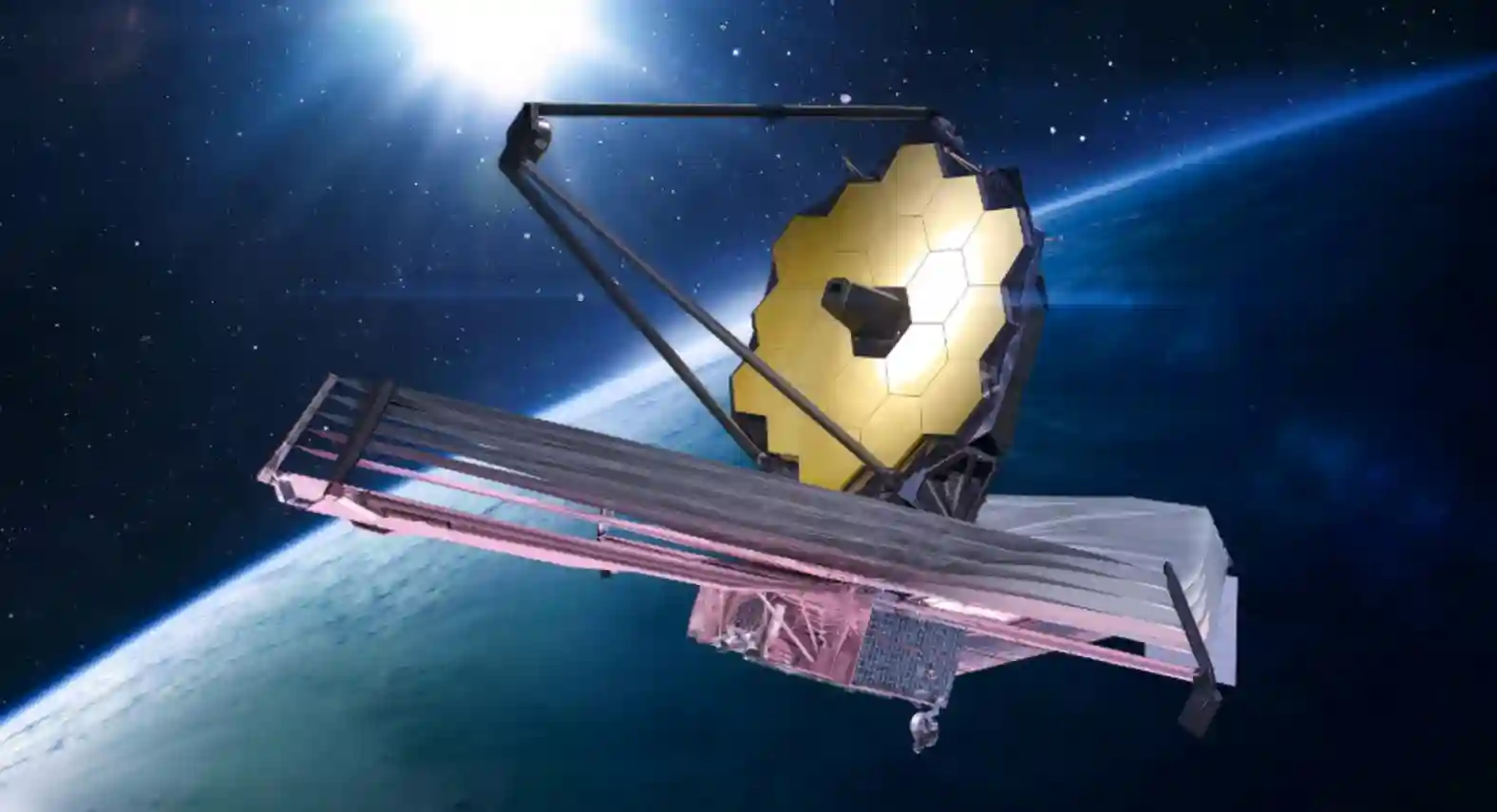
While the James Webb Space Telescope is famous for zooming in on distant objects with incredible detail, Roman is designed to do the opposite: capture huge swaths of sky at once. Its field of view is at least 100 times larger than Hubble’s, meaning it can photograph vast panoramas of the cosmos in a single shot instead of stitching together thousands of narrow images.
Here are some facts that make this mission genuinely astonishing:
- It could spot over 100,000 new exoplanets. Roman will conduct a statistical census of planetary systems across our galaxy, dramatically expanding the catalog of known worlds beyond our solar system.
- It might photograph a billion galaxies. Over its lifetime, scientists expect Roman to measure light from roughly a billion galaxies, reshaping our understanding of how the universe evolved.
- Its camera has 300 megapixels. The Wide Field Instrument is sharp enough to capture extremely detailed, high-resolution images across enormous stretches of sky, while also gathering sensitive spectroscopic data.
- It has a mirror the same size as Hubble’s 7.9 feet (2.4 meters) wide, but thanks to smarter instrument design, it achieves a vastly wider view without needing to be bigger.
- It will hunt for the universe’s invisible glue. One of Roman’s core missions is investigating dark matter, the mysterious substance that makes up most of the mass in galaxies but has never been directly observed.
- It will help solve the mystery of dark energy by tracking how fast the universe is expanding over cosmic time, using data from thousands of exploding stars.
- It has a coronagraph that can “blot out” starlight. This instrument blocks the glare of distant stars so scientists can directly image the faint planets and dust disks orbiting them, something almost impossible to do otherwise.
- It’s named after a trailblazer. The telescope honors Nancy Grace Roman, NASA’s first chief astronomer and the woman known as the “Mother of Hubble” for championing that mission decades ago.
- It’s headed nearly a million miles from Earth. Unlike Hubble, which orbits our planet, Roman will travel to the second Sun-Earth Lagrange point (L2): the same gravitational “parking spot” used by the James Webb Space Telescope, where it can operate in a stable, thermally ideal environment.
- The mission costs about $4 billion and is expected to run for at least five years, with the possibility of an extended mission well beyond that.
What Happens Next
If the Sunday launch goes as planned, Roman will spend the following weeks and months traveling to L2, unfolding its systems, and calibrating its instruments before beginning full science operations. Once online, it will work alongside Hubble and Webb as part of NASA’s next generation of great observatories, giving humanity its widest-ever window into the cosmos.