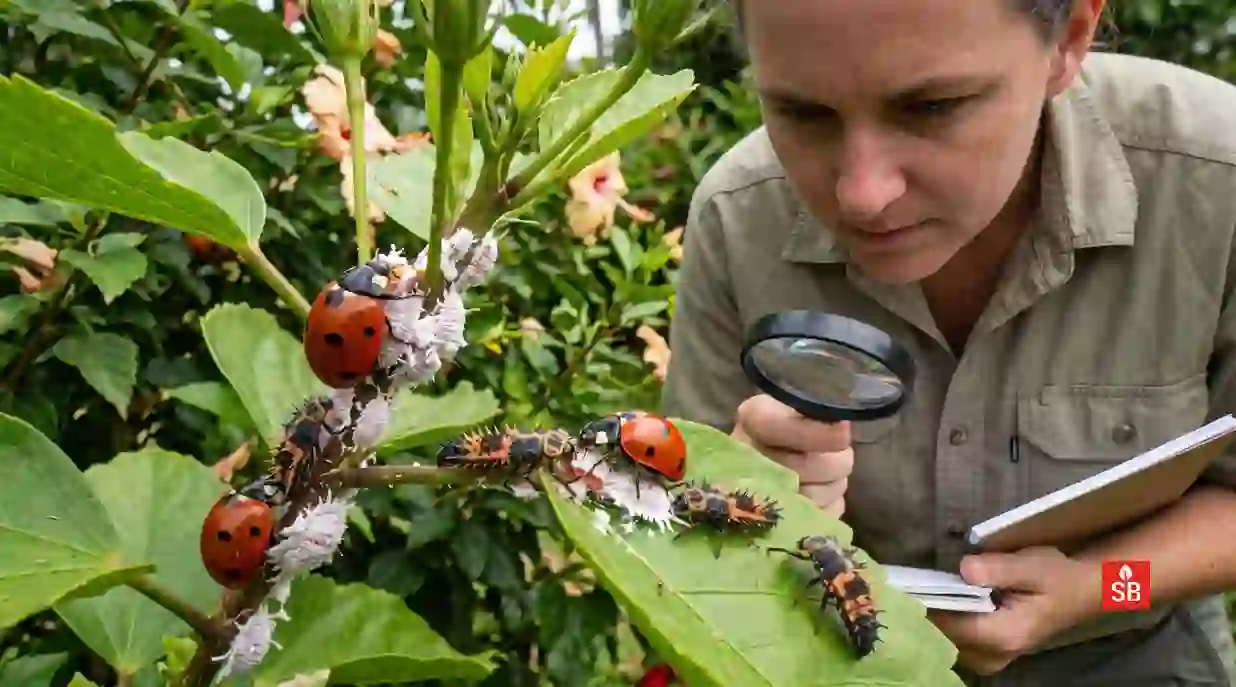
Ladybirds, lacewings and tiny wasps can do the work of a pesticide. The catch is what we feed them, and a new review says biotechnology may finally solve it.
There is an old and very simple idea in farming: if a pest is eating your crop, bring in something that eats the pest. Ladybird beetles clear out aphids. Lacewings go after whiteflies. Predatory mites hunt other mites. Tiny wasps called Trichogramma lay their eggs inside pest eggs, so the pest never even hatches. These creatures are called natural enemies, and farmers around the world already buy them by the millions and release them into greenhouses, orchards and open fields. It works, it leaves no chemical residue, and it does not poison the soil or the water. So why has this not replaced insecticides everywhere? A new review in Trends in Biotechnology, written by scientists from China, Belgium, the United States, Brazil, Mexico and France, points to a problem that sounds almost too ordinary to matter. Lunch.
To raise a predator, you have to raise its prey first. To raise a parasitic wasp, you have to raise the insect it lives inside. That means factories full of insects feeding insects, and often plants feeding those insects too. Growing ladybirds means growing aphids, which means growing the plants the aphids eat. Every extra step adds labour, cost and risk. Prey supply rises and falls with the season. A bad batch of prey means a weak batch of predators. And if a wasp is kept for many generations on a substitute host that is easy to farm but is not its real target, it slowly gets worse at attacking the pest it was bred to kill. Meanwhile a bottle of insecticide is cheap, always in stock and works within hours. That imbalance, the authors argue, is one of the biggest reasons biological control has not taken over.

The obvious fix is an artificial diet, a formula in a dish that removes live prey from the equation. Scientists have been trying this for decades and the results are strange. Roughly 127 species of predators and parasitic insects have been reared successfully on artificial food in the laboratory, about 53 predators and 74 parasitoids. Almost none of these recipes made it into commercial production. China once built a fully mechanised line producing Trichogramma wasps on artificial food, and in field tests those wasps controlled a soybean pest just as well as wasps raised the traditional way. But the recipe depended on fluid drawn from real insects, so it never became cheap enough, and the production lines shut down in the early 2000s. Diets without any insect ingredients are cleaner, cheaper and easier to standardise, yet insects raised on them often develop slowly, survive poorly and lay fewer eggs.
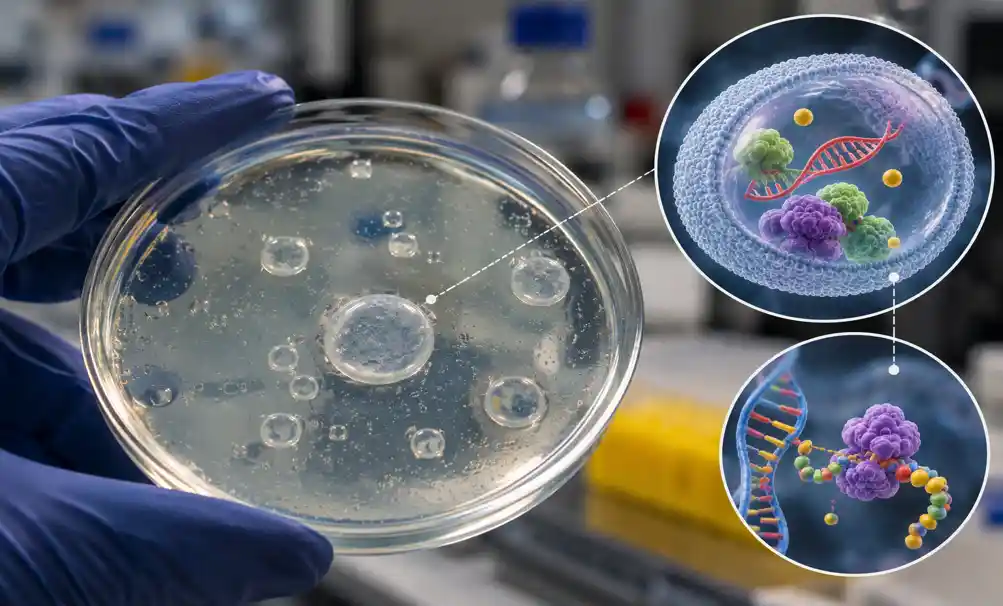
The reason, the review explains, is that food is not only fuel. A natural host delivers a very specific mix of proteins, fats, vitamins and minerals, and most laboratory recipes simply do not match that balance. This is where the new tools come in. By analysing the proteins and small molecules inside real prey, researchers can now build a nutrient map of what an insect actually needs instead of guessing. By feeding insects food labelled with carbon 13 or nitrogen 15, they can follow individual nutrients through the body and see which ones are absorbed and which pass straight through. They are also paying attention to gut bacteria, which turn out to be quiet partners in digestion. In one study, adding a single probiotic bacterium to the diet of a predatory bug improved the survival of the young and helped the adult females live longer and lay more eggs.
Cost is being attacked from another direction. Pure amino acids and vitamins are expensive to buy, so engineers are rewiring bacteria and yeast to brew them instead. Modified strains can now pour out amino acids at industrial scale, in one case more than 220 grams of lysine from a single litre of culture. The authors model what this could mean for the price of a beneficial insect. Traditional rearing costs about 0.93 US dollars per thousand individuals. An artificial diet system costs more than that when the recipe is mediocre, but the cost falls sharply as diet quality improves, dropping toward 0.06 dollars per thousand at the top end. Their calculated tipping point sits at a quality score of 0.76. Below it, live prey wins. Above it, the factory wins, and it is not close.
Even a perfect recipe can still fail, because insects have to be persuaded to eat it. They judge food by smell, taste, texture, shape and colour, and a nutritious blob that smells wrong is simply ignored. So researchers now add the natural scent chemicals of real hosts, which also keeps laboratory insects from losing their hunting instincts. Predatory bugs that stab their food get liquid diets sealed inside thin membranes or tiny capsules. Parasitic wasps are the hardest of all, since they need a fake egg that acts as a nursery. Plastic capsules work, but real host eggs have microscopic pores and ridges, and wasps sometimes cannot chew their way out of the imitation. Teams are turning to 3D printing to copy that fine structure, and printed fake fruit has already fooled real predators in field tests.
The vision at the end of the paper is a rearing facility that behaves like a modern insect farm, with sensors, automated feeding and software adjusting the recipe as the data arrives. The edible insect industry already runs facilities like this for black soldier flies, so the blueprint exists. Real obstacles remain, including batch to batch variation in fermented ingredients, unknown by products in the mix and regulators who have never had to approve engineered insect food. But if it works, the economics of pest control shift, and the good bugs finally get a meal that does not cost more than the crop.
Source:
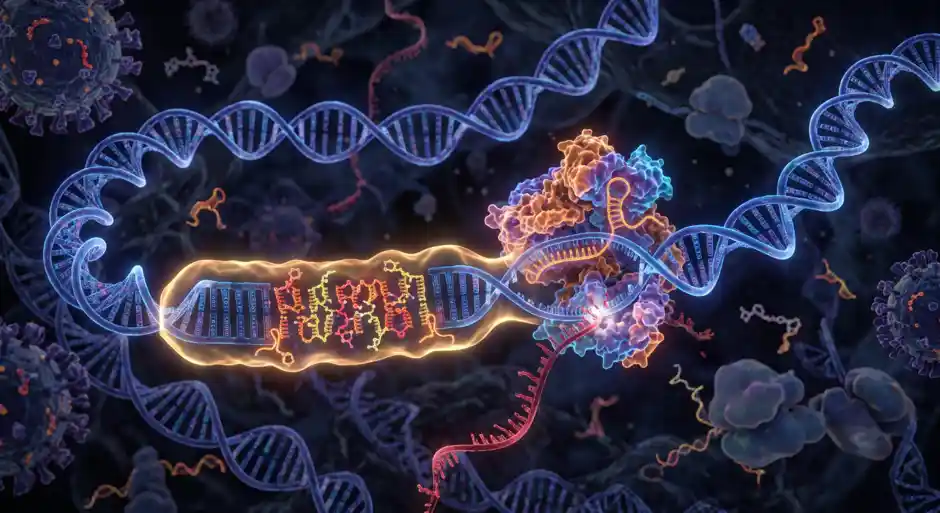
Wang, Y., Yang, W. C., De Clercq, P., Leppla, N. C., de Freitas Bueno, A., Ramirez-Romero, R., Desneux, N., & Zang, L. S. (2026). Biotechnology driven artificial diets for mass rearing arthropod natural enemies. Trends in Biotechnology, 44(9), 2530–2544. https://doi.org/10.1016/j.tibtech.2025.12.010
Hung, Y. T., Chen, C. N., & Wu, W. J. (2021). Comparison of artificial diets and natural prey for mass rearing of Orius strigicollis (Hemiptera: Anthocoridae) using demographic characteristics to optimize cost efficiency. Journal of Economic Entomology, 114(4), 1523–1532. https://doi.org/10.1093/jee/toab112
Zang, L. S., Wang, S., Zhang, F., & Desneux, N. (2021). Biological control with Trichogramma in China: History, present status, and perspectives. Annual Review of Entomology, 66, 463–484. https://doi.org/10.1146/annurev-ento-060120-091143