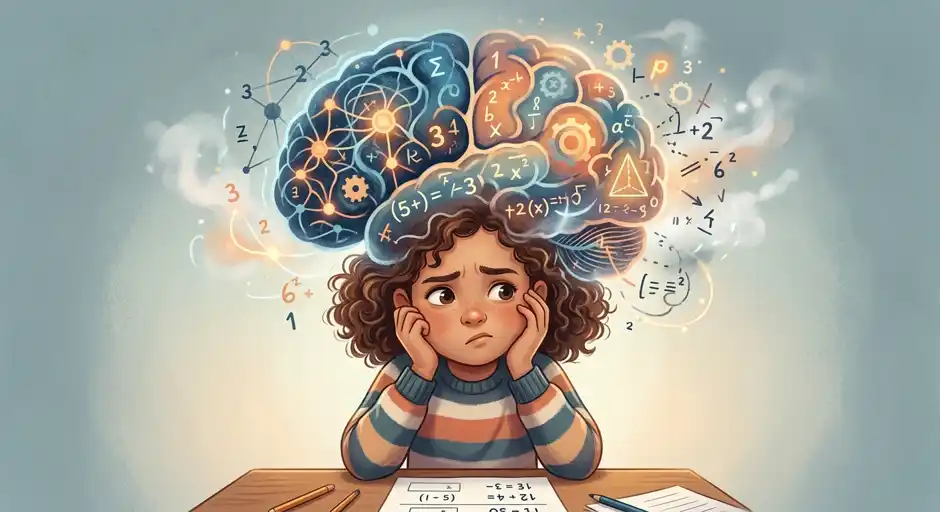
Artificial intelligence has quietly become a new companion in our daily lives. It writes emails, solves maths problems, translates languages, creates pictures, and answers difficult questions within seconds. It feels almost like carrying a brilliant friend in your pocket. But every shining coin has two sides. If AI keeps thinking for us, will our own brain slowly become a silent passenger? As people have long said, “A knife is useful in skilled hands, but dangerous in careless ones.” Scientists say the answer is yes, but only if we stop using our own minds.
The human brain is like a powerful muscle. The more you use it, the stronger it becomes. Solving puzzles, remembering facts, and making decisions are like daily workouts for the brain. Psychologists call this “desirable difficulty,” which means that a little mental struggle helps us learn better. “Let me solve it first,” your brain would say if it could speak. If AI answers every question before we even try, we may lose the chance to sharpen our thinking. It is like taking a lift every day instead of climbing the stairs. The destination is the same, but the strength gained is very different.
Scientists describe this habit as cognitive offloading, a process in which people use external tools to reduce mental effort. Humans have been doing this for centuries by writing notes, using calculators, and setting reminders on mobile phones. AI is simply a much smarter helper. Think of it as a crane lifting heavy building blocks. It makes construction faster, but the engineer must still know how the building stands. When AI handles routine work, our minds become free for creativity, planning, and innovation. However, if we depend on it for every small decision, our skills in reasoning, memory, and problem solving may slowly gather dust.

That does not mean AI is making people less intelligent. In fact, when used wisely, it can become an excellent teacher. Students can ask AI to explain difficult topics in simple words. Professionals can brainstorm fresh ideas more quickly. Researchers can read and summarise hundreds of pages in minutes. Here, AI is not stealing the driver’s seat. It is sitting beside us like a helpful co pilot saying, “Let’s think together.” Many great discoveries begin with good questions, and AI can help people ask even better ones.
The real danger begins when people accept AI’s answers without asking questions. AI can sometimes produce incorrect information, outdated facts, or convincing sounding mistakes. This is where critical thinking becomes the true superhero. Evaluating evidence, checking reliable sources, spotting bias, and asking follow up questions remain essential skills. Ironically, in an age overflowing with information, finding facts is becoming easier than judging whether those facts are true. The biggest challenge today is not collecting knowledge, but separating gold from glitter.
So, can AI make us forget how to think? Not by itself. Like calculators, GPS, and the internet before it, AI is simply a tool. A hammer can build a home or break a window. The choice always belongs to the person holding it. If we allow AI to replace our curiosity, reasoning, and independent thinking, our minds may gradually become less active. But if we use AI to challenge our ideas, learn new concepts, and explore different viewpoints, it can make human intelligence even stronger.
The future is not a battle between humans and artificial intelligence. It is a partnership. As technology grows smarter, our responsibility is to grow wiser. After all, as one educator wisely said, “Technology should expand the mind, never replace the habit of thinking.”