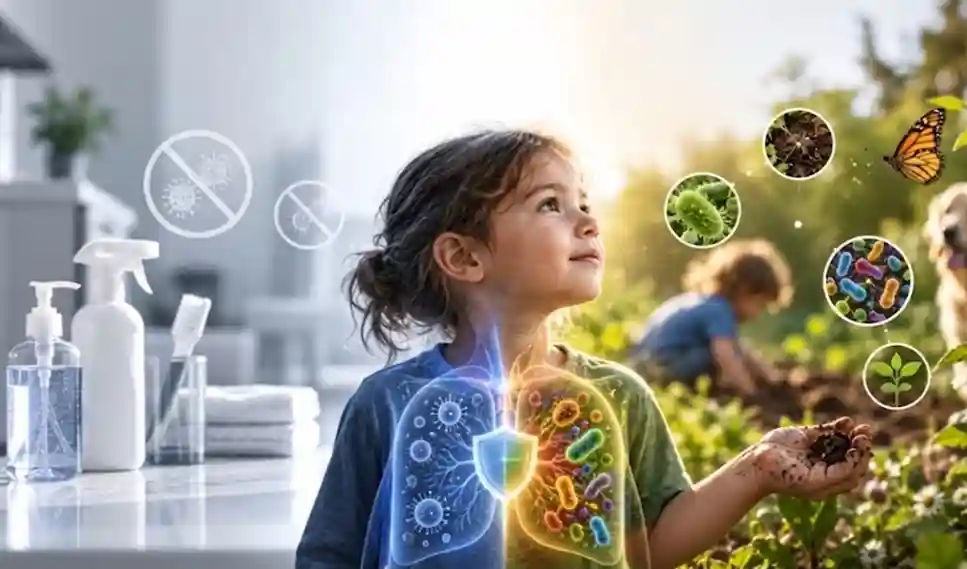
A sparkling home may look like a shield, but can it also become a silent bubble? Since the COVID,19 pandemic, hand sanitisers, antibacterial soaps, and disinfectant sprays have become trusted companions in daily life. They have protected millions from dangerous infections, and that is a great victory for public health. Yet, scientists are asking a curious question. If every tiny harmless microbe is treated like an unwanted guest, could our immune system miss some important lessons? As the old proverb says, “Too much of anything can be harmful.” Cleanliness is a faithful friend, but even a good friend must know when to step aside.
The idea is called the hygiene hypothesis, although scientists now believe the story is much richer than the name suggests. It first appeared in 1989 when researchers noticed that children growing up in larger families were less likely to develop allergies such as hay fever. One possible reason was that brothers and sisters unknowingly became little teachers by sharing common childhood infections. “Our immune system learns by meeting the world, not by hiding from it,” is a simple way to understand this idea. Like a student who learns better in a busy classroom than in an empty room, the body’s defence system becomes wiser through safe and natural experiences.
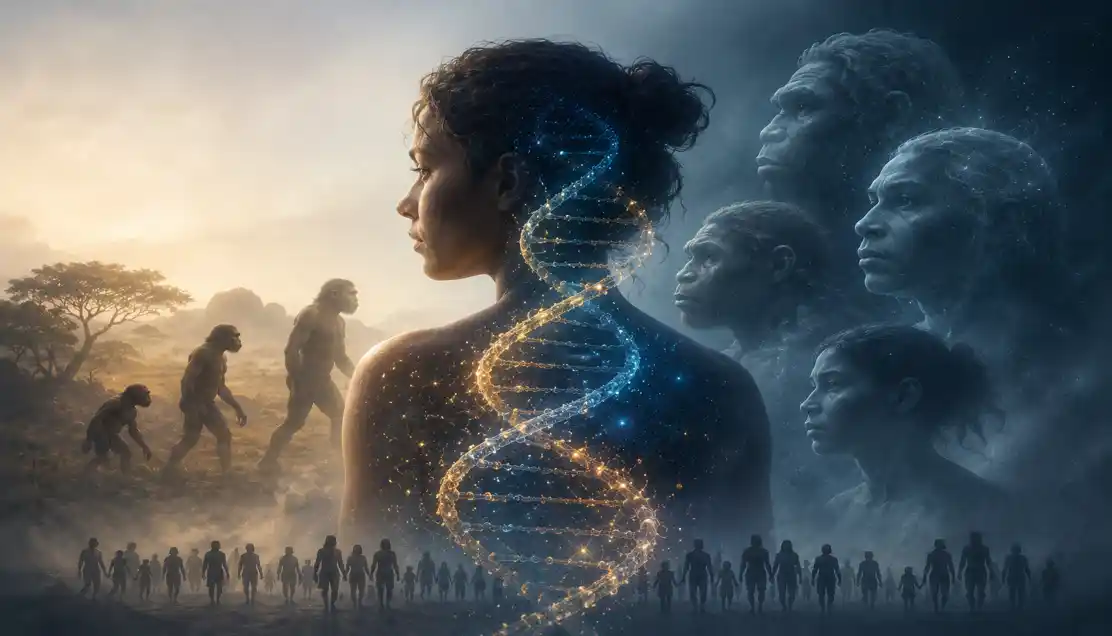
Today, scientists have expanded this idea into what is known as the “Old Friends” hypothesis. These old friends are not close relatives or neighbours. They are harmless microbes living in soil, plants, animals, and inside our gut, which have travelled with humans throughout evolution. They act like experienced coaches, gently training immune cells to recognise the difference between friend and foe. In immunology, this process is called immune regulation, where the immune system learns tolerance instead of launching unnecessary inflammatory attacks. Without these microscopic companions, the immune system may sometimes mistake harmless substances like pollen or dust for dangerous enemies, rather like a security guard stopping every visitor at the gate.
Many scientific studies support this view. Children raised on farms, those who play outdoors regularly, or those who grow up around pets often have fewer allergies and asthma. Their surroundings offer a richer variety of harmless microbes, helping to build a healthier gut microbiome. This community of trillions of microorganisms functions like a bustling city, where every resident has a small but meaningful job. When this microbial city is diverse and balanced, the immune system is less likely to overreact. In contrast, frequent antibiotic use, highly processed foods, limited outdoor activity, and urban lifestyles may quietly reduce this diversity, making the immune system more sensitive.
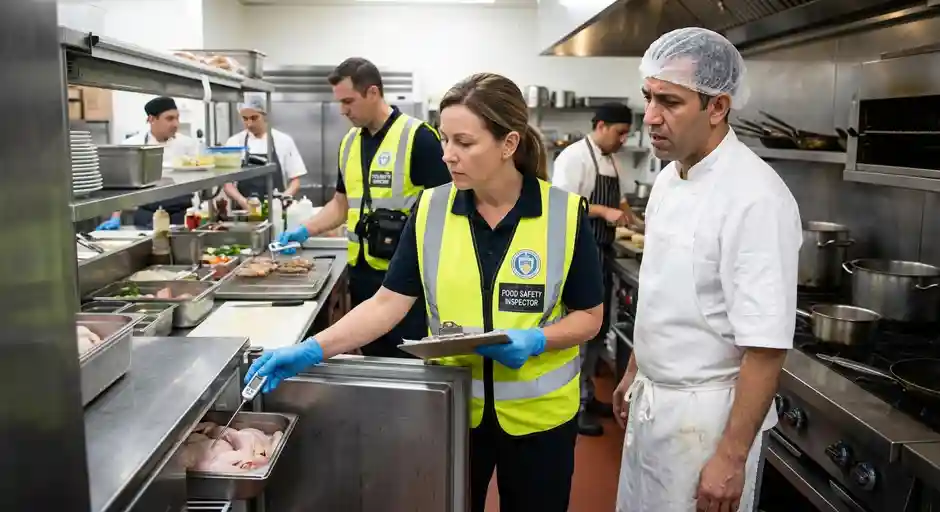
Does this mean we should stop washing our hands? Absolutely not. That would be like throwing away an umbrella because the rain has stopped for a while. Handwashing with soap after using the toilet, before cooking, and after coughing or sneezing remains one of the simplest and strongest ways to prevent disease. Vaccination, safe drinking water, and proper sanitation continue to save countless lives every year. The real challenge is not cleanliness itself, but losing regular contact with the rich collection of harmless microbes that humans naturally encountered for thousands of years.
Scientists now recommend what is called targeted hygiene. This means cleaning where it truly matters, while allowing healthy contact with nature in everyday life. Children playing in parks, families spending time in gardens, keeping pets responsibly, and eating a fibre rich and diverse diet all help nourish beneficial microbes. It is not an invitation to welcome harmful infections, but an encouragement to rebuild a healthy partnership with nature. There is a touch of irony here. In trying to remove every microbe, we may accidentally push away some of our oldest and most helpful allies.
The real message is simple yet powerful. Germs are not all villains, just as every stranger is not an enemy. Our immune system is like an orchestra, and harmless microbes are the quiet musicians helping it stay in tune. Remove every instrument, and the music loses its harmony. As another old saying reminds us, “Nature knows best.” The healthiest future may not lie in living inside a perfectly polished bubble, but in finding the right balance between protection and connection with the invisible world that has always walked beside us.