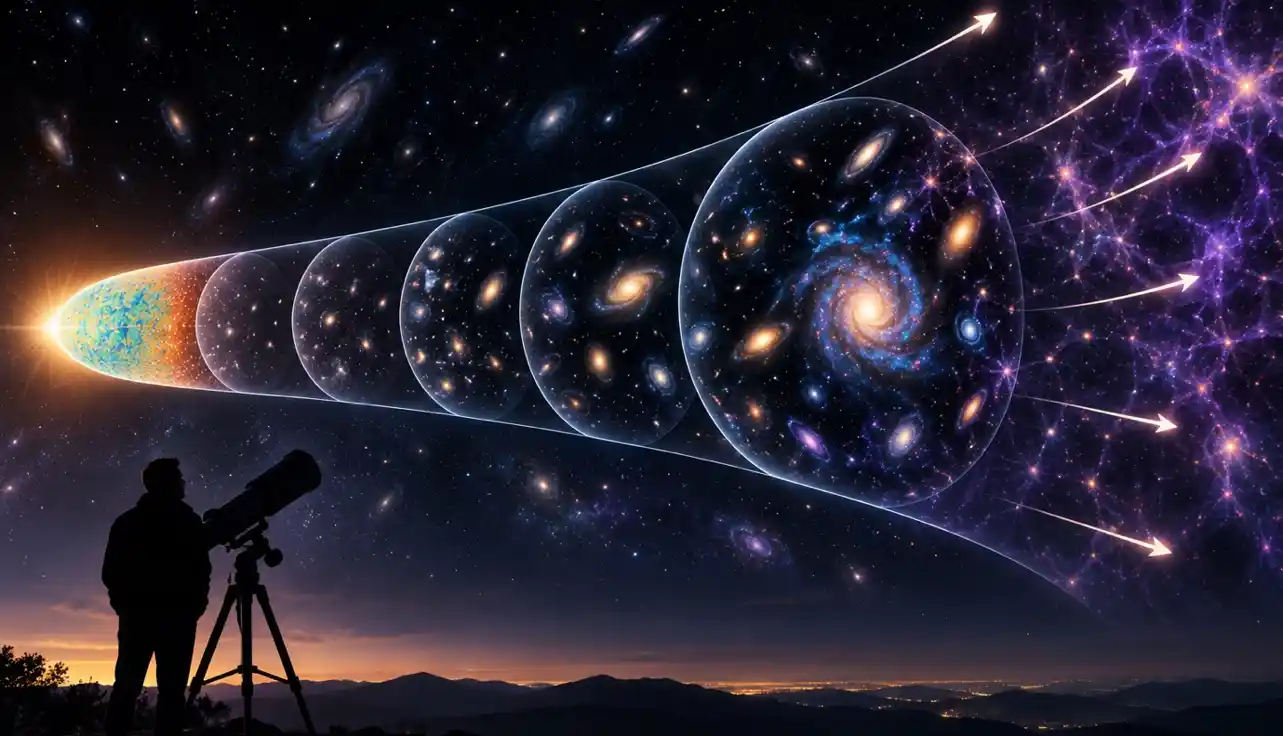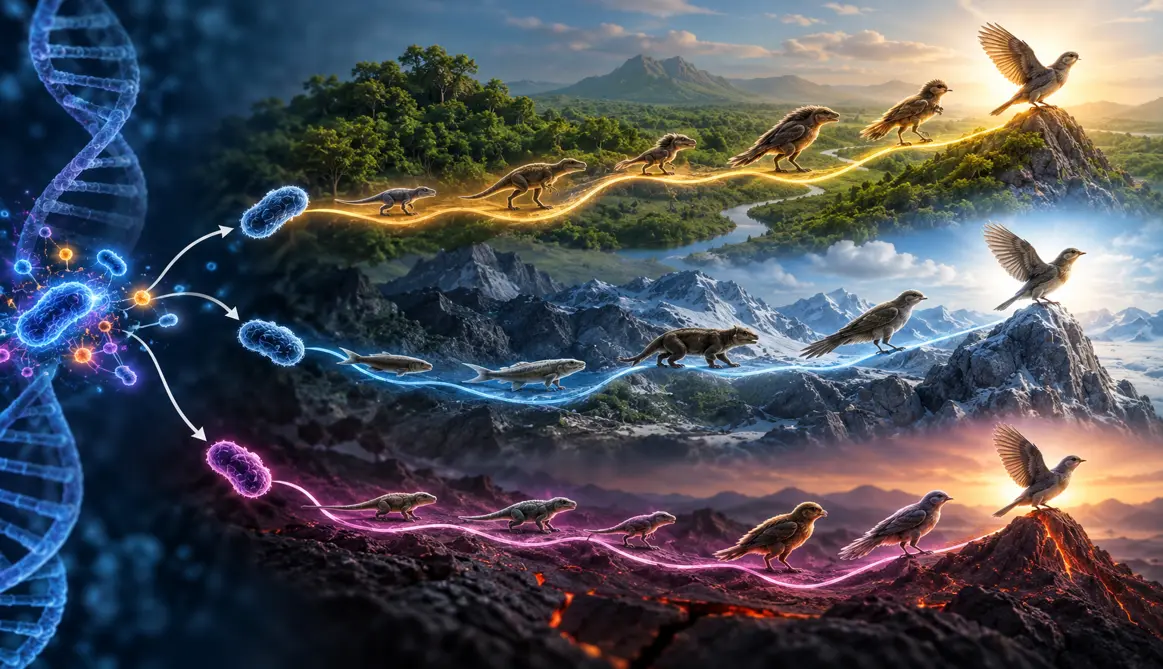
Evolution is often described as a process driven by random mutations and natural selection. If mutations arise by chance, does that mean the future of life is completely unpredictable? Surprisingly, scientists are discovering that evolution may be more predictable than we once thought but only to a point.
The key lies in separating two forces: chance and necessity.
When evolution repeats itself
Scientists can study evolutionary predictability by essentially “replaying” evolution. One of the most famous examples is Richard Lenski’s long-term E. coli evolution experiment, in which genetically similar bacterial populations have been evolving under the same laboratory conditions for tens of thousands of generations.
Although the populations do not acquire identical mutations, many repeatedly evolve similar characteristics, such as improved growth and adaptation to their environment. This suggests that natural selection can constrain evolution toward certain solutions when the environmental conditions remain similar.
This phenomenon is known as convergent or parallel evolution: different populations independently arrive at similar biological outcomes.
But chance still matters
The picture becomes much less predictable when we look closely at the genetic level.
Mutations occur unpredictably, and genetic drift can cause even beneficial mutations to disappear. Previous mutations can also change which evolutionary pathways are available later a phenomenon known as historical contingency.
Experiments in which scientists repeatedly evolved ancestral proteins under similar conditions have demonstrated just how powerful this contingency can be. Different evolutionary starting points sometimes produced dramatically different genetic solutions despite identical selection pressures.
In other words, evolution may repeatedly climb toward a similar “mountain peak,” while taking completely different routes to get there.
Could we eventually forecast evolution?
Modern sequencing, experimental evolution, mathematical models and increasingly sophisticated measurements of fitness landscapes are making evolutionary prediction more realistic. Scientists can now investigate which mutations are likely to be beneficial, which genetic combinations are accessible and how environmental conditions alter evolutionary trajectories.
This could eventually have practical applications from anticipating how bacteria develop antibiotic resistance to predicting how pathogens may adapt to changing environments.
But predicting evolution does not mean predicting every mutation or knowing exactly what a species will become. The further into the future we look, the more chance events accumulate.
The surprising answer
So, can evolution be predicted?
To some extent, yes.
We can often predict broad evolutionary trends when selection strongly favours particular traits. But the precise genetic route and especially the long-term outcomecan remain highly unpredictable.
Evolution therefore appears to be neither pure chance nor pure destiny. It is a dynamic combination of mutation, natural selection, genetic drift, environmental pressures and historical accidents.
And that may be one of the most fascinating discoveries of all: the future of evolution has rules, but it does not have a script.
Sources: