For many people, the day does not end until the phone says goodbye. A few minutes of scrolling through social media often turns into an hour without us even noticing. One video becomes another, one message becomes ten, and suddenly bedtime quietly slips away. Many people blame blue light for this sleepy struggle. But is blue light really the villain of the story, or is it simply taking the blame for a much bigger problem? As the old saying goes, “Every coin has two sides.” Your phone is like a faithful servant, but it can quickly become a demanding master if you let it.
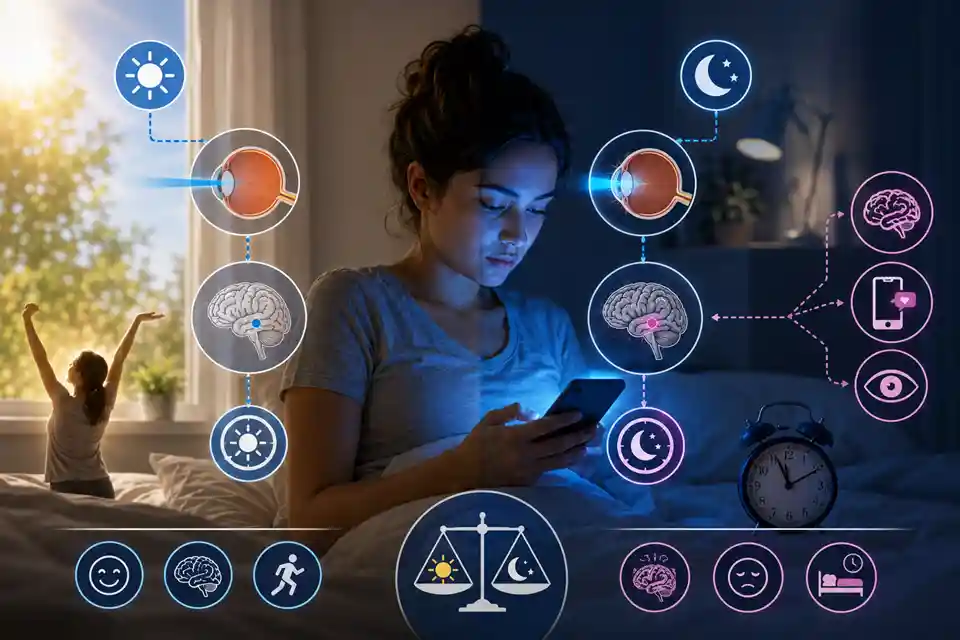
The answer is yes, blue light does affect sleep, but it is only one piece of the puzzle. Light is the body’s natural timekeeper. Special cells in our eyes detect blue light and send messages to a tiny part of the brain called the suprachiasmatic nucleus, or SCN, which acts as the body’s master clock. “Wake up, it is daytime,” the sunlight seems to tell our brain every morning. During the day, this blue rich light keeps us alert, active, and focused, just like a school bell tells students when classes begin.
Trouble begins when the same daytime signal arrives late at night. Bright blue light from phones, tablets, laptops, and televisions can reduce the release of melatonin, the hormone that gently prepares the body for sleep. Melatonin works like a caring night watchman who quietly closes the doors of wakefulness and opens the gates of rest. When blue light delays this hormone, the brain receives mixed signals. In chronobiology, this disturbance affects the circadian rhythm, the body’s natural 24 hour biological clock. It is like asking a train to leave the station while the signal is still red.
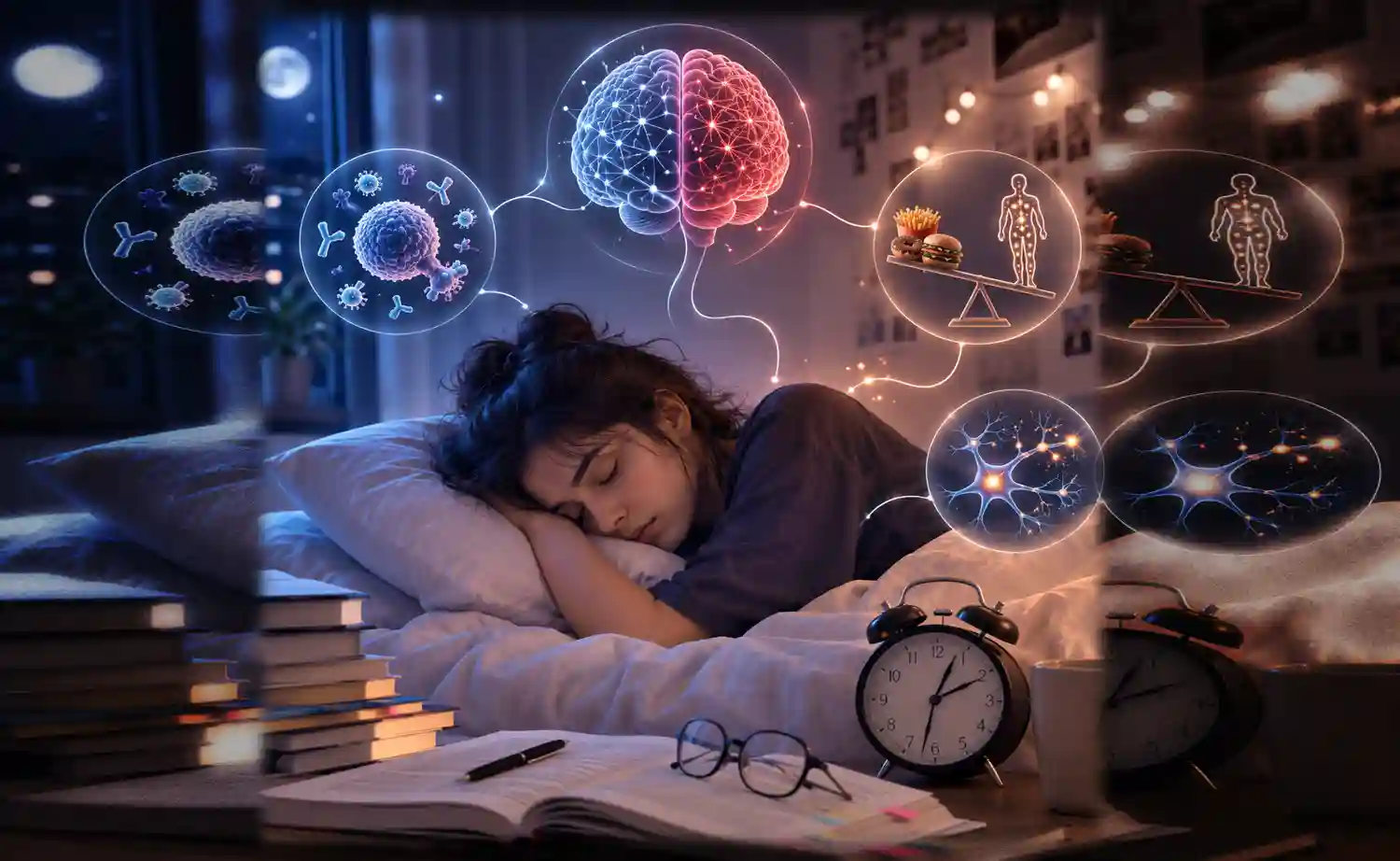
Scientific studies show that long hours of screen use before bedtime can delay sleep, reduce sleep quality, and shorten total sleeping time, especially in children and teenagers. Their developing brains are more sensitive to evening light. But blue light is not working alone. The content on the screen is equally powerful. An exciting cricket match, an action movie, a thrilling game, stressful news, or endless social media scrolling keeps the brain wide awake. It is a little ironic that people often scroll through videos to relax, yet many end up becoming even more alert. The famous phrase, “Just one more video,” has become one of the biggest bedtime traps of modern life.
Think of your brain as a busy classroom at the end of the school day. If students keep talking loudly, the teacher cannot switch off the lights and lock the room. In the same way, exciting online content keeps the brain busy even after the body wants to sleep. Notifications seem to whisper, “Do not leave yet, something interesting is waiting.” This personification reflects how digital distractions quietly compete with your natural sleep signals. Sometimes the brightest light is not from the screen, but from our curiosity.
The good news is that protecting your sleep does not require throwing your phone away. Small changes can make a big difference. Limiting screen use during the hour before bedtime is one of the simplest and most effective habits. If this is difficult, reduce screen brightness, switch on night mode or blue light filters, and keep your bedroom dark. A regular sleep schedule and exposure to natural morning sunlight help strengthen the circadian rhythm, making it easier for the body to know when to wake and when to rest. As the proverb says, “Prevention is better than cure.”
So, is blue light the real enemy? Not at all. Blue light is one of nature’s greatest gifts during the day. It helps us stay awake, improves attention, and keeps our body clock running on time. The real issue is not the light itself, but the wrong light at the wrong time. Like fire, blue light can cook your food or burn your hand, depending on how you use it. Your phone is not secretly stealing your sleep. Instead, your habits decide whether it becomes a helpful tool or a silent sleep thief. Balance, not fear, is the true secret to peaceful nights and energetic mornings.