Obesity is usually linked to eating habits, lack of exercise, and genetics. But what if the tiny bacteria living inside our gut also play an important role? A landmark study published in Science has shown that gut microbes can influence body weight in a surprising way. The research suggests that obesity may not depend only on our genes or diet, but also on the community of microorganisms living in our intestines. While obesity is not an infectious disease that spreads from person to person, beneficial bacteria can sometimes transfer health-promoting effects under specific conditions.
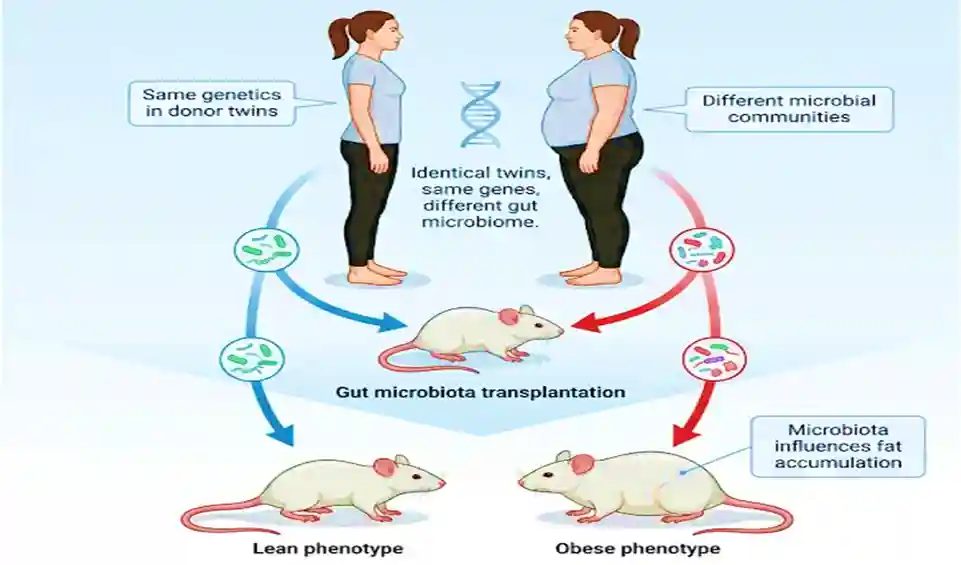
Researchers studied identical twin sisters where one twin was obese and the other was lean. Since identical twins share the same genes and usually grow up in the same environment, they provide an excellent model to understand the effects of factors other than genetics. Scientists found that although the twins had the same DNA, their gut microbiomes were very different. This suggested that gut bacteria could contribute to differences in body weight.
To test this idea, researchers transplanted gut microbes from each twin into separate groups of germ-free mice, animals that naturally lack gut bacteria. Mice receiving microbiota from the obese twin gained significantly more body fat than mice receiving microbes from the lean twin, even though both groups consumed the same amount of food and calories. This remarkable finding showed that gut microbes alone could influence fat storage and metabolism.
The most fascinating part of the study came when the two groups of mice were housed together. Mice naturally eat each other’s feces, a normal behavior called coprophagy, which allows gut bacteria to move from one animal to another. Beneficial bacteria from the lean mice successfully colonized the obese microbiome mice. As a result, the obese mice stopped gaining excess body fat, showing that healthy gut microbes could reshape the microbial community and improve metabolic health.
However, there was an important catch. The protective effect only occurred when the mice were fed a healthy diet rich in fruits, vegetables, and plant fibers while being low in saturated fat. When researchers switched the animals to a high-fat diet, the beneficial bacteria failed to establish themselves in the gut. In other words, unhealthy food created an environment where helpful microbes could not survive or provide their protective effects.
These findings highlight the powerful relationship between diet and the gut microbiome. A healthy diet nourishes beneficial bacteria, which in turn produce compounds such as short-chain fatty acids that regulate inflammation, improve insulin sensitivity, and influence how the body stores energy. Poor dietary choices, on the other hand, encourage microbes associated with metabolic disorders.
The study does not mean obesity is contagious like the flu or the common cold. Instead, it demonstrates that the gut microbiome is an important factor in metabolic health and that beneficial microbial communities may someday become part of obesity treatment. Scientists are now exploring microbiome-based therapies, including probiotics, prebiotics, personalized nutrition, and fecal microbiota transplantation, to manage obesity and related metabolic diseases.
As research continues, one message is becoming increasingly clear. We are not feeding only ourselves every time we eat, we are also feeding trillions of microbes that influence our health. Choosing a fiber-rich, balanced diet may be one of the simplest ways to cultivate a healthier gut microbiome and reduce the risk of obesity.