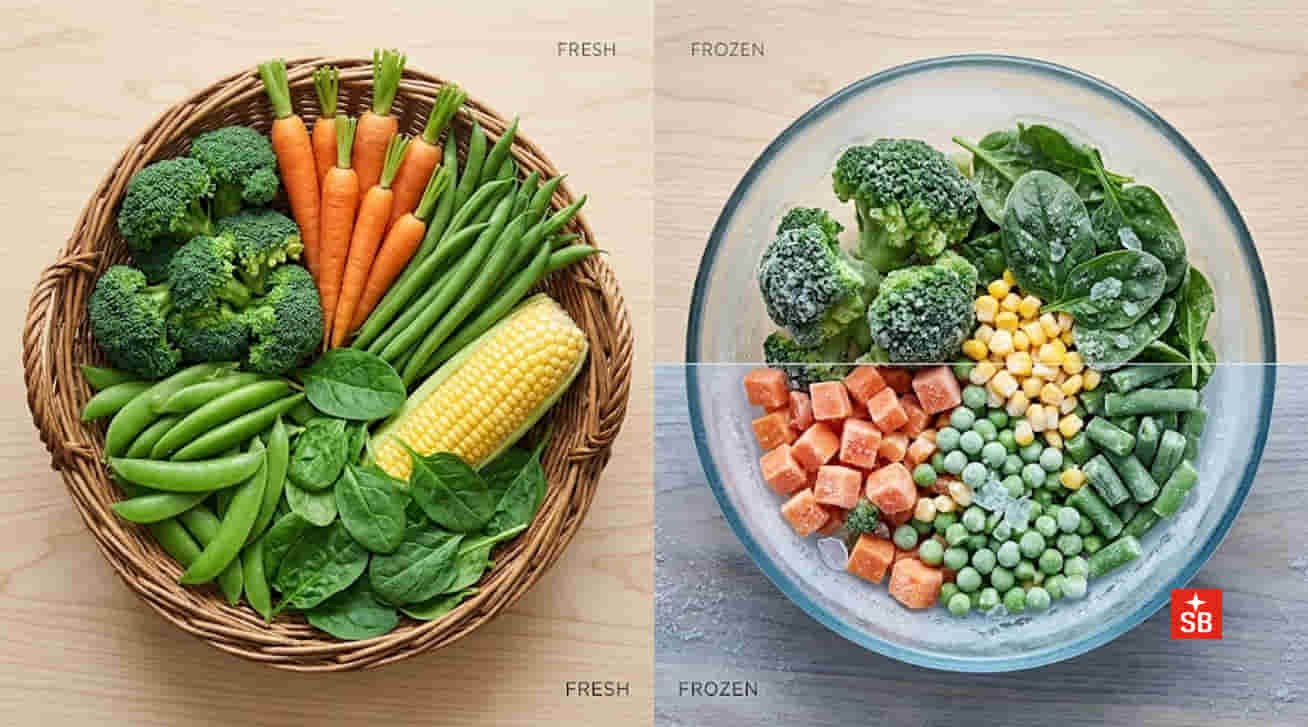
A walk through the supermarket often creates a simple belief, fresh vegetables are always the healthiest choice. Frozen vegetables quietly wait in another corner, sometimes treated like second place players. But science asks an interesting question, is fresh always best? The answer may surprise you. Fresh and frozen vegetables are like two students taking different roads to the same classroom. One travels immediately, while the other takes a shortcut through the freezer. As the proverb says, “All that glitters is not gold.” Sometimes the humble frozen packet carries just as much goodness as the colourful fresh basket.
Fresh vegetables are naturally rich in vitamins, minerals, fibre, and plant compounds that protect our health. However, the word “fresh” can be a little misleading. Many vegetables spend several days travelling from farms to warehouses, supermarkets, and finally to your kitchen. During this journey, some nutrients slowly wave goodbye. Vitamin C is especially sensitive to oxygen, light, and heat. Certain B vitamins may also decrease with time. Minerals and fibre, however, are much stronger. They quietly stand their ground even after days of storage. It is almost as if the vegetables whisper, “We are trying our best to hold on.”
“Good health grows from daily choices, not supermarket shelves.”

Frozen vegetables follow a different path. They are usually harvested when fully grown and quickly taken for processing. Before freezing, they go through blanching, where they are briefly placed in hot water or steam. This process stops natural enzymes that would otherwise spoil the vegetables during storage. Although blanching can reduce small amounts of vitamin C and some B vitamins, freezing acts like pressing the pause button on a movie. Once frozen, nutrient loss slows down greatly, helping vegetables keep much of their nutritional value for months.
Scientific studies comparing fresh, refrigerated, and frozen vegetables tell an interesting story. In many cases, frozen vegetables contain nutrient levels that are similar to, or sometimes even higher than, fresh vegetables that have been stored for several days. This happens because frozen vegetables lock in many nutrients soon after harvest, while fresh vegetables continue losing certain vitamins during transport and storage. In nutritional science, this preservation process helps maintain micronutrient stability over longer periods.
Does this mean frozen vegetables are healthier than fresh ones? Not always. The final nutritional value depends on many factors, including the type of vegetable, how quickly it was frozen, storage conditions, and the cooking method used at home. Boiling vegetables in large amounts of water can wash away water soluble vitamins, while steaming or microwaving with very little water helps protect more nutrients. In simple words, even the healthiest vegetable can lose some of its goodness if it spends too long swimming in boiling water.
There is another point worth remembering. Not every frozen vegetable packet is the same. Plain frozen vegetables are excellent choices, but some products come with added salt, creamy sauces, butter, or cheese. These extras may increase sodium, sugar, or fat content. Reading the nutrition label is like reading the fine print of a contract. It helps you know exactly what you are bringing home.
So, which should you choose? Both fresh and frozen vegetables deserve a place on your plate. Fresh vegetables are wonderful when they are bought and eaten quickly. Frozen vegetables offer convenience, last much longer, reduce food waste, and are available throughout the year. For busy families, they are often a practical helping hand waiting inside the freezer.
In the end, nutrition is not a beauty contest between fresh and frozen vegetables. It is about making healthy choices that fit your daily life. The healthiest vegetable is not the one that looks the brightest in the shop, but the one that reaches your plate instead of your dustbin. As the old saying reminds us, “Health grows where good habits are planted.” Whether fresh or frozen, vegetables remain powerful partners in building a healthier future.