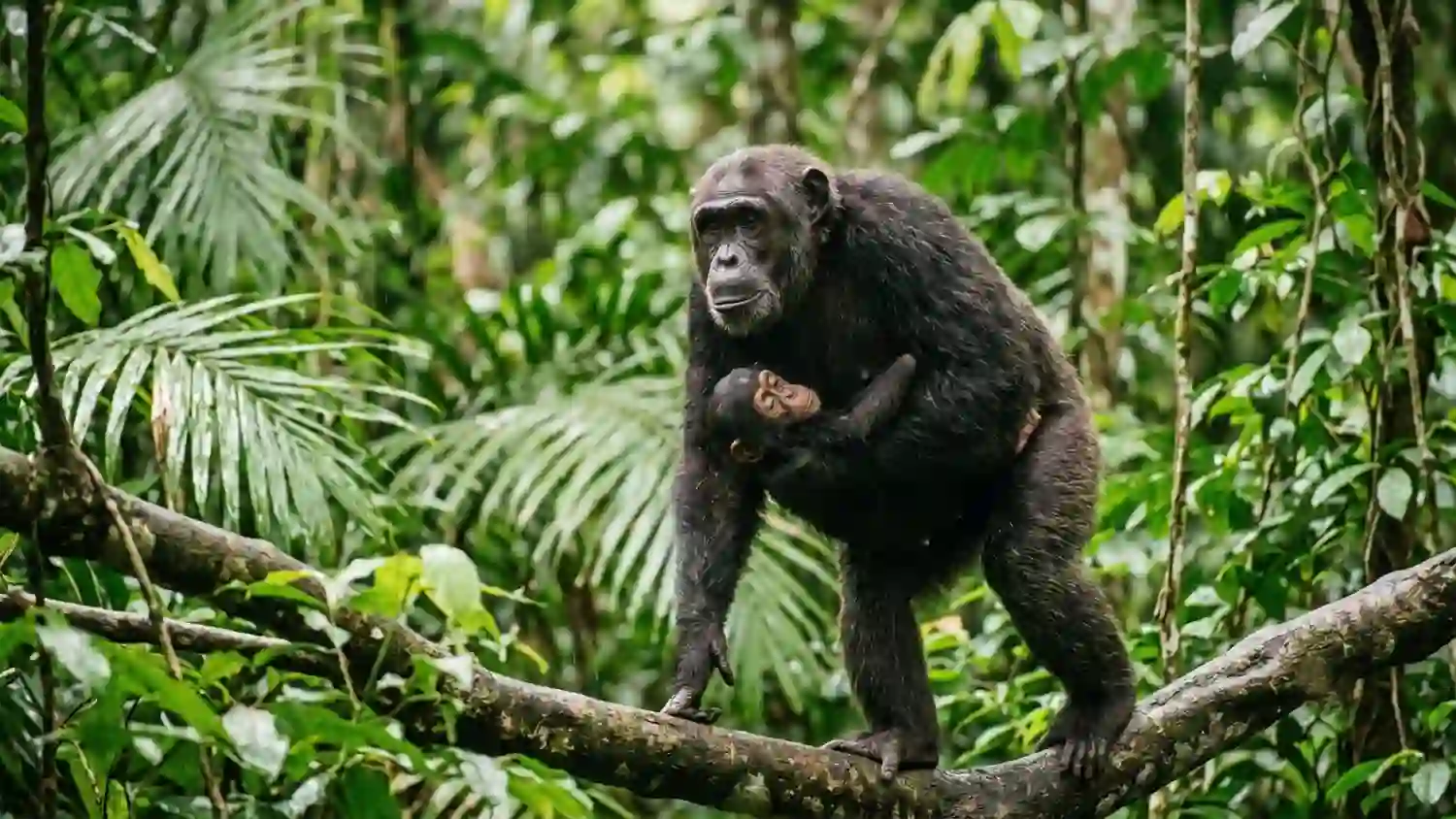
A chimpanzee mother may continue carrying her infant long after it has died. She may groom its body, hold it close and travel with it as she would when it was alive. In some documented cases, this behaviour has continued for months. Why would a mother continue caring for an infant that can no longer respond? Scientists call this behaviour infant corpse carrying. It has been observed in chimpanzees and bonobos, but explaining why it happens has been difficult. Does the mother recognise that her infant has died? Or does the strong bond between them keep her maternal behaviour going?
A new study from researchers at the University of Oxford examined 83 documented cases from 15 different sites to investigate what influences how long mothers carry their dead infants. The durations varied enormously, from around 30 minutes to 126 days, with an average of approximately 11 days. Two patterns stood out. First, mothers tended to carry older infants for longer than younger ones. Older infants have generally spent more time with their mothers, suggesting that the strength of their bond may influence how long the behaviour continues.
Second, infants that died from disease were carried for longer than those killed through infanticide. This finding may offer a clue. A sudden, violent death could provide different cues from an illness in which an infant gradually becomes weaker. Researchers have proposed that the circumstances of death may influence how readily a mother responds to the loss. However, the study cannot establish exactly what an individual mother understands or experiences.

The findings also raise a deeper question: does carrying a dead infant mean that a chimpanzee does not understand death?
Not necessarily. Mothers have sometimes continued carrying infants even after their bodies became mummified. The researchers argue that persistent maternal behaviour, social bonds and the circumstances surrounding death may explain the behaviour without requiring us to assume that the mother believes her infant will recover. That does not prove chimpanzees understand death as permanent, either; this remains an open scientific question. Understanding these responses matters because chimpanzees and humans share a common ancestor that lived millions of years ago. Studying how our closest living relatives respond to death may help researchers investigate the evolutionary origins of human responses to loss.
For now, the research points to a powerful possibility: behaviour that looks like a refusal to let go may arise from the persistence of a maternal bond, even when the biological reality has changed.