The night sky has always been like a giant storybook, but many of its pages remained closed until the Hubble Space Telescope opened them. For more than 35 years, Hubble has acted like a tireless explorer, travelling without moving and showing us wonders hidden billions of light years away. It is often said, “Old is gold,” and Hubble proves this saying true. While many people celebrate newer telescopes, Hubble continues to whisper secrets of the universe that leave scientists speechless. As a famous quote reminds us, “The sky is not the limit, it is only the beginning.”
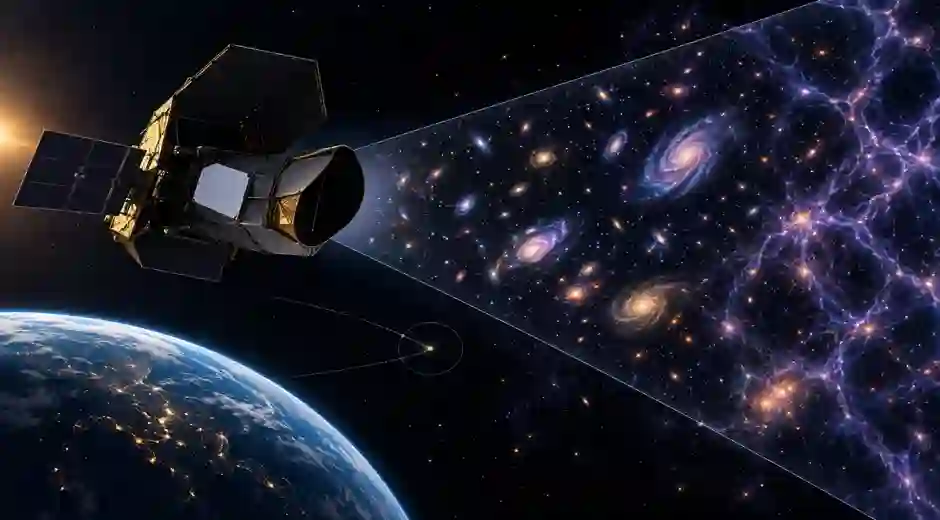
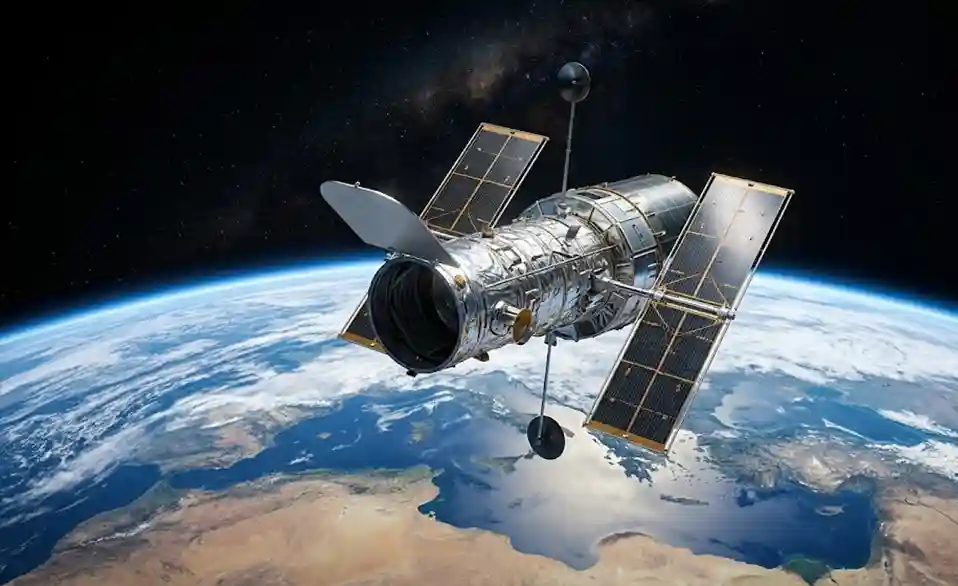
One of Hubble’s greatest strengths is its home in space. Unlike telescopes on Earth, it does not have to look through the Earth’s atmosphere, which behaves like a foggy window. Floating about 340 miles above Earth, Hubble enjoys a crystal clear view of the universe. It captures ultraviolet, visible, and near infrared light, allowing scientists to study stars, galaxies, black holes, and nebulae in different ways. “Space is full of colours that our eyes cannot see,” Hubble seems to say. It is like having three different pairs of glasses that reveal different hidden worlds.
Hubble’s achievements are nothing short of extraordinary. Since its launch in 1990, it has completed nearly 1.7 million observations of about 55,000 celestial objects. Its massive collection of data has crossed 400 terabytes, and scientists have published more than 22,000 research papers using its observations. These studies have been cited over a million times, showing how valuable Hubble’s discoveries are to astronomy. Even today, astronomers compete fiercely for observing time because every hour with Hubble is as precious as gold. This remarkable demand proves that age is only a number when excellence continues to shine.
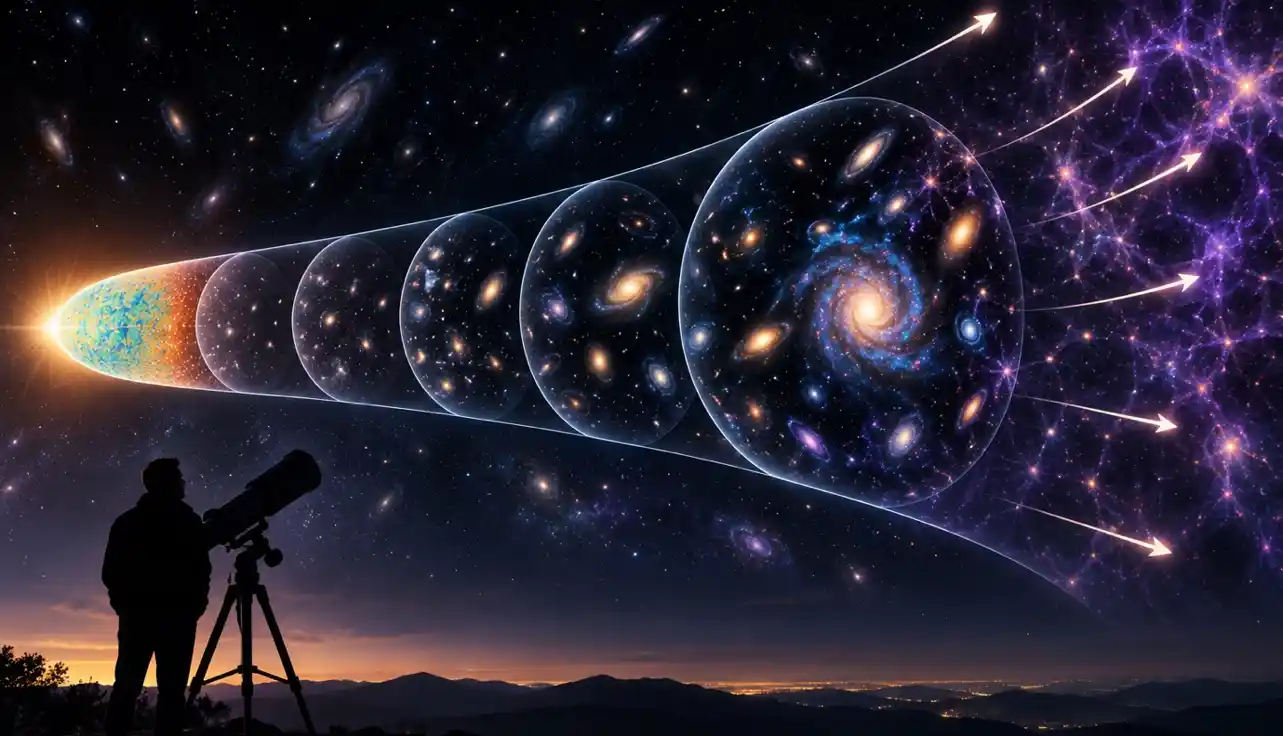
Perhaps Hubble’s most famous achievement came through its Deep Field images. Scientists pointed the telescope towards what looked like an empty, dark patch of sky for several days. To everyone’s surprise, that “empty” space turned out to be crowded with thousands of distant galaxies. It was like opening a forgotten cupboard and finding a hidden treasure inside. Some of these galaxies appeared as they existed only 400 to 800 million years after the Big Bang. This discovery transformed our understanding of how galaxies formed and how the young universe evolved over billions of years.
Hubble also played a major role in measuring the expansion of the universe. Using special stars called Cepheid variable stars as cosmic distance markers, scientists measured the Hubble constant with remarkable precision. However, this created a surprising puzzle called the “Hubble tension.” The expansion rate measured by Hubble does not perfectly match the value predicted from the cosmic microwave background. This scientific disagreement is not a failure but a doorway to new discoveries. As the proverb says, “Every question is the beginning of wisdom.” Sometimes the universe answers one question by asking an even bigger one.
Although the James Webb Space Telescope now captures many headlines, Hubble remains an excellent team player. It regularly works alongside Webb and powerful ground based observatories to confirm discoveries across different wavelengths. Together they have refined the rotation period of Uranus, observed planetary collisions around the star Fomalhaut, and even detected a white dwarf consuming the remains of a Pluto like object. This teamwork is like different musicians playing together to create one beautiful symphony, where each instrument contributes its own unique sound.
Hubble’s journey was not always smooth. Soon after its launch, scientists discovered that its primary mirror had a tiny flaw, causing blurry images. Many believed the mission had failed. Instead of giving up, NASA astronauts visited the telescope in 1993 and installed corrective optics, almost like giving Hubble a new pair of spectacles. That repair transformed disappointment into one of the greatest comeback stories in the history of science. It reminds us that even the brightest stars sometimes need a little adjustment before they shine.
Today, Hubble is much more than an old telescope. It is a teacher, a storyteller, and a bridge between humanity and the cosmos. It inspired generations of astronomers, fuelled curiosity about space, and laid the foundation for modern discoveries. James Webb may now explore farther into the universe, but it proudly stands on Hubble’s shoulders. As another timeless saying reminds us, “Great trees grow from strong roots.” Hubble continues to prove that true legends never fade, they simply continue writing new chapters among the stars.