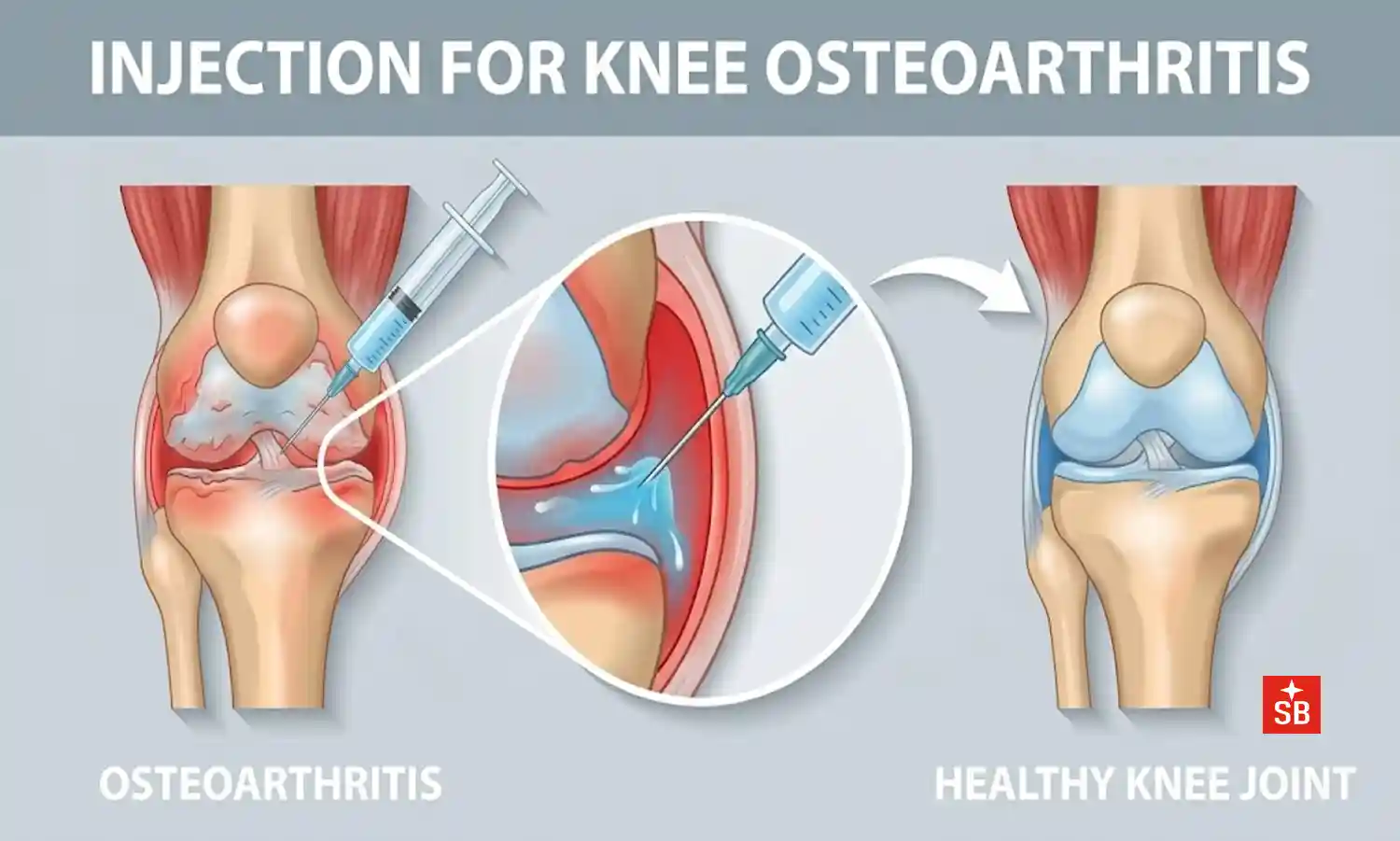
A knee in pain can feel like an old door hinge that cries out every time it moves. For millions of people living with chronic knee pain, especially those dealing with osteoarthritis, every step can seem like a battle between rust and movement. When oral medicines, heat packs, and physical therapy fail to provide comfort, doctors often suggest injecting a therapeutic material directly into the knee joint to calm the storm. Timely treatment can often prevent bigger problems later. These injections are like skilled mechanics entering a tired machine, helping its parts work together more smoothly.
However, because these treatments involve needles going directly into a major joint, they are surrounded by a massive web of medical myths, Internet misinformation, and patient fears. Rumours spread faster than wildfire, and the truth often walks with a limp behind them. Some people look at these shots as magic potions that will instantly regrow destroyed bone, while others terrify themselves into believing the procedure is agonizing or will ruin their joints forever. Ironically, many fear the tiny needle more than the severe pain that limits their daily life. The truth lies somewhere in the middle. Knee injections are powerful tools for managing pain and restoring mobility, but they are maintenance strategies, not permanent cures. They are not miracle wands, but practical companions in the long journey of joint care.
To understand how they work, it helps to look at the three primary categories of materials used in modern medicine: corticosteroids, hyaluronic acid, and regenerative biologics like platelet-rich plasma, or PRP. Each material serves a completely different purpose within the joint ecosystem. Think of the knee as a busy city, where different workers perform different tasks. One puts out fires, another oils the machinery, and a third encourages repair work. In medical jargon, these therapies target inflammation, lubrication, and biological healing through different pathways.

The three materials reshaping knee care
The first and most common material used is corticosteroids, often referred to simply as “cortisone.” Think of cortisone as a powerful fire extinguisher. When a knee is arthritic, the inside of the joint becomes deeply inflamed, hot, swollen, and filled with angry chemical signals. It is as if the joint itself whispers, “I am under attack.” Cortisone is a synthetic hormone that, when injected, rapidly shuts down this inflammatory fire. Like rain calming a forest blaze, it brings quick relief to many patients.
Consider the real-life example of Robert, a 65-year-old retired school teacher who loved tending to his backyard garden. His knee arthritis became so severe that the joint swelled up like a balloon, leaving him unable to bend his leg or walk down his porch steps. His doctor delivered a corticosteroid injection. “I thought my gardening days were over,” Robert said, “but within two days, I could move comfortably again.” Within forty-eight hours, the swelling completely vanished, and the burning pain subsided. Robert was back in his garden that weekend. For him, the injection acted like a temporary truce in an ongoing battle.
However, the major limitation of cortisone is that it wears off, usually within two to three months, and it does absolutely nothing to fix the underlying structural damage. Furthermore, overusing it can actually degrade the remaining cartilage over time. There is a quiet irony here, the same treatment that calms inflammation can become harmful if used too often. As another proverb reminds us, “Too much of anything is good for nothing.”
The second material is hyaluronic acid, frequently called “gel shots” or viscosupplementation. If cortisone is a fire extinguisher, hyaluronic acid is a premium bottle of synthetic lubricant. Healthy knees naturally contain a thick, slippery fluid that acts as a shock absorber. In an arthritic knee, this fluid becomes thin, watery, and less effective. Gel injections try to replace that lost cushion. It is like adding fresh oil to an engine that has been running dry for years.
Take the case of Sarah, an avid mall walker in her early 50s. She did not have severe swelling, but her knees constantly felt stiff, dry, and mechanical, like bone rubbing on bone. She opted for a series of hyaluronic acid injections. “It felt as if my knees had found their missing cushion,” Sarah recalled. Because the gel mimics natural joint fluid, it took a few weeks to start working, but it provided Sarah with a smooth, dampening cushion that lasted for nearly six months, allowing her to complete her morning walks without that gritty, scraping sensation. Her knees, once reluctant travellers, slowly became willing companions again.

The third and newest category involves platelet-rich plasma, or PRP, which belongs to the field of regenerative medicine. Instead of a manufactured chemical or gel, the material used here is harvested directly from the patient’s own body. A nurse draws a sample of your blood, spins it in a machine called a centrifuge to isolate the platelets, the cells responsible for healing, and injects that concentrated biological mixture back into your knee. Here, the body becomes both the patient and the pharmacy, a fascinating example of modern medicine working hand in hand with natural biology.
A real-world example is Marcus, a 42-year-old amateur weekend soccer player dealing with early-stage cartilage wear. He wanted an option that worked with his body’s natural biology. The PRP injection triggered a localized healing response that gradually calmed his pain over several months. “I wanted my own body to help itself,” Marcus said. While promising, PRP is highly variable. Because the material comes from your own blood, its effectiveness depends entirely on your personal health, age, and biology, and it is rarely covered by standard health insurance. In this field, every person’s biology writes its own story.
Weighing your options: pros, cons, and limitations
Choosing the right injection material requires balancing quick relief against long-term safety. Medicine is often a game of balance, like walking a tightrope between immediate comfort and future benefit. The table below outlines exactly what each material offers and where it falls short.
Debunking the myths of the needle
The biggest myth that keeps patients awake at night is the fear of the procedure itself. Many believe that getting a needle pushed into a joint must be an agonizing, bone-chilling experience. In reality, orthopedic specialists utilize highly effective local numbing sprays or tiny needles filled with lidocaine to freeze the skin first. Most patients report that the actual joint injection feels like a brief, dull pressure that is over in less than thirty seconds. The mountain of fear often turns out to be a molehill of discomfort.
Another massive misconception is that these injections are a form of artificial camouflage designed to trick you into ruining your joints further. Patients worry that by masking the pain, they will accidentally overexert themselves and destroy their knees completely. This is a misunderstanding of how pain management connects to physical rehabilitation. Pain is like a strict gatekeeper, preventing movement, but sometimes the gatekeeper becomes too harsh and stops useful activity as well.
When your knee hurts constantly, your brain naturally stops using the surrounding muscles to protect the joint. Over time, your thigh and calf muscles weaken from disuse, which ironically throws even more weight and stress directly onto the damaged bone. It becomes a vicious cycle, where pain feeds weakness and weakness feeds pain.
When an injection safely dampens the pain, it opens up a critical “window of opportunity.” This window allows you to perform targeted physical therapy exercises, build up your quadriceps, and correct your walking posture without crying out in agony. The shot does not mask the problem so you can run a marathon, it relieves the pain so you can rebuild the muscular scaffolding around your knee, creating a natural, long-term defence system against future wear and tear. Strong muscles become silent bodyguards, protecting the joint every day.
Ultimately, knee joint injections are highly sophisticated tools, but they are not time machines that can restore a sixty-year-old knee back to its twenty-year-old glory. They are excellent, practical strategies designed to reduce discomfort, improve daily movement, and buy valuable years of active living before major surgical interventions like a total knee replacement become necessary. Modern medicine does not promise miracles, but it often provides something equally precious, the chance to move, work, and enjoy life with less pain.