For years, scientists have known about the CO₂ fertilization effect, the ability of higher atmospheric carbon dioxide to stimulate photosynthesis and improve water-use efficiency in many plants. It sounds like a simple equation: more CO₂, more plant growth.But nature rarely follows a straight line.
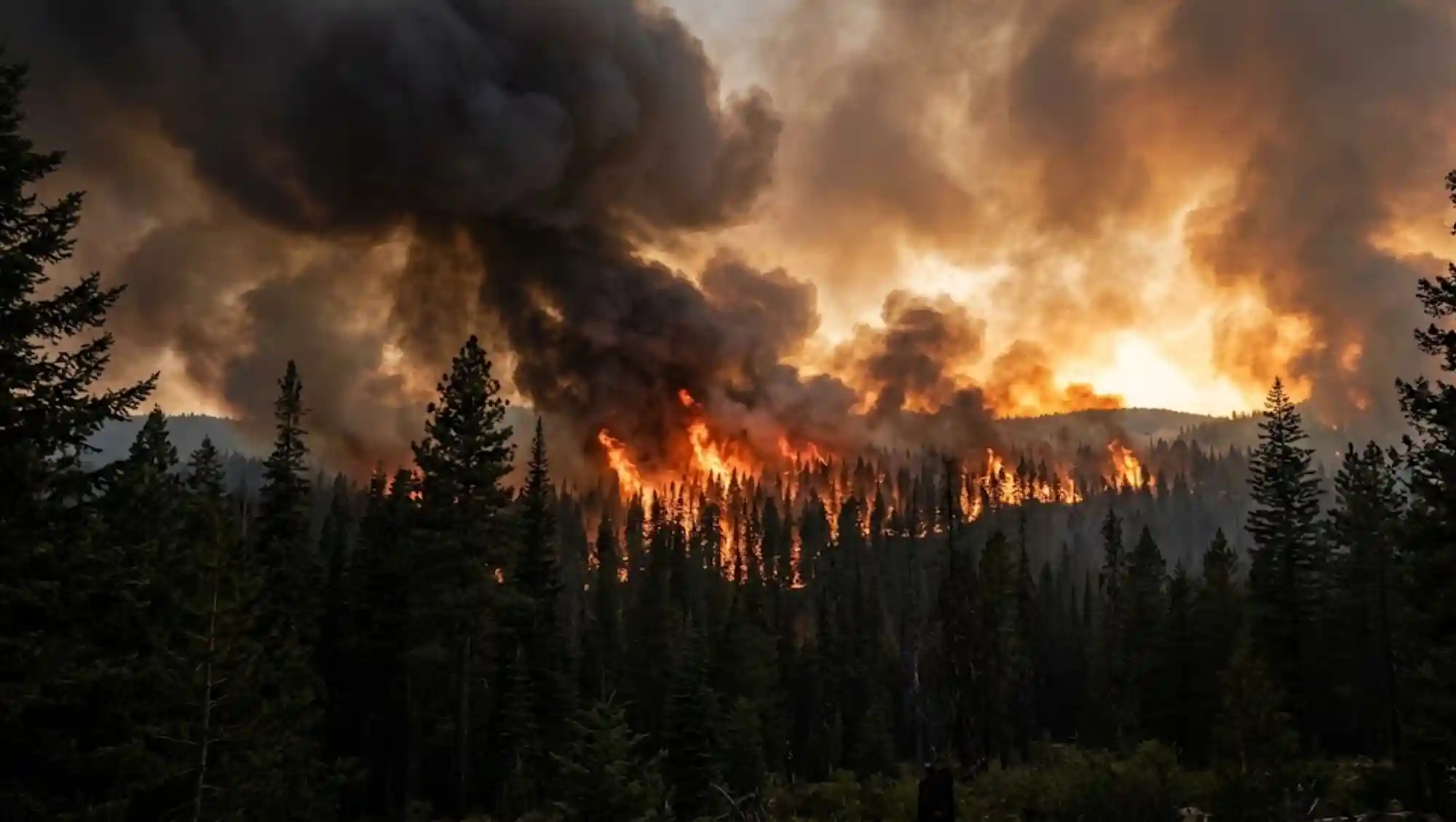
A new study published in Science provides a remarkable glimpse into what happened to forests during the Paleocene-Eocene Thermal Maximum (PETM), a period of rapid global warming about 56 million years ago. The evidence suggests that forests initially benefited from rising CO₂, becoming denser and more productive. But as temperatures and environmental stress intensified, this advantage was overwhelmed, and forest biomass eventually declined dramatically.
The PETM was one of Earth’s major episodes of rapid climate change. Large amounts of carbon entered the atmosphere and oceans, temperatures increased substantially, and ecosystems were forced to adapt.
The new research suggests that vegetation did not respond in a simple, linear fashion. Increased CO₂ initially encouraged plant growth. Higher CO₂ can allow plants to maintain carbon fixation while partially closing their stomata, reducing water loss.
But warming changes the equation.
Higher temperatures increase evaporative demand, dry soils more rapidly and increase water stress. Prolonged heat and drought can impair photosynthesis, damage plant hydraulic systems and increase susceptibility to fire, pests and disease.
This is the ecological plot twist.
A greener world may not mean a healthier world
Satellite observations have documented widespread increases in vegetation greenness in several parts of the world. CO₂ fertilization, nitrogen deposition, irrigation and land-use changes can all contribute.
But greenness is not the same as resilience.
A forest may initially produce more leaves under elevated CO₂ while simultaneously becoming increasingly vulnerable to heat and drought. Once environmental stress crosses a threshold, the system can shift rapidly.
This is particularly important because modern climate change is not simply increasing CO₂. It is simultaneously changing temperature, rainfall patterns, atmospheric dryness, wildfire regimes and soil moisture.
The forest responds to the whole climate, not to the CO₂ concentration alone.
Where is atmospheric CO₂ today?
The warning becomes more relevant when we look at today’s atmosphere.
NOAA measurements from Mauna Loa show atmospheric CO₂ at roughly 427–429 ppm in August 2026, compared with approximately 280 ppm before the industrial era. [NOAA Global Monitoring Laboratory CO₂ Trends]
That represents an increase of roughly 150 ppm above pre-industrial levels.
CO₂ is also continuing to rise. Recent observations and forecasts indicate annual increases of roughly a few parts per million per year.
If a simple 2-3 ppm annual increase continued, atmospheric CO₂ could approach approximately 440–445 ppm around 2030 and roughly 480–510 ppm by 2050.
These are simple trend-based projections, not climate-model predictions. Actual concentrations will depend on future emissions, land-use change, ocean uptake, carbon sinks and climate policy.
What could 2100 look like?
The range of possible futures is enormous.
The Shared Socioeconomic Pathways (SSPs) used in climate modelling project very different atmospheric CO₂ trajectories depending on future emissions. Under strong mitigation, concentrations could stabilize and eventually decline. Under high-emission pathways, CO₂ could continue rising dramatically through the century.
This is why predictions should not be reduced to a single number.
The future CO₂ concentration is partly determined by what humanity does today.
The Amazon and other forests: the modern test
The ancient forest record is especially relevant to tropical ecosystems.
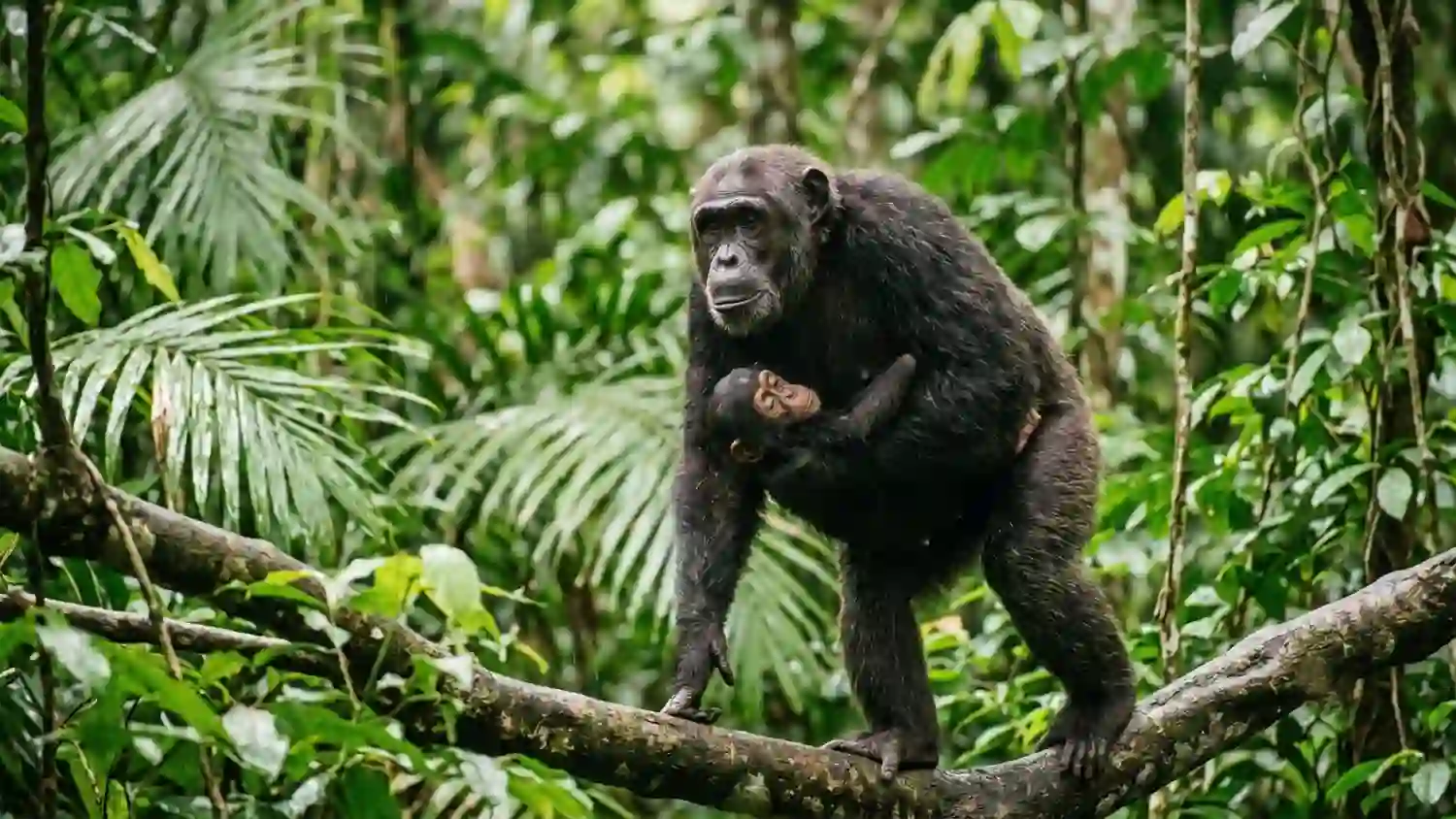
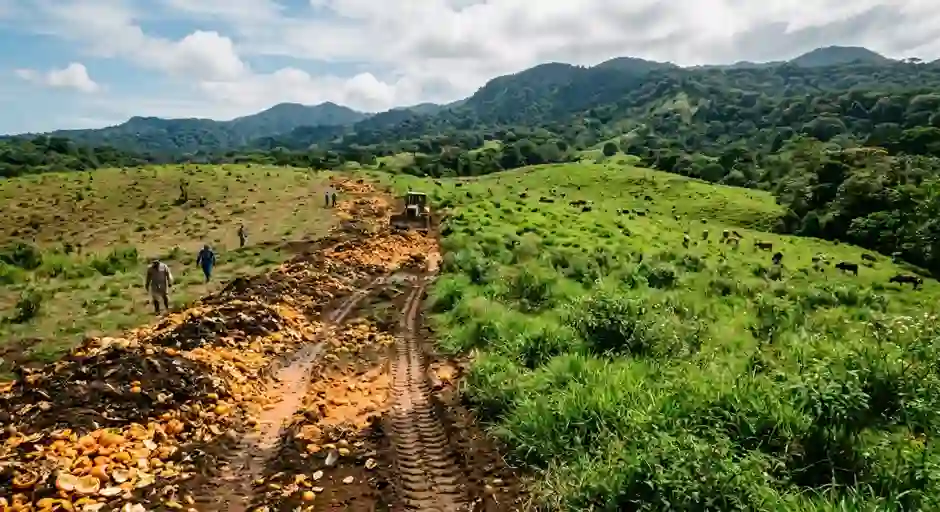
The Amazon and other tropical forests are already experiencing increasing pressure from warming, drought, deforestation and fire. Climate models suggest that continued warming could increase the risk of regional vegetation changes and carbon losses.
The mechanism is biologically complex.
Heat and drought can trigger stomatal closure, reduce photosynthesis and increase reactive oxygen species (ROS). Plants activate stress pathways involving abscisic acid (ABA), antioxidant systems, heat-shock proteins and stress-responsive genes.
At the ecosystem level, however, individual molecular responses can accumulate into something much larger: reduced growth, tree mortality, altered species composition and increased fire risk.
An ancient warning, not a crystal ball
There is an important caveat. The PETM was not identical to modern climate change. Continents, ecosystems, atmospheric chemistry and the rate of carbon release were different.
Therefore, the ancient event cannot tell us exactly what today’s forests will look like in 2100.
But it gives us something equally valuable: evidence that ecosystems can respond non-linearly to rapid climate change.
The geological record is like an old stress-test report from Earth.
It reminds us that environmental systems can absorb pressure for a while-and then suddenly change.
The simple lesson
CO₂ is essential for plants. Higher CO₂ can increase photosynthesis and growth.But forests also need water, suitable temperatures, healthy soils and stable ecosystems.
So the story is not simply about more CO₂ making Earth greener.
A little more CO₂ may help plants. Too much CO₂, together with rising heat and drought, can change the rules.
The ancient forests have already shown us one possible ending.The choice of which future we create is still ours.
| References: 1. Dunn, R. et al. (2026). Science. DOI: 10.1126/science.aec4776. 2. Dinneen, J. (2026). “Ancient rise in CO₂ was catastrophic for forests: what that means for today’s plants.” Nature, 13 August 2026. 3. NOAA Global Monitoring Laboratory. Atmospheric CO₂ trends, Mauna Loa Observatory, 2026. 4. Meinshausen, M. et al. (2020). The shared socio-economic pathway (SSP) greenhouse gas concentrations and their extensions to 2500. Geoscientific Model Development. 5. IPCC (2023). Climate Change 2023: Synthesis Report. |