That bottle of cooking oil may look perfectly normal after frying but chemically, it can be very different from when you first poured it into the pan. Reusing oil once or twice is common in many kitchens, especially when deep-frying foods. But what actually happens to the oil each time it is heated?
The answer begins with oxidation.
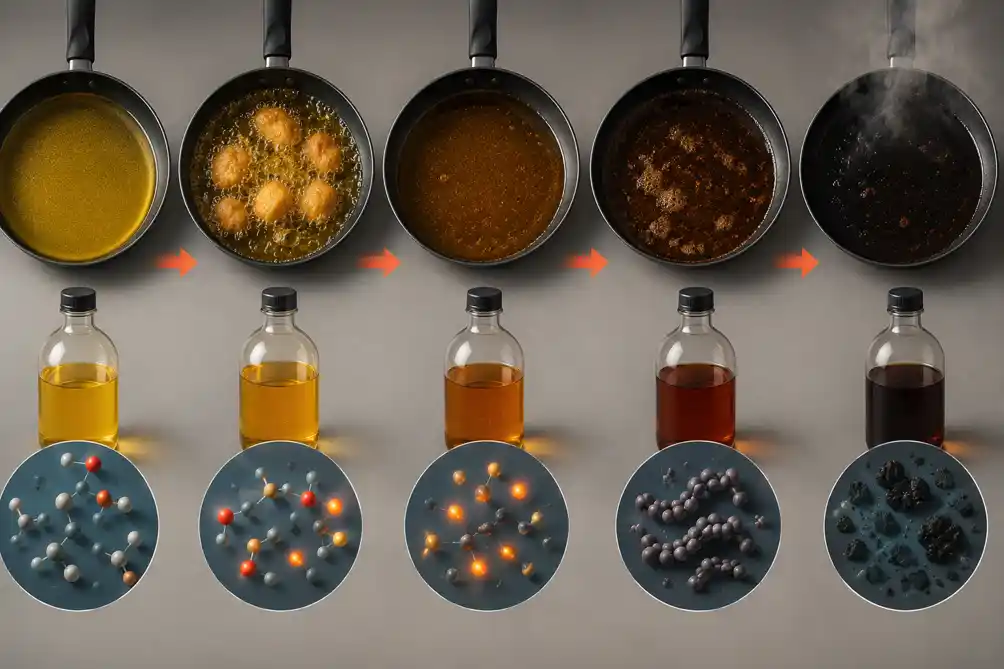
Cooking oils contain fats, particularly unsaturated fatty acids, that can react with oxygen when exposed to high temperatures. During frying, heat accelerates these reactions and produces unstable compounds called lipid oxidation products. The more often oil is heated, cooled, exposed to air, and reheated, the more these reactions can accumulate.

One important group of compounds produced during this process is aldehydes. These include substances such as acrolein and other reactive aldehydes that can form when fatty acids break down at high temperatures. Some are also released into the air as cooking fumes, meaning repeated high-temperature frying can affect not only the oil and food but also indoor air quality.
The oil can also undergo polymerisation. Smaller molecules created during heating can react with one another and form larger compounds called polymers. This can make repeatedly heated oil become darker, thicker, and more viscous. Its smoke point can also decrease as degradation products accumulate.
Another important change is the gradual depletion of naturally occurring antioxidants, such as tocopherols (vitamin E compounds), which normally help protect the oil from oxidation. Recent research has also found changes in fatty-acid profiles and increasing lipid-peroxidation products when oils are repeatedly used for deep frying.
Does this mean eating food fried in reused oil will immediately make you sick?
No. The risk depends on the type of oil, temperature, duration of heating, exposure to oxygen, food residues, and how many times the oil is reused. Much of the evidence linking repeatedly heated oils with inflammation, cardiovascular effects, or other health problems comes from laboratory and animal studies, so it should not be interpreted as proof that occasional consumption causes disease in humans.
So, how can you tell when oil has had enough?

Watch for darkening, excessive foaming, unusual odour, increased thickness, smoke appearing at normal frying temperatures, or persistent food particles. These are signs that the oil has undergone significant degradation.
The chemistry is simple but important: every cycle of heating gives oxidation and other degradation reactions another opportunity to occur.
Oil may look reusable but its chemistry remembers every time it has been heated