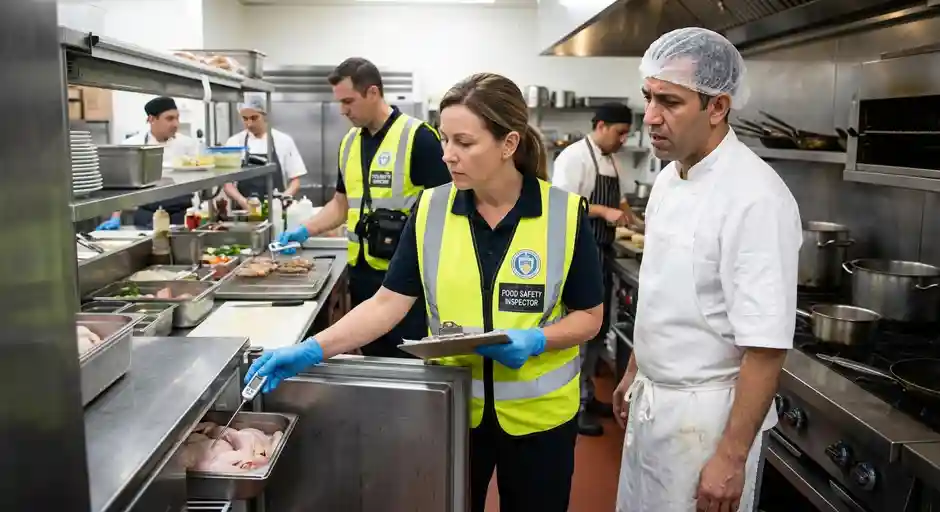
A five-star hotel usually comes with an expectation that the food is not only delicious, but safe. So when food-safety inspections uncover spoiled meat, fungal growth, expired ingredients, poor storage conditions, or unhygienic kitchens, the concern goes far beyond one restaurant. Recent food-safety raids across India have brought an uncomfortable question back to the table: how much do we really know about the food prepared outside our homes?
Food safety is not simply about whether something looks fresh when it reaches the plate. Between a raw ingredient entering a kitchen and a finished meal being served, there are several opportunities for contamination. Meat, dairy products, eggs, cooked rice and other perishable foods can support the growth of bacteria if they are stored at unsafe temperatures. Poor hygiene can introduce pathogens through hands, utensils, surfaces, or contaminated water. And when food is repeatedly stored, handled, or reheated incorrectly, the risk increases further.
Some contamination is obvious. A strange smell, visible mould, or slimy texture can be a warning sign that food has deteriorated. But many dangerous microorganisms leave no visible or detectable change in food. Salmonella, E. coli, Listeria monocytogenes and Staphylococcus aureus, for example, can contaminate food without making it look spoiled. That is why food safety depends so heavily on proper storage, cooking, sanitation and temperature control rather than appearance alone.

This also explains why “home food is healthier” is only partly true. A home kitchen gives greater control over ingredients, preparation and hygiene, but it is not automatically free from contamination. Raw meat can contaminate cutting boards, cooked food can be left at room temperature for too long, and inadequate handwashing can spread microorganisms just as easily at home.
The bigger issue exposed by food raids is therefore not simply restaurants versus home food. It is whether the entire food chain (from storage and transportation to preparation and serving) follows basic safety standards. This becomes even more important in hotels, restaurants, canteens, PGs and other places where food is prepared for large numbers of people.
Perhaps the real lesson isn’t that we need to return completely to the old days of eating only home-cooked meals. It is that freshness, hygiene and safe food handling matter wherever food is prepared. A home-cooked meal can be comforting, nutritious and safer simply because we know what went into it. But the same principles should be possible in every kitchen serving the public.