A strawberry can be recognised by its colour before it is even tasted. That familiar red isn’t simply a cosmetic feature. It is the visible result of thousands of biochemical reactions taking place inside the developing fruit. Now, scientists have managed to interrupt that process with a single, precisely targeted gene edit, turning normally red strawberries white. But the interesting part isn’t really the colour. It’s how precisely the scientists managed to change it.
The red colour of strawberries comes largely from anthocyanins, a group of pigments also responsible for the red, purple and blue colours seen in many fruits and flowers. Their production is controlled by a network of genes. One important regulator in strawberries is a gene called MYB10, which acts somewhat like a molecular switch: it activates other genes involved in producing anthocyanin pigments. But there was a complication. The cultivated strawberry is octoploid, meaning it carries eight sets of chromosomes instead of the two found in humans. As a result, many genes exist in several closely related copies. Editing the wrong copy might have little effect, or editing several copies could produce unwanted changes.
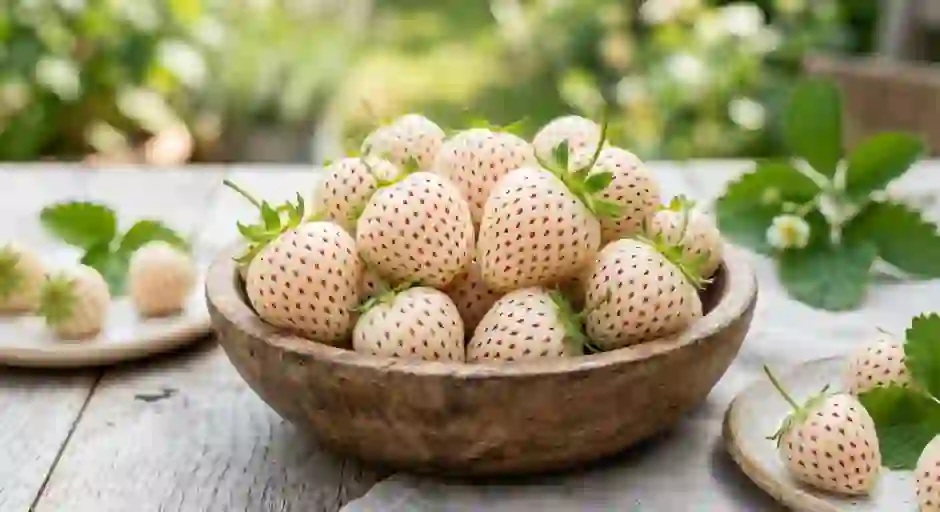
So the researchers first had to determine which copy of MYB10 was actually doing most of the work. Their experiments showed that one particular copy, called MYB10-1B, was strongly active as the fruit turned red, while its related copies contributed much less. That gave CRISPR/Cas9 a specific target. Using CRISPR/Cas9, the researchers introduced mutations specifically into MYB10-1B in the commercial strawberry variety Florida Brilliance. When this gene copy was disrupted, the downstream genes responsible for anthocyanin production became much less active. The result was striking: instead of developing their usual red colour, the edited strawberries remained white throughout ripening.
Interestingly, the seeds remained red. This suggests that pigment production is regulated differently in different parts of the fruit, showing that even something as simple as “strawberry colour” can involve surprisingly precise biological control.
The experiment is important beyond producing unusual-looking strawberries. It demonstrates that CRISPR can selectively edit one functional gene copy within a complicated, multi-copy genome. That could make it easier for scientists to modify specific traits in other polyploid crops, where traditional breeding and gene editing are more challenging. So, the white strawberry isn’t just a novelty. It is a visible demonstration of something much bigger: when scientists understand exactly which genetic switch controls a trait, they can sometimes change the entire appearance of a plant by editing just one carefully chosen piece of DNA.