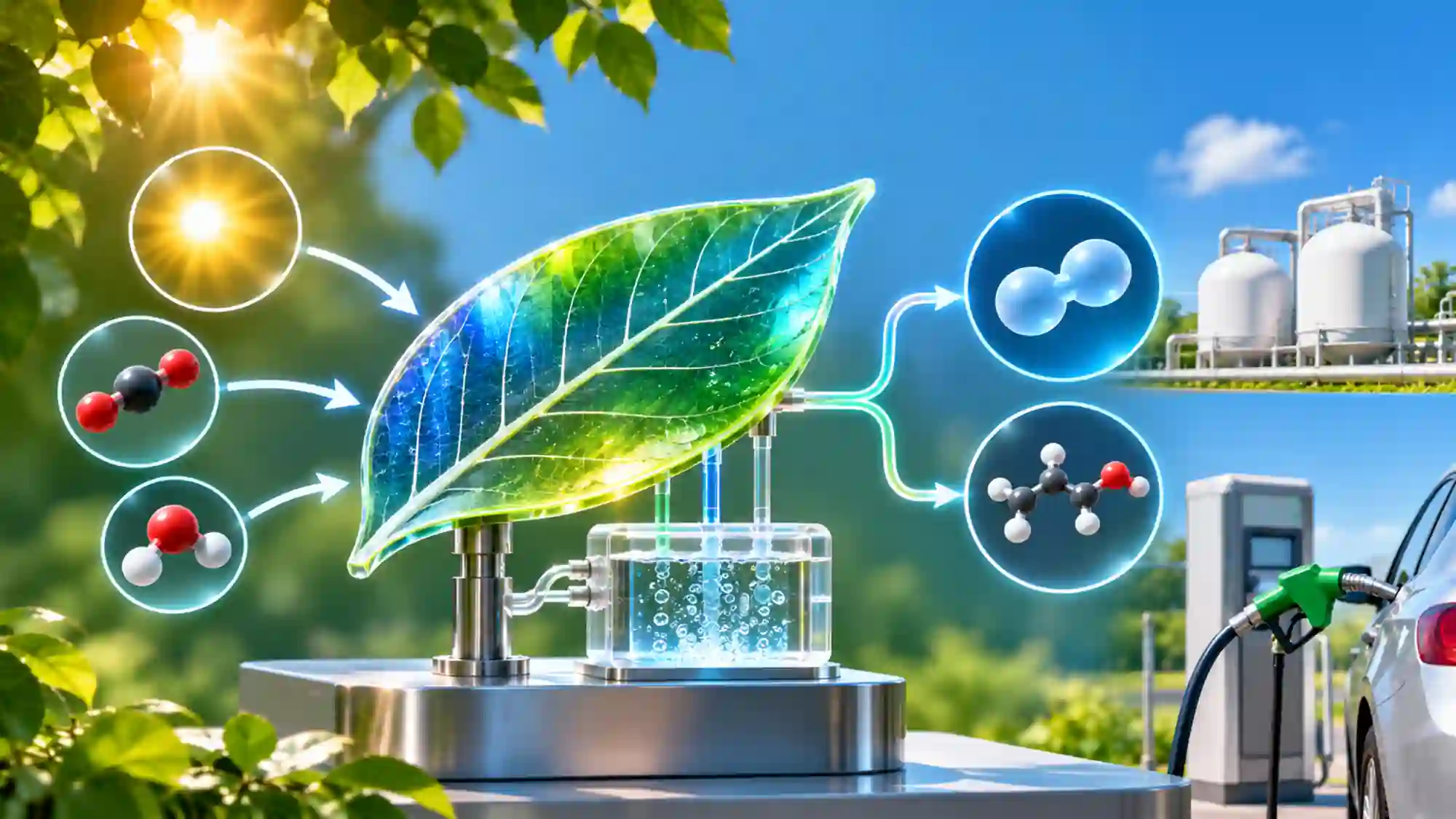
Plants have mastered an extraordinary process: using sunlight, water, and carbon dioxide to produce chemical energy through photosynthesis. Inspired by this natural ability, scientists are developing artificial leaves that mimic photosynthesis and convert sunlight into usable fuels. These technologies could eventually provide a way to store renewable solar energy in the form of hydrogen and carbon-based fuels.
How Do Artificial Leaves Work?
Unlike biological leaves, artificial leaves use engineered materials rather than chlorophyll to capture sunlight. Their operation generally involves three steps: absorbing light, separating electrical charges and driving chemical reactions.
When sunlight strikes a light-absorbing semiconductor, it generates electrons and positively charged holes. These electrical charges can drive chemical reactions at catalytic surfaces.
In one approach, water is split into hydrogen and oxygen. The hydrogen can then be collected and used as a clean-burning fuel.
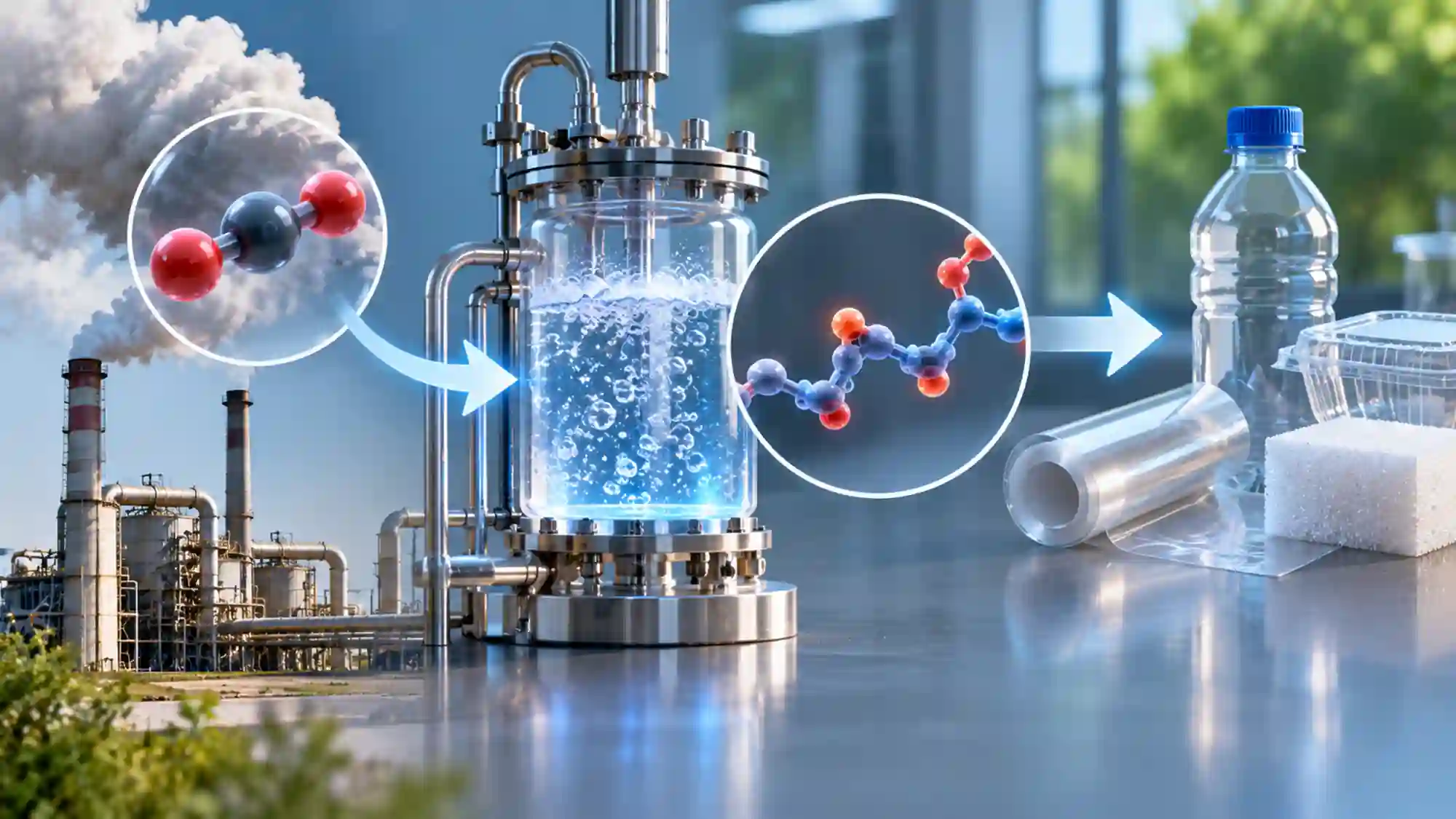
Another approach uses captured carbon dioxide and water to produce carbon-based fuels such as carbon monoxide, formate, methane or alcohols. This process resembles photosynthesis because it uses sunlight to convert carbon dioxide into energy-rich chemical products.
From Laboratory Experiments to Artificial Leaves
In 2023, researchers demonstrated a standalone artificial leaf that used sunlight, water and carbon dioxide to produce liquid multi-carbon alcohols, including ethanol and propanol. The device combined light-absorbing materials with a specialised copper-palladium catalyst.
In another development, researchers reported a floatable artificial leaf in 2025 that combined carbon dioxide conversion with water purification. Such designs could potentially support artificial photosynthesis in open environments.
These experiments demonstrate that artificial leaves can produce useful chemical fuels, although their performance and scale remain limited.
Why Is Scaling Up So Difficult?
Artificial photosynthesis faces several challenges. Many light-absorbing materials and catalysts lose efficiency over time, while competing chemical reactions can reduce the amount of desired fuel produced.
Researchers must also improve energy-conversion efficiency, develop affordable materials and ensure that devices operate reliably under changing sunlight conditions.
Producing fuels at an industrial scale will require substantial improvements in durability, manufacturing costs, and overall efficiency.
The Future of Solar Fuels
Artificial leaves could eventually complement solar panels by converting sunlight directly into storable chemical energy rather than electricity alone. Hydrogen and carbon-based fuels could potentially support industries and transportation sectors that are difficult to electrify. Although artificial photosynthesis is still developing, it offers an exciting possibility: manufacturing renewable fuels by borrowing one of nature’s most successful energy-conversion strategies.
Sources
- Rahaman, M., Andrei, V., Wright, D., Lam, E., Pornrungroj, C., Bhattacharjee, S., Pichler, C. M., Greer, H. F., Baumberg, J. J., & Reisner, E. (2023). Solar-driven liquid multi-carbon fuel production using a standalone perovskite–BiVO₄ artificial leaf. Nature Energy, 8, 629–638. https://doi.org/10.1038/s41560-023-01262-3
- Zhang, Z., Wang, Y., Xie, Y., Tsukamoto, T., Zhao, Q., Huang, Q., Huang, X., Zhang, B., Song, W., Chen, C., Sheng, H., & Zhao, J. (2025). Floatable artificial leaf to couple oxygen-tolerant CO₂ conversion with water purification. Nature Communications, 16. https://doi.org/10.1038/s41467-024-55753-2