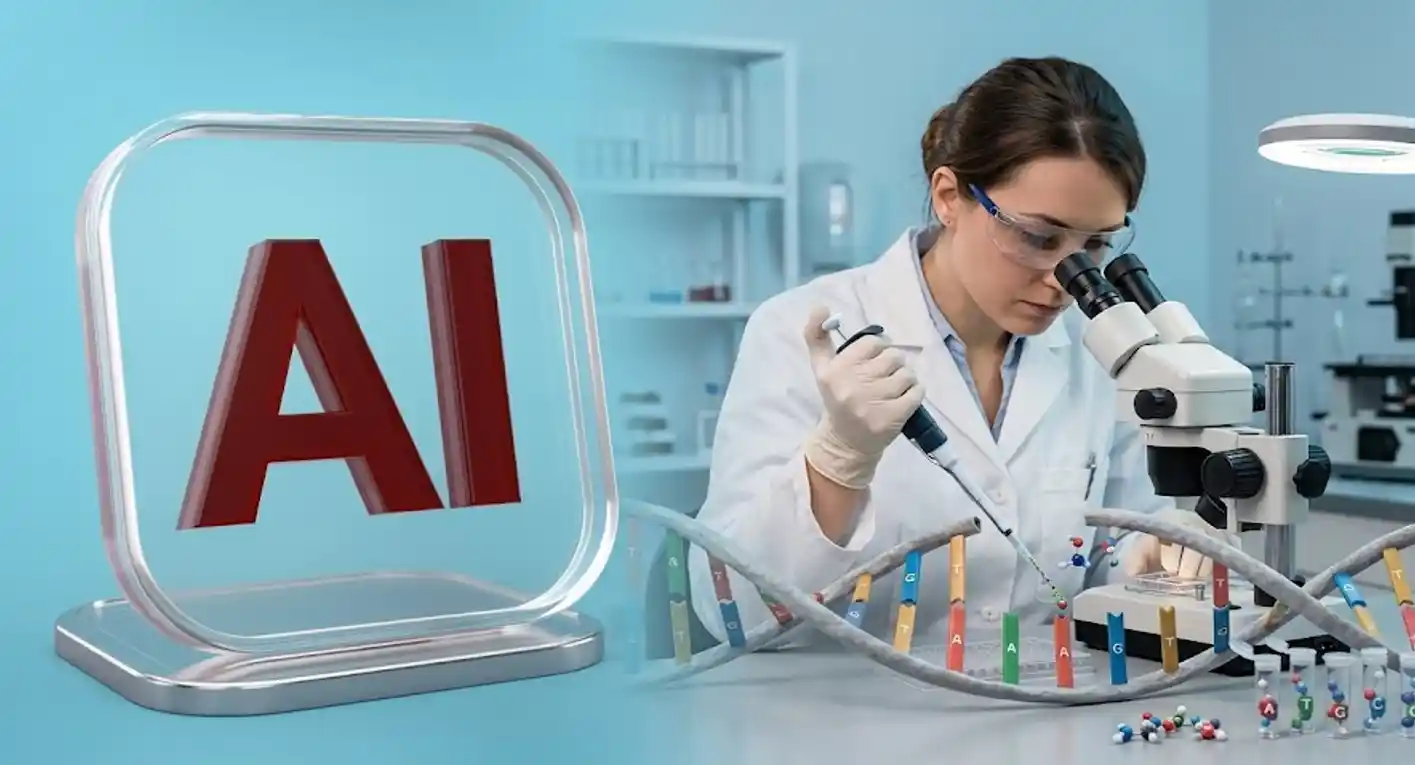
When AI Starts Writing Viral DNA: What Bacteriophages Are Teaching Us About the Future of Biology
Artificial intelligence is no longer being used only to read genomes. Scientists are beginning to use it to design them.
That shift could represent one of the most important developments in synthetic biology, and bacteriophages, the viruses that infect bacteria, are providing an ideal testing ground.

Two recent lines of research illustrate both sides of this emerging field. One asks: What happens when we change almost every letter of a viral genome? The other asks an even more ambitious question: Can an AI model design a complete viral genome that actually works?
Together, these studies reveal how much we are learning about the “language” of DNA, and how much remains mysterious.
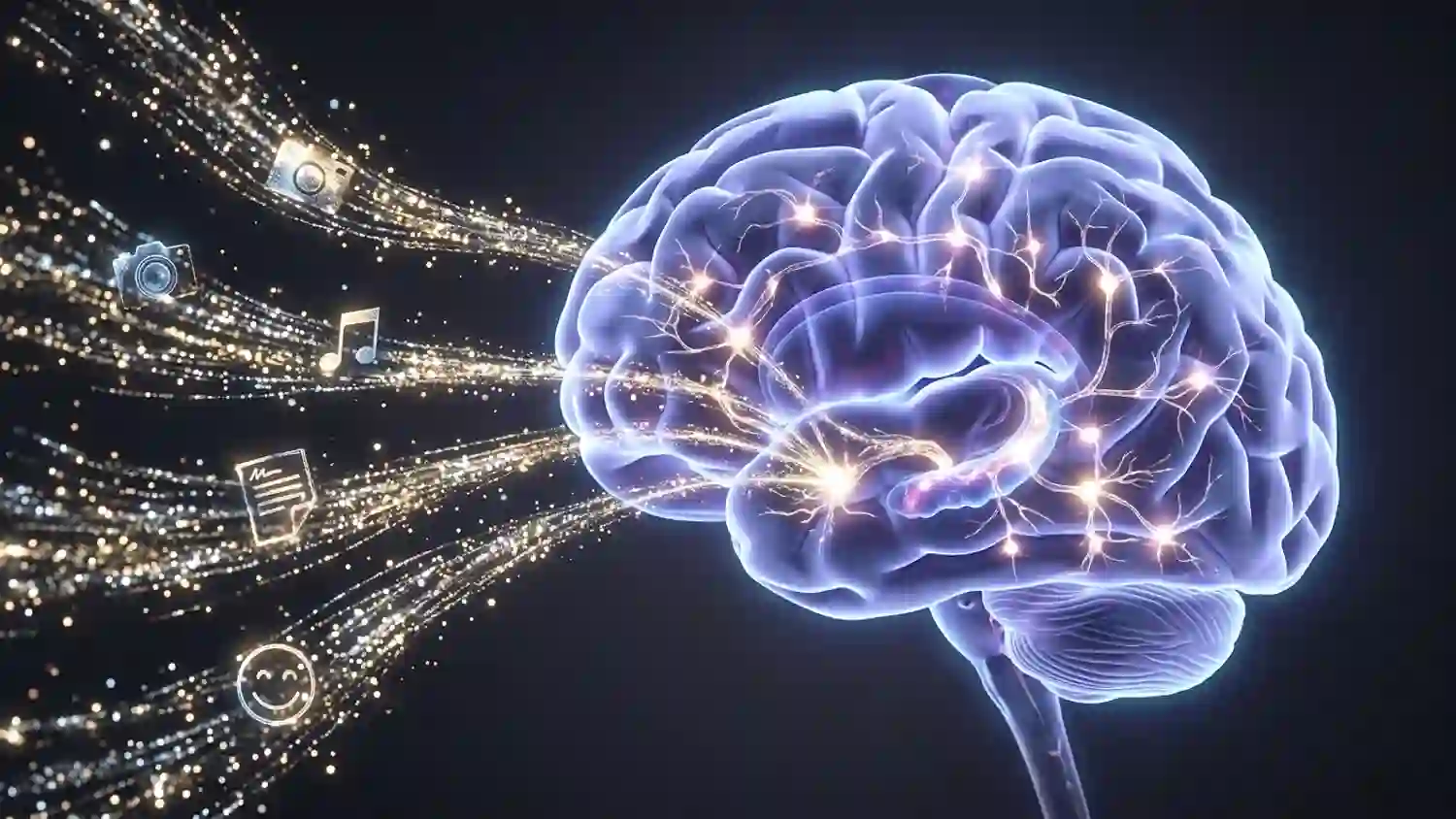
The Genome as a Biological Language
DNA is often described as a genetic blueprint. But the analogy has limitations.
A genome is more like a highly interconnected language in which individual letters, words and sentences influence one another. Changing one DNA letter can have little effect, or it can disrupt an important biological function.
The tiny bacteriophage ΦX174 provides an unusually useful system for studying this problem. It was the first genome to be sequenced and later became one of the best-characterized viral genomes in biology.

In research reported by Nature, scientists systematically altered essentially every position in the ΦX174 genome. The experiment created an enormous collection of genetic variants, allowing researchers to investigate how changes throughout the genome affected viral performance.
The results were surprising.
Some changes that might have been expected to seriously damage the virus were tolerated, while other seemingly modest alterations had unexpected consequences. More importantly, leading AI models struggled to predict many of these outcomes.
This is an important reminder: knowing a DNA sequence is not the same as completely understanding what that sequence does.
Then AI Took the Next Step
While one group was testing how genomes respond to change, another group was asking whether AI could generate genomes in the first place.
In a study published in Science, Samuel King and colleagues used genome language models to design complete bacteriophage genomes. These models work conceptually like language models, but instead of learning patterns in sentences, they learn patterns in biological sequences.
The researchers used the small ΦX174 genome as a starting point and generated new genome sequences intended to produce bacteriophages with particular biological characteristics.
The remarkable part came when the computer-generated sequences were tested experimentally.
The researchers reported 16 viable phages with diverse fitness profiles. Structural analysis also revealed that one generated phage contained a DNA-packaging protein that was evolutionarily distant from the corresponding protein in the original template.
In other words, the AI was not simply copying a naturally occurring virus.
It was finding new combinations of genetic information that could produce functional biological systems.
Why “Genome Language Models” Matter
Large language models learn statistical relationships between words. Genome language models apply a similar idea to biological sequences.
During training, these models can encounter huge numbers of DNA sequences and learn patterns associated with genes, regulatory regions and interactions between different parts of genomes.
The exciting possibility is that such models could eventually help scientists explore biological designs that nature has never produced.
This is particularly interesting for phage therapy.
Bacteriophages naturally attack bacteria, making them potential tools against bacterial infections. One major challenge is that bacteria can evolve resistance to individual phages. AI-assisted design could, in principle, provide a way to explore diverse phage genomes and identify candidates with useful properties.
The Science study reported that a cocktail of generated phages could rapidly overcome resistance in ΦX174-resistant bacterial strains, suggesting a possible future direction for AI-assisted phage development.
However, this is still early-stage science, not a ready-made clinical technology.
The Missing Piece: Biology Is More Complicated Than Code
The most interesting connection between the two research stories may actually be their apparent contradiction.
One study shows that AI can generate functional genomes.
The other shows that AI still struggles to predict what many genome changes will do.
Both can be true.
A model can learn powerful biological patterns without understanding every underlying mechanism. Biology contains overlapping genes, interacting proteins, regulatory signals and evolutionary constraints. A change in one location can have consequences somewhere else.
That complexity makes biology fundamentally different from writing computer code.
A programmer can usually inspect a piece of software and trace its logic. In a genome, the “logic” is distributed across molecular interactions that have evolved over billions of years.
From Reading DNA to Designing Biology
For decades, genomics was primarily about reading biological information.
DNA sequencing allowed scientists to decode genomes. Bioinformatics allowed them to compare sequences and identify genes. Machine learning then helped researchers recognize increasingly complicated patterns.
Generative genome models could take the next step:
Read → Understand patterns → Generate → Test → Learn
That does not mean AI is replacing biology. Instead, it creates a new partnership between computation and experimentation.
AI can explore enormous numbers of possible sequences, while laboratory experiments determine which predictions actually work.
The combination could eventually influence synthetic biology, biotechnology, phage research and other areas where designing biological systems is useful.
A Powerful Technology That Needs Careful Governance
The ability to generate functioning viral genomes also raises important safety questions.
The current demonstrations involve bacteriophages, which target bacteria, and the systems used in this research were developed with safety considerations in mind. But the broader principle, that generative AI can help create biological sequences, requires responsible oversight.
Researchers and policy experts have emphasized the importance of safeguards covering AI models, biological research, DNA synthesis and laboratory work.
The goal should not be to stop innovation, but to ensure that the ability to design biology develops alongside appropriate safety standards.
The Bigger Picture
Perhaps the most exciting lesson from these studies is not that AI has “learned life.”
It is that scientists are beginning to experiment with the rules of life at genome scale.
One team is changing almost every letter to discover what the genome can tolerate. Another is asking AI to generate new combinations that nature has not necessarily explored.
Together, they point toward a future in which biology becomes increasingly designable, but never completely predictable.
And that may be the real lesson of the AI-designed phage era:
We are becoming better at writing the language of DNA, but we are still learning what the words mean.
Takeaway
Genomes are more than sequences.
AI can learn patterns in biological DNA and generate new sequences.
Bacteriophages provide a useful model for testing genome-scale design.
Laboratory experiments remain essential for determining whether AI-generated predictions actually work.
As biological design becomes more powerful, responsible safeguards will be equally important.
References
Callaway, E. (2026, September 1). Mutating every DNA letter of a genome shows surprising effects—and the limits of AI. Nature.
King, S. H., Driscoll, C. L., Li, D. B., Guo, D., Merchant, A. T., Brixi, G., Wilkinson, M. E., & Hie, B. L. (2026). Generative design of bacteriophages with genome language models. Science, 393(6811), eaec2657. https://doi.org/10.1126
Wei, H., Li, X., & Lehner, B. (2026). Complete mutagenesis of the genome and proteome of bacteriophage ΦX174. bioRxiv. https://doi.org/10.64898/2026.07.25.740675