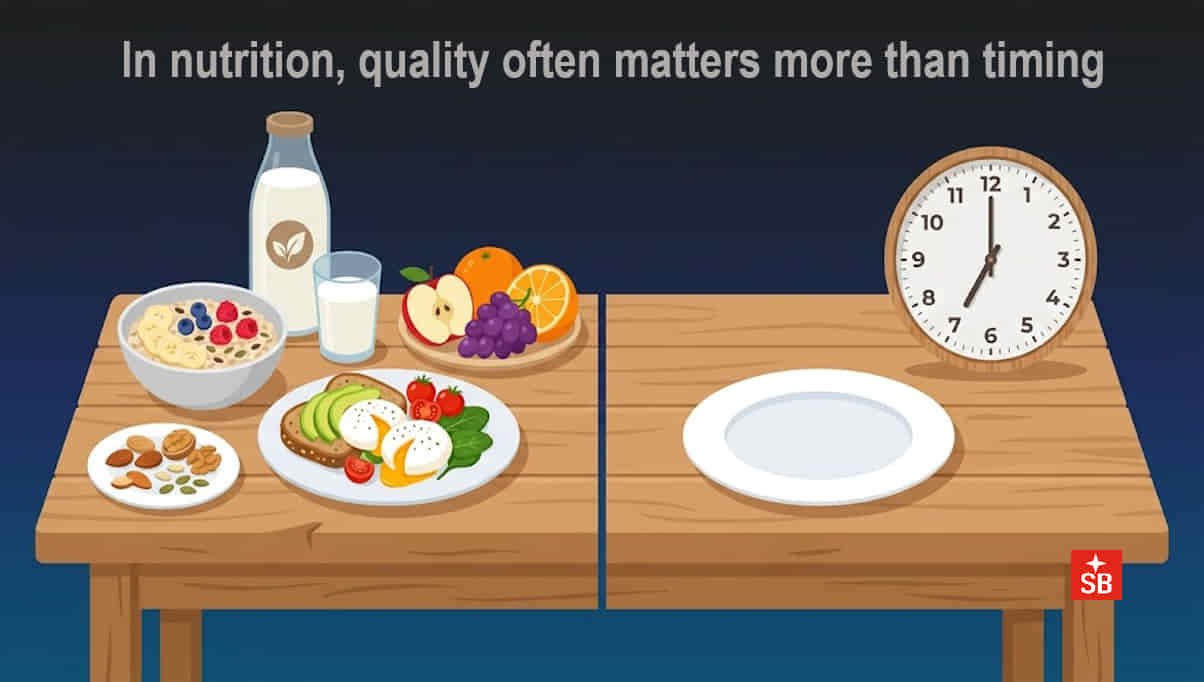
Every morning, millions of people hear the same advice, “Never skip breakfast, it is the most important meal of the day.” This old saying has been passed from one generation to another like a family treasure. But does your body really treat breakfast like a king sitting on the throne of nutrition? Science now says the answer is not so simple. Breakfast is like the opening scene of a movie. It can set the mood, but it does not decide how the whole story ends. As the proverb says, “Do not judge a book by its cover.” The real hero is not the clock on your wall, but the quality of food you eat throughout the day.
Metabolism is a steady river, not an engine waiting for ignition.
Breakfast literally means “breaking the fast” after many hours without food during sleep. During the night, your body quietly keeps working like a dedicated night shift worker, using stored energy to keep your heart beating, lungs breathing, and brain active. In the morning, breakfast can refill these energy stores by providing glucose, vitamins, minerals, protein, and other nutrients. For children and teenagers, regular breakfast has been linked with better diet quality, and several studies suggest it may improve attention, memory, and classroom performance. In simple words, breakfast can help the brain say, “Thank you, I am ready for today’s lessons.”
For many years, scientists noticed that people who regularly ate breakfast often had lower body weight than those who skipped it. At first glance, this looked like strong evidence. However, this was mainly based on observational studies, which can only show associations, not direct cause and effect. Breakfast eaters often followed healthier lifestyles overall. They were more likely to exercise, sleep regularly, avoid smoking, and eat balanced meals. In scientific language, these are called confounding factors, hidden players that quietly influence the final result. It is a reminder that correlation does not always mean causation, an important principle in nutrition science.
To answer the question more fairly, researchers performed randomised controlled trials, considered the gold standard of medical research. Participants were randomly assigned either to eat breakfast or to skip it. A systematic review published in The BMJ found little evidence that eating breakfast alone helps people lose weight. In fact, those who ate breakfast often consumed slightly more calories over the entire day than those who skipped it. This finding turned a popular belief upside down. The breakfast crown suddenly looked a little less shiny. As the saying goes, “Not everything that glitters is gold.”
Another popular claim is that breakfast “kick-starts” your metabolism. This idea sounds attractive, but human metabolism is not a sleepy engine waiting for someone to turn the key. Every meal slightly increases energy expenditure through a process called the thermic effect of food. Whether you eat at 8 a.m. or 1 p.m., your body still burns energy while digesting food. Skipping breakfast does not force your metabolism to wave a white flag or instantly store every bite as fat. That fear is more fiction than fact.
What truly matters is the quality of the meal. A breakfast rich in protein, fibre, whole grains, fruits, nuts, or healthy fats can keep hunger under control for longer and provide essential nutrients. On the other hand, sugary cereals, cream filled pastries, and sweetened drinks may give a quick burst of energy, only to disappear like fireworks in the sky, bright for a moment, then gone. Such foods often leave people hungry again much sooner. In nutrition science, foods with more fibre and protein generally produce greater satiety, meaning they help people feel full for longer.
So, should everyone eat breakfast? The answer is surprisingly personal. If you wake up hungry and breakfast keeps your energy steady while preventing unhealthy snacking later, then breakfast can be your faithful morning companion. If you naturally prefer eating later and still meet your daily nutritional needs, skipping breakfast is not automatically harmful. Many people following carefully planned intermittent fasting schedules remain healthy when their overall diet is balanced. The body listens more carefully to what you eat than to what time the clock shows.
Nutrition is like building a strong house. Breakfast is only one brick in the wall. Lunch, dinner, healthy snacks, regular exercise, good sleep, stress control, and balanced food choices all work together to build lasting health. Giving breakfast all the credit is a little like praising the opening batsman for winning a cricket match before the rest of the team has even played.
In the end, breakfast can certainly be an important meal, but science suggests it is not automatically the most important one for everyone. There is no universal rule that fits every person. Your body is unique, your lifestyle is unique, and your eating pattern should match your health needs. As the old proverb wisely reminds us, “A balanced life is better than blind rules.” The real winner is not the first meal of the day, but the healthy choices you make from sunrise to bedtime.