What if something normally scraped off a fish and thrown away could become a plastic film, and then disappear back into the soil after its job was done?
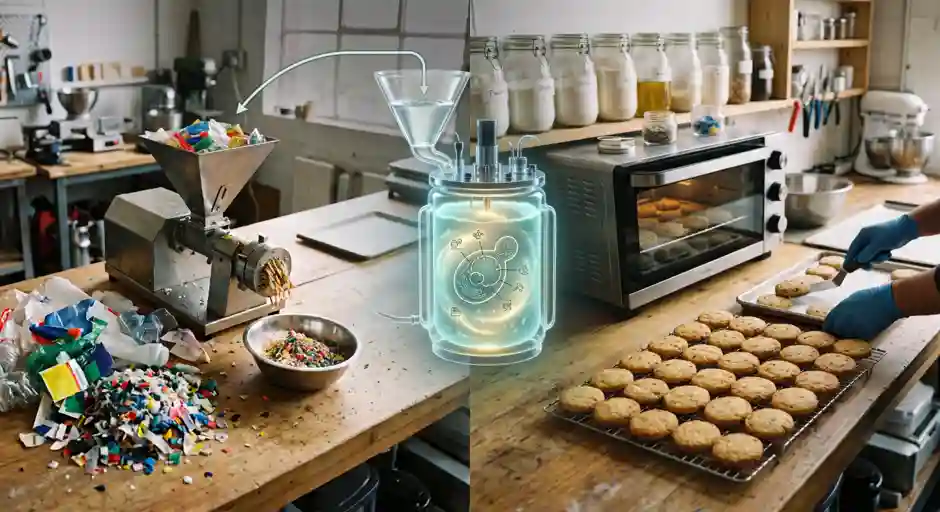
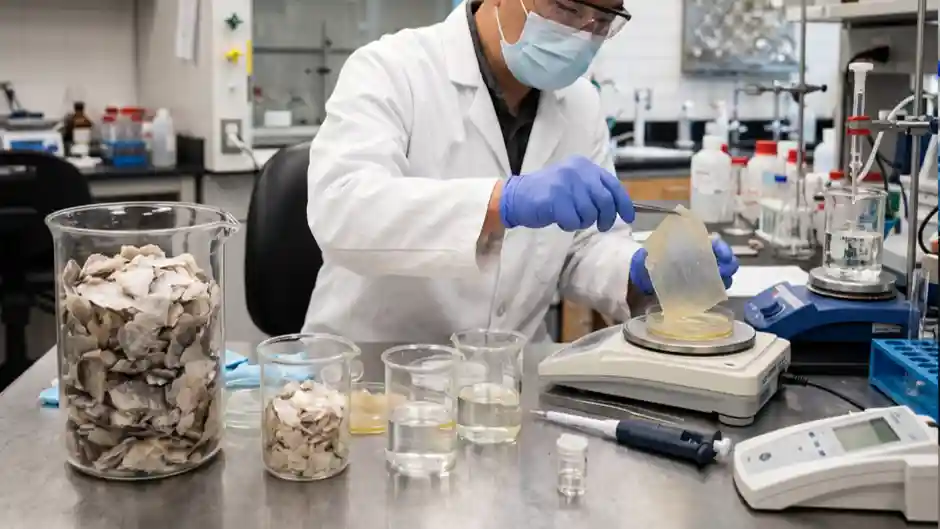
Researchers have developed a plastic-like material called Cyclo.Plas 2 using components recovered from discarded fish scales. The resulting material can be made into thin, flexible films, and experiments reported that the films began breaking down in soil after about two weeks and had largely biodegraded by the end of eight weeks. The idea starts with something fish scales already contain: collagen.
Fish scales are made partly from a collagen-rich organic matrix reinforced with calcium-containing minerals. Instead of treating the scales simply as waste, the researchers isolated the collagenous material and used it as the foundation for a plastic-like film. They then combined the collagen with chitosan, a biodegradable polysaccharide, to improve the material’s resistance to water and heat. Three different collagen-to-chitosan ratios—90:10, 70:30 and 50:50—were tested. The mixtures formed translucent, flexible sheets. They evaluated properties including tensile strength, transparency, thermal stability and resistance to water, comparing the material with conventional thin plastics such as low-density polyethylene (LDPE).
But strength is only half of the problem when developing a plastic alternative. A material intended for packaging needs to survive long enough to be useful, but ideally should not remain in the environment for decades after being discarded. That’s where Cyclo.Plas 2 produced an interesting result. They mixed different amounts of the film with organic soil and monitored the samples for eight weeks. Breakdown began during the second week. As the experiment continued, the remaining material softened and degraded, with little visible material left at the end of the eight-week observation period.
They also tested whether the material could negatively affect plants. During a four-week phytotoxicity experiment, the plants survived without the visible signs of toxicity that they were looking for. However, the study itself says that additional work is needed to understand the material’s longer-term environmental effects and whether the degraded material could have any useful role as a soil amendment or fertiliser. This is important because biodegradable does not automatically mean environmentally harmless in every situation. These were performed under controlled conditions, and the material still needs testing in more realistic environments, including aquatic and marine conditions.
They also identified several steps needed before the concept could become a practical product, including developing the film directly from raw fish-scale waste and producing prototypes closer to real packaging applications. Still, the concept demonstrates an intriguing possibility: waste from one industry could become the raw material for another. Instead of allowing fish scales to become another discarded waste stream, their collagen could potentially be turned into a short-lived material designed for a short-lived purpose. Plastic may not always need to last for centuries just because the product using it lasts for minutes.
Source: