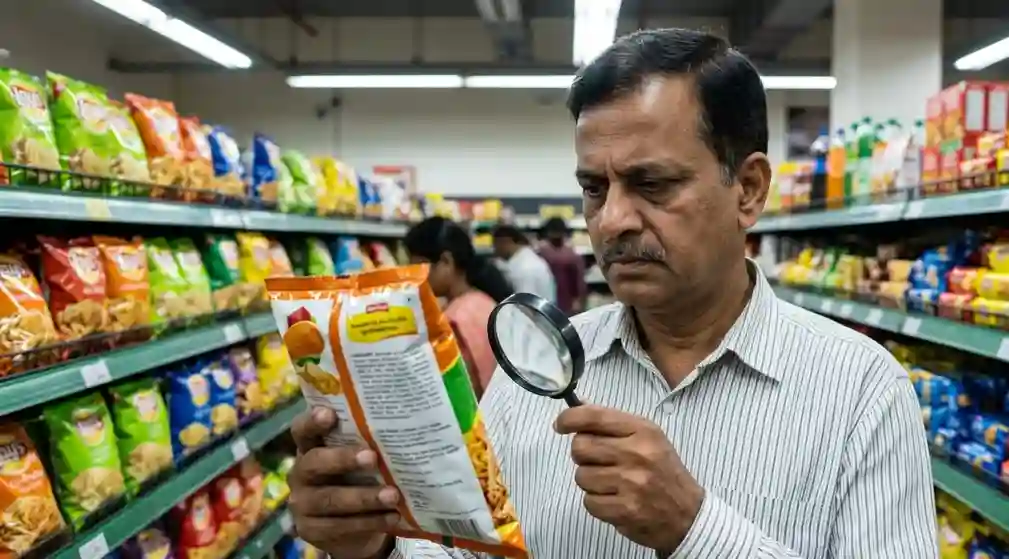
There is a particular kind of innocence that dies quietly, somewhere between the crinkle of a chip packet and the first bite. For most of us, that innocence lasted a lifetime. For India, it may have ended this year. A sweeping crackdown by food-safety regulators has pulled back the foil wrapper on an uncomfortable truth: the ingredient list on the back of your favourite snack may be the least honest paragraph in your kitchen. Falsified expiry dates. Mislabeled nutrition. Warehouses where hygiene was treated as optional. All of it hiding in plain sight across a packaged-food industry now worth more than $100 billion.
The same name, a different truth
Here is the part that stings. It’s not just fringe products or shady vendors. It’s the household names. A can of Fanta bought in Mumbai contains roughly three times the sugar of the same can bought in London. Maggi noodles sold in Britain carry red warning labels and are made with sunflower oil; the Indian version, made with palm oil, carries no such warning at all. Same brand, same logo, same jingle stuck in your head- a fundamentally different product underneath.
This isn’t an accident of geography. It’s policy. India currently requires only a small-print ingredient list on the back of packaging, no bold front-of-pack warnings of the kind consumers elsewhere take for granted. And when regulators considered changing that in March 2026, industry pushback reportedly helped keep the warnings off the shelf, until public backlash forced a rethink and new front-of-pack label proposals emerged in August.
The officer with 3,000 raids
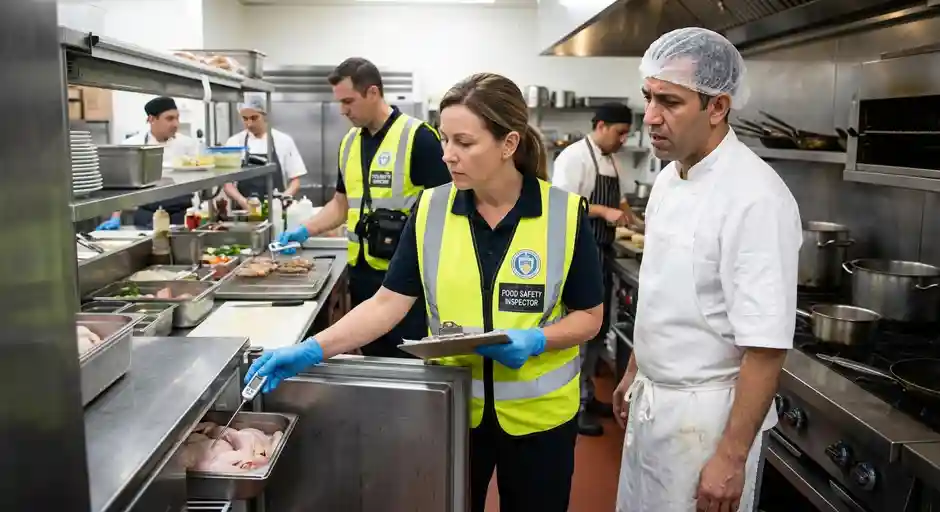
If this story has a protagonist, it might be Tukaram Mundhe, Maharashtra’s food-safety commissioner, who has led more than 3,000 raids on food establishments since May. His frustration cuts to the heart of the matter. He has asked why companies should be allowed to meet one standard of honesty abroad and a lesser one at home, insisting that legal compliance alone isn’t the same as ethical behavior. But even his relentless enforcement hasn’t escaped scrutiny; courts have pushed back against his department for what judges called overreach, a reminder that cracking down on an entire industry is rarely as clean as it sounds in a headline.
Then came Mumbai. A warehouse raid uncovered products bound for export with falsified expiry dates and nutrition information, including one package carrying a nutrition label mimicking Canadian formatting, despite never having been near a Canadian factory. It was convincing enough that Canada’s own food inspection agency began watching whether its imports were at risk- the first time a foreign regulator responded to the affair.
A regulator chasing a moving target
The scale of the problem is staggering on its own: nearly 80% of India’s packaged-food market is high in fat, sugar, or salt, and each year since 2020, inspectors have flagged roughly one in five of the more than 100,000 samples they test as unsafe, substandard, or poorly labelled.
Meanwhile, the industry keeps outrunning the rulebook. Quick commerce, a $13 billion sector delivering some 9 million orders a day, only faced a serious hygiene crackdown in August 2026, after inspectors discovered cockroaches, rodents, and rotting produce inside its warehouses. Energy drinks, growing at over 12% a year, only received updated labelling rules in July. And Wai Wai noodle maker Chaudhary Group was ordered to halt certain products after inspectors reportedly found floor-swept, broken noodles being repackaged for sale.
The question behind the question
Strip away the brand names and court cases, and one question remains: can a regulatory system built for a simpler food economy keep up with an industry evolving faster than the laws meant to govern it? For now, the answer is being written raid by raid, label by label, and for consumers, one increasingly skeptical glance at the back of the packet at a time.
Sources:
Kalra, A. (2026, September 8). Explainer: Raids, shutdowns, warning labels — India’s unprecedented food safety push. Reuters.
Reuters. (2026, September 8). India’s food-safety crackdown exposes misleading labels, hygiene lapses. Deccan Chronicle.
Food Safety and Standards Authority of India (FSSAI). (2026). Notices and enforcement actions. Ministry of Health and Family Welfare, Government of India. https://www.fssai.gov.in/