Plant-based meat is often marketed as a cleaner, healthier alternative to conventional meat. But recent research has raised an unexpected question: could some meat alternatives contain fungal toxins that deserve closer attention?
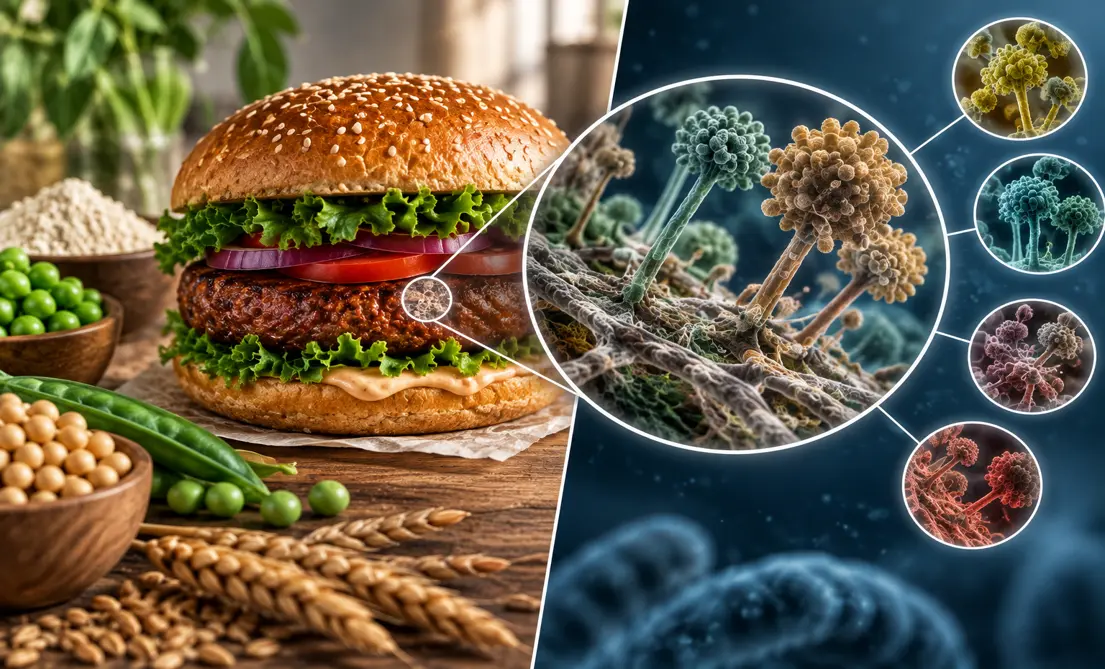
The concern involves mycotoxins chemical compounds produced by certain fungi that can contaminate crops such as soy, wheat, peas and other plant-based ingredients. Some mycotoxins, including aflatoxins and toxins produced by Alternaria and Fusarium species, can have harmful effects at sufficiently high exposure levels.
How do they get into plant-based meat?
The fungi do not necessarily grow inside the finished burger. Instead, contamination can occur earlier, while crops are growing, being harvested, stored or processed. When contaminated plant ingredients are converted into protein concentrates, flours or other components, some toxins may remain.
A 2023 study analysing 13 plant-based meat alternatives detected one or more mycotoxins in most of the tested products, although the study was small and cannot represent the entire market.
More recently, researchers analysed 32 plant-based alternative products and detected at least one target mycotoxin in 27 samples. Alternaria toxins were particularly common. Importantly, the researchers reported that none of the measured concentrations exceeded established regulatory limits or recommended values, while also noting that plant-based alternatives are not always specifically covered by existing contaminant regulations.
So, should consumers be worried?
The answer is cautious rather than alarming.
A 2025 risk-assessment study examined contamination data from hundreds of plant-based meat and dairy alternatives and identified certain mycotoxins particularly aflatoxins and Alternaria toxins as potential concerns under some dietary scenarios. However, the researchers themselves noted that the dataset represented a convenience sample, meaning it should not be interpreted as evidence that all plant-based meat products carry dangerous toxin levels.
There is also an important distinction between finding a toxin and demonstrating harm. Risk depends on concentration, frequency of consumption, the particular toxin, individual susceptibility and total dietary exposure.
What about fungal-based meat?
Mycoprotein is different. Instead of relying primarily on plants, it is produced from edible fungal biomass. The fungi are deliberately cultivated under controlled conditions rather than being accidental contaminants. Nevertheless, researchers continue to investigate issues such as allergens, strain-specific safety and potential toxic compounds.
The bigger lesson
Plant-based meat should not automatically be considered dangerous because some products contain detectable mycotoxins. But the findings highlight an important issue as alternative proteins become more common: food-safety monitoring needs to evolve alongside the food itself.
For consumers, there is no need to panic. But for scientists and regulators, the message is clearer: as plant-based foods become a larger part of the diet, systematic monitoring of contaminants and appropriate safety limits will become increasingly important.
Sources: