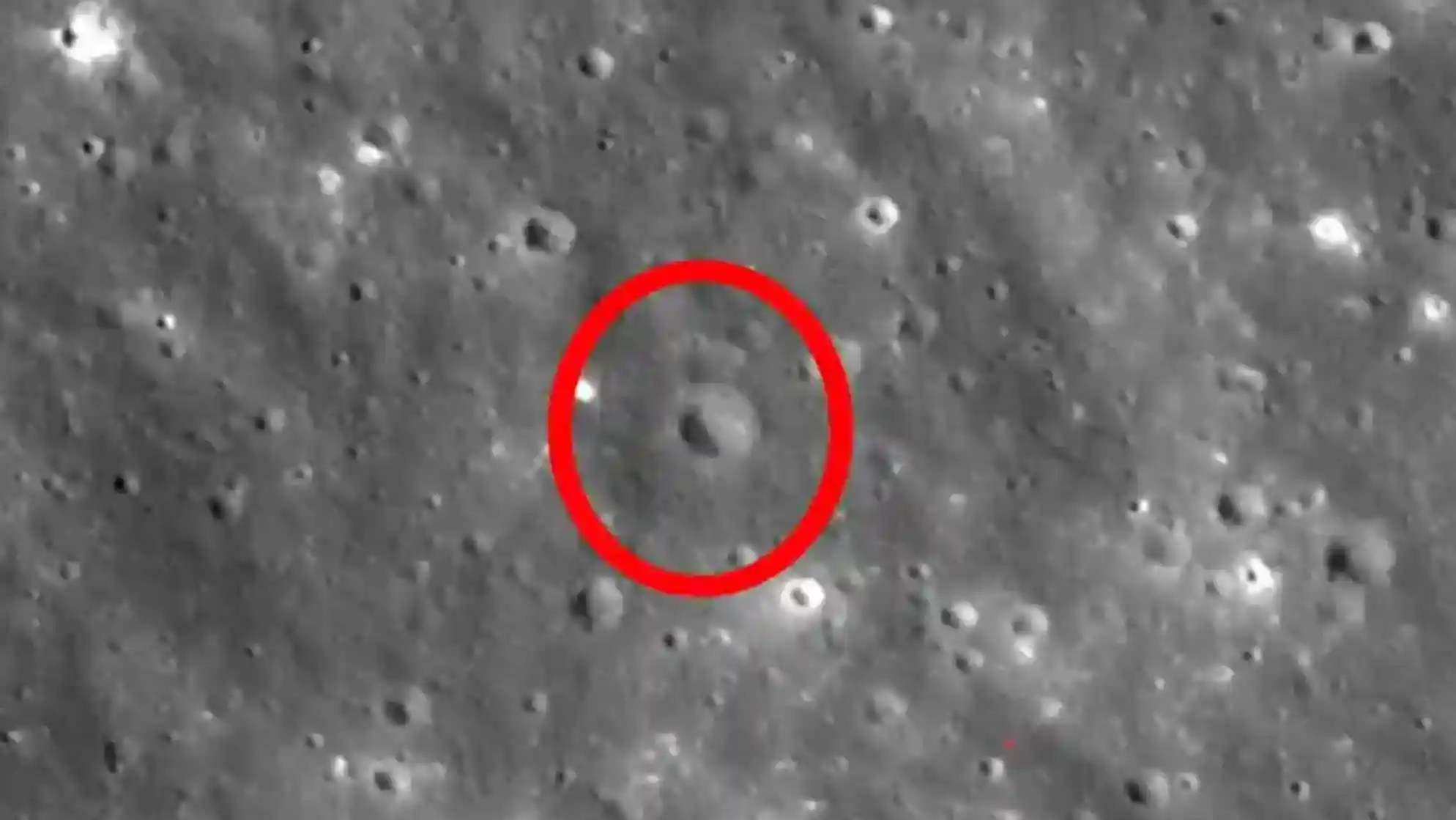
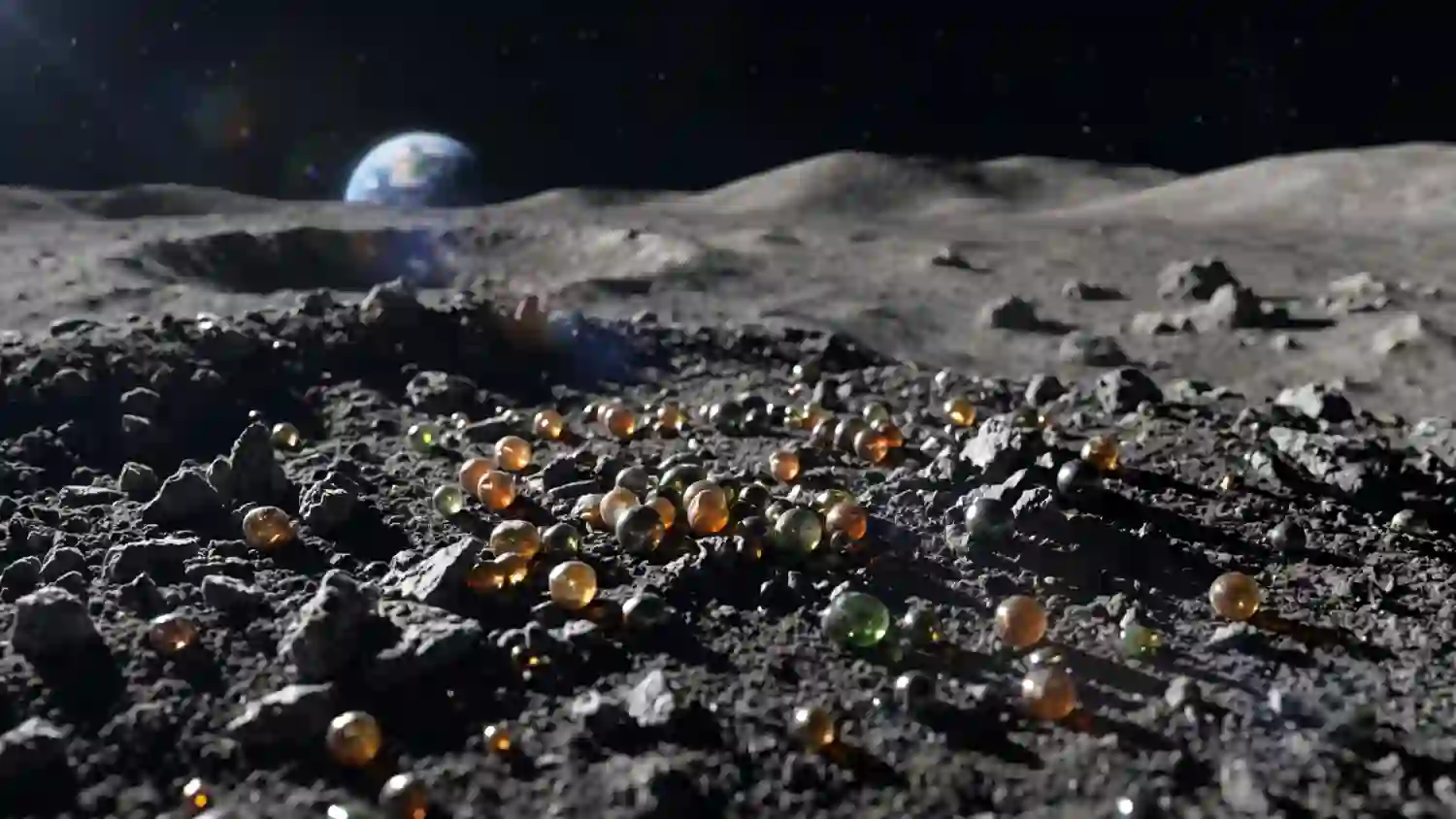
By the time you finish reading this sentence, a piece of American rocket history has been sitting silently in a Moon crater for weeks and NASA just proved it.
On August 5, 2026, a spent SpaceX Falcon 9 upper stage, the part of the rocket that does its job and then becomes space junk – slammed into the lunar surface. It was the leftover hardware from a January 2025 launch that had carried Firefly Aerospace’s Blue Ghost 1 lander to the Moon. For over a year, that empty rocket body drifted through space, a ghost of a mission long completed. Then, gravity finally called it home.
What happened next reads less like a footnote and more like a detective story written in craters and light.

The Six-Day Wait
NASA’s Lunar Reconnaissance Orbiter (LRO) didn’t just happen to catch the impact site. Engineers had to earn that photograph.
LRO orbits the Moon pole-to-pole every two hours, skimming just 60 miles above the surface at a blistering one mile per second. But the Moon rotates independently underneath it – so the spacecraft had to wait for the exact patch of lunar real estate where the crash happened to rotate into view. That took six days.
And even then, the margin for error was razor-thin. Engineers had to tilt the entire spacecraft to angle its cameras toward the crater at precisely the right moment. Miss the timing by just 10 seconds, and the target would have drifted 10 miles off-center turning a triumphant photo op into a blank frame of gray dust.
They didn’t miss.
What the Camera Found
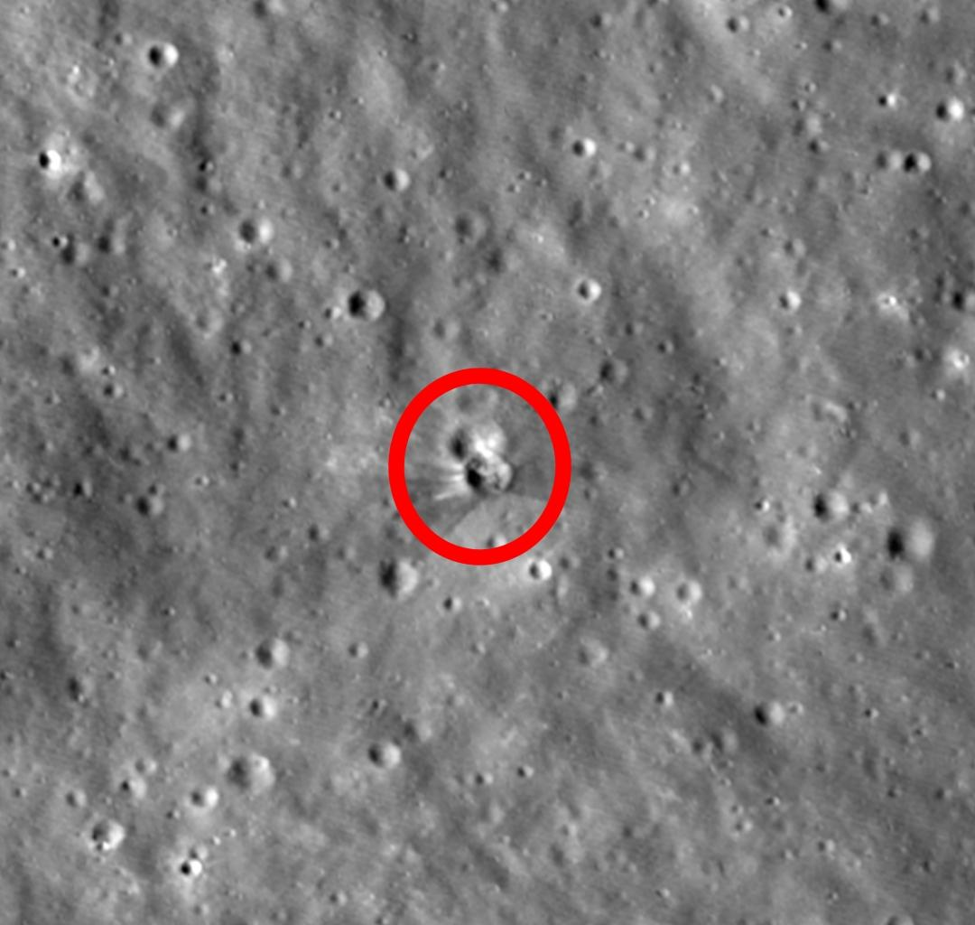
Using LRO’s Narrow-Angle Camera – sharp enough to spot something as small as 3 feet across – scientists finally got their look between August 11 and 12.
The verdict: a crater about 60 feet wide and less than 10 feet deep, its depth calculated from nothing more than the length of its own shadow stretching across the lunar soil.
But the real story was in the light. Photographed from multiple angles as sunlight shifted across the site, the crater revealed a halo of contrasting rays radiating outward – dark streaks of old, weathered lunar dust that’s been battered by solar wind and micrometeorites for eons, cut through by bright splashes of freshly excavated material blasted up from more than a foot underground. It’s the Moon’s version of a bruise turning colors: old damage versus brand new.
A Global Guessing Game -Solved
Here’s the part that turns this from a nice photo into genuine planetary science: nobody knew exactly where the impact would happen.
It started with amateur astronomers, poring over public tracking data, piecing together the rocket’s doomed trajectory just from curiosity and math. NASA’s Center for Near Earth Object Studies -the very team responsible for tracking asteroids that could one day threaten Earth – saw an opportunity too good to pass up. If they could predict where a rocket would hit the Moon, they could sharpen the same tools used to predict where a hazardous space rock might one day hit us.
Working out of the Jet Propulsion Laboratory in Southern California, that team refined their calculations again and again until they landed on a predicted impact zone – and passed it along to an unlikely ally: South Korea’s Korea Pathfinder Lunar Orbiter, nicknamed Danuri.
Danuri’s high-resolution camera swept over the coordinates just hours later and found the crater almost exactly where NASA said it would be -off by a mere 0.6 miles. Danuri then sent its own refined coordinates back to the LRO team, sharpening the hunt even further.
By comparing before-and-after images of the lunar surface, scientists nailed down the crater’s exact address: 19.4759°N, 266.7138°E, sitting at an elevation of 511 meters.
Why a Rocket Crash Matters
It’s easy to shrug off a small crater on a Moon already pockmarked by billions of years of impacts. But this one is different – because for once, humans knew the “asteroid” was coming.
That predictability turned a routine piece of space debris into a live-fire drill for planetary defense, proving that scientists can track an object’s fall well enough to hand another country’s spacecraft the coordinates in advance -and have it show up almost exactly on target. It’s a small crater with a big lesson: international space agencies, working together with nothing more than shared data and good math, can pinpoint where something from space is going to land before it ever gets there.
Images credited to NASA Goddard/Intuitive Machines and NASA/JPL-Caltech.
Reference:
NASA Science Editorial Team, NASA’s LRO Images Falcon 9 Crater on Moon, Learns New Details,” published August 18, 2026.